




Taiwan and the United States have reached a trade deal that links lower tariffs to major Taiwanese investment in American technology and energy, deepening an already sensitive economic relationship shaped by semiconductors and geopolitics.
Announcing the agreement late Thursday, the US Commerce Department said Taiwan’s semiconductor and technology companies will invest at least $250bn in the United States. In exchange, Washington will reduce its general tariff on imports of Taiwanese goods from 20 percent to 15 percent.
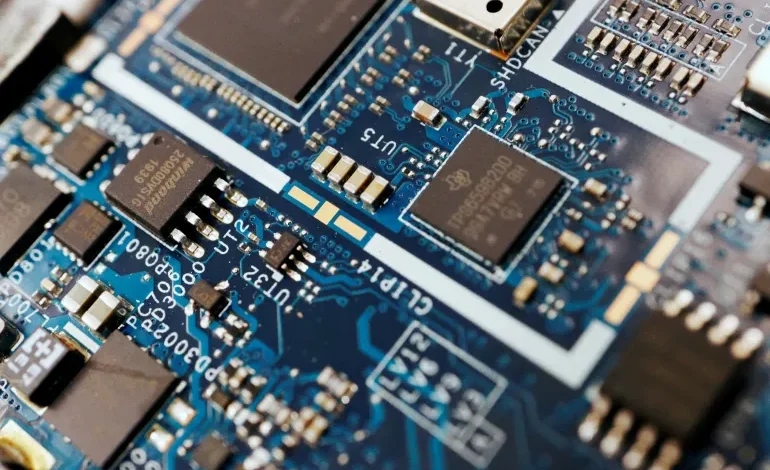
The deal reflects a sustained push by the US to secure greater access to Taiwan’s semiconductor industry, which dominates the global supply of advanced chips used in artificial intelligence, defence systems, and consumer electronics. Taiwan’s central role in the global tech economy has also placed it at the centre of geopolitical tensions, as China continues to claim the island as part of its sovereign territory.
President Donald Trump initially announced a 32 percent tariff on Taiwanese goods last spring as part of his sweeping “Liberation Day” tariff package, before later lowering the rate to 20 percent. The new agreement cuts that figure further.
The Commerce Department described the deal as “historic”, saying it “will strengthen US economic resilience, create high-paying jobs, and bolster national security”.
Beyond the headline investment commitment, Taiwan will also provide at least $250bn in credit guarantees to support additional investment by its companies across the US semiconductor supply chain. The funding will go toward advanced chip production, energy infrastructure, and artificial intelligence research and manufacturing.
Taiwanese officials stressed that the agreement would not weaken the island’s position as the world’s leading chip producer.
The island’s semiconductor sector has long been viewed as a “silicon shield”, a strategic asset believed to deter military pressure from China while encouraging US support. Despite expanding overseas production, Taipei insists the heart of the industry will remain at home.
“Based on current planning, Taiwan will still remain the world’s most important producer of AI semiconductors, not only for Taiwanese companies, but globally,” Economic Affairs Minister Kung Ming-hsin told reporters on Friday.
He projected that production capacity for advanced AI chips would be split roughly 85–15 between Taiwan and the United States by 2030, shifting to 80–20 by 2036.
Beijing responded sharply to the agreement.
“China consistently and resolutely opposes any agreement … signed between countries with which it has diplomatic relations and the Taiwan region of China,” a spokesperson for China’s foreign ministry said, urging Washington to adhere to the one-China principle.
For Washington, the deal advances two goals at once: easing tariff pressure while accelerating the reshoring of strategic industries. For Taipei, it secures tariff relief while reinforcing its indispensability to the global semiconductor economy.



The latest news in your social feeds
Subscribe to our social media platforms to stay tuned