






With input from BBC and MultiState.
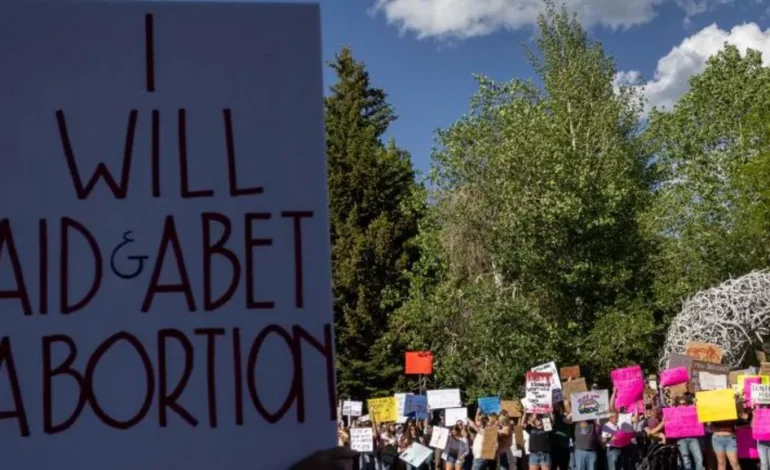
Wyoming’s highest court just delivered a major win for abortion rights – at least for now. In a 4–1 decision, the Wyoming Supreme Court struck down the state’s near-total abortion ban and a separate ban on abortion pills, ruling both violate the state constitution’s guarantee that adults have the right to make their own health care decisions. The result: abortion stays legal in Wyoming for the moment, renewing a fierce fight over how reproductive rights are defined in the state.
But while the ruling keeps clinics open and pills available, it also ignites a fresh political showdown over whether Wyoming voters should decide the issue at the ballot box, and how far state lawmakers will go to challenge the court’s interpretation of the law.
What makes this ruling especially interesting – and unexpected to some – is that it hinged on a constitutional amendment approved by Wyoming voters back in 2012. That amendment guarantees that “each competent adult has the right to make his or her own health care decisions,” language that was originally inserted into the state constitution as part of a backlash to the Affordable Care Act. At the time, many lawmakers viewed it as a mostly symbolic statement about health insurance, not a sword that could be used to block abortion restrictions.
Fast forward to 2026: the Supreme Court applied strict scrutiny, the toughest legal test, finding that Wyoming’s anti-abortion laws were not “narrowly tailored” to serve a compelling state interest – especially once abortion clearly qualified as health care under the 2012 amendment.
The court’s majority wrote that decisions about pregnancy “are influenced by many considerations, all of them personal,” and that even though ending a pregnancy ends a fetal life, that choice still fits within health care decisions protected by the state constitution.
The case was brought by a coalition that included Wellspring Health Access, the state’s only abortion provider, two obstetricians, and an advocacy group. In a brief social-media post after the ruling, Wellspring simply wrote: “Affirmed.” That quiet celebration said a lot, considering the high stakes for clinic staff and patients in a state surrounded by tighter bans.
Abortion pill access – crucial because medication abortion has become the most common method nationwide – also survived the ruling. That’s significant here, because Wyoming’s Legislature had passed a bill making it illegal to “prescribe, dispense, distribute, sell or use any drug for the purpose of procuring or performing an abortion,” which would have effectively outlawed abortion pills in the state.
Republican lawmakers and Gov. Mark Gordon wasted little time expressing their displeasure. Gordon called the decision “disappointing” and urged the Legislature to pass a constitutional amendment clarifying that abortion is not protected under the “health care freedom” language. He wants that question put before voters as soon as this fall.
Some factions within Republican leadership are even suggesting shrinking the size of the Wyoming Supreme Court – a suggestion that critics say veers toward politicizing what is supposed to be an independent judiciary.
Onlookers see this as part of a broader trend where courts are increasingly central battlegrounds in the abortion debate, leading legislators to take structural shots at judicial independence when outcomes aren’t to their liking.
For now, the court’s interpretation of the state constitution trumps the Legislature’s recent bans. Abortion remains legal, and abortion pills remain accessible – a rare outcome in a region where many neighboring states have near-total bans or aggressive restrictions.
But this ruling doesn’t end the issue – it reframes it.
- Voters may be asked next whether to amend the state constitution to explicitly ban abortion, a step that would sidestep the current health care freedom protections.
- Elected officials are already debating changes to the judicial system, raising questions about how far state government might go to check judicial power.
- Abortion policy in Wyoming may now hinge on ballot box politics more than courtroom battles — at least for the next few years.
In the short term, the court’s decision gives abortion rights advocates a clear legal footing and clinics some breathing room. But the political response underscores that the fight isn’t over – it’s just moving to a new arena where public opinion, constitutional language, and state politics will all collide.
Abortion is still legal in Wyoming, but how long that lasts – and under what rules – is now a question beyond the courtroom and straight into the heart of Wyoming’s civic debate.


The latest news in your social feeds
Subscribe to our social media platforms to stay tuned