





Bloomberg, CNBC, ABC News, USA Today contributed to this report.
European carmakers started the week in the red, and it didn’t take long for investors to point the finger at Washington.
Shares of some of Europe’s biggest auto manufacturers fell sharply on Monday after US President Donald Trump renewed his threat to slap tariffs on European allies – this time tying trade penalties directly to his long-running push to bring Greenland under US control.
By early afternoon in London, Europe’s Stoxx Automobiles and Parts index was down about 2%, trimming steeper losses from earlier in the session. The damage, though, was already done for several household names.
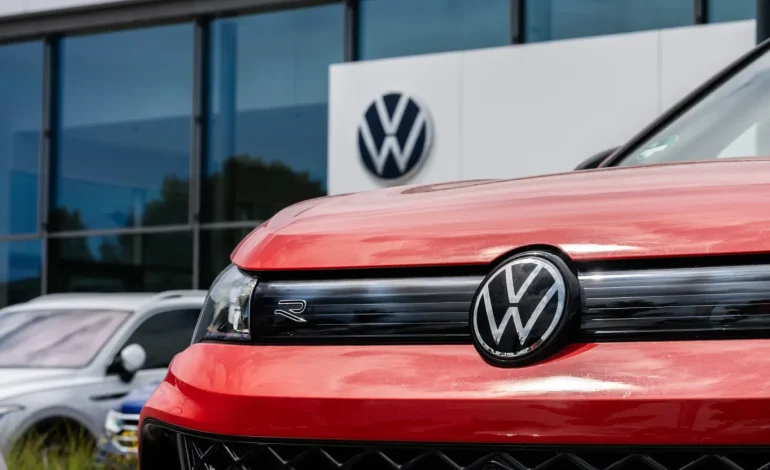
Volkswagen, BMW and Mercedes-Benz Group were each down between 2.5% and 3%. Porsche slipped more than 3%. Ferrari’s Milan-listed shares fell roughly 2.2%, hitting a 52-week low. Stellantis – owner of brands like Jeep, Dodge, Fiat, Chrysler and Peugeot – was also caught in the sell-off, down around 1.8%.
The sell-off follows Trump’s announcement over the weekend that the US would impose 10% tariffs on all goods from eight European countries starting Feb. 1, rising to 25% by June 1 if the US is not allowed to purchase Greenland. The countries named include the UK, Denmark, Norway, Sweden, France, Germany, the Netherlands and Finland – all NATO members.
Greenland, a self-governing territory within the Kingdom of Denmark, has become a fixation for Trump, who argues that US control of the mineral-rich Arctic island is essential for American security and to counter Russian and Chinese influence. Danish and Greenlandic leaders have repeatedly rejected the idea.
Markets, meanwhile, are focused less on geopolitics and more on what tariffs would mean in practice – especially for autos.
The automotive sector is widely viewed as one of the most tariff-sensitive industries in the world. Car manufacturing relies on deeply globalized supply chains, with parts crossing borders multiple times before a vehicle is finished. Europe’s biggest automakers also depend heavily on North America, both as a production base and as a sales market.
That makes them sitting ducks when trade tensions flare.
“Our view is that ultimately tariffs are a blunt tool that seldom really works for any sort of length of time,” Rob Brewis, director and investment manager at Aubrey Capital Management, said Monday. “It’s a very global economy these days and people find a way around it – even if they can’t talk themselves out of them.”
Brewis noted that tariffs caused a major stir when Trump last leaned on them, but their shock value tends to fade with repetition. Even so, he singled out autos as a sector that can’t easily shrug off the pressure.
“The car sector is already facing huge threats from Chinese players,” he said, adding that fresh trade barriers only complicate an already difficult environment for European manufacturers.
The tariff threat has triggered a rapid political response across Europe. European Council President Antonio Costa announced that leaders of all 27 EU member states will hold an “extraordinary meeting” later this week to discuss the situation.
European leaders have been unusually blunt in their reaction. Costa said recent talks reconfirmed Europe’s “strong commitment” to international law, NATO-based Arctic security, and solidarity with Denmark and Greenland. He also warned that tariffs would undermine transatlantic relations and violate existing EU-US trade understandings.
Behind the scenes, EU officials are weighing whether to activate the bloc’s anti-coercion instrument, often dubbed the “trade bazooka.” The mechanism would allow the EU to retaliate with sweeping measures, including restrictions on US goods, services, investments, and even intellectual property protections. It has never been used before – largely because of how disruptive it would be.
French President Emmanuel Macron has floated invoking the instrument if the tariffs go ahead, while other leaders, including Ireland’s prime minister, have urged caution, arguing it may be premature to reach for such a powerful tool.
Trump, for his part, has shown little sign of backing off. In a letter sent to Norwegian Prime Minister Jonas Gahr Støre, he doubled down on his Greenland argument, questioning Denmark’s claim to the territory and asserting that only the US can truly secure it.
The president has also framed the tariffs as leverage rather than punishment, saying they would remain in place until the US is able to purchase Greenland. He has even suggested that military force could be considered if other options fail – comments that have further unnerved European capitals.
For investors, the immediate concern isn’t whether the US actually ends up owning Greenland, but whether this marks the start of another transatlantic trade war. Trade between the EU and the US is worth nearly $2 trillion annually, making it the largest bilateral economic relationship in the world.
Autos sit right at the center of that relationship – and right in the firing line when tariffs enter the conversation.
Monday’s sell-off suggests markets are taking Trump’s threats seriously, even if many analysts remain skeptical that tariffs of this scale would last. For Europe’s carmakers, already grappling with electric vehicle transitions, Chinese competition, and slowing global demand, the prospect of new US trade barriers is one more headache they can do without.
And for now, at least, that anxiety is showing up clearly on the stock ticker.

The latest news in your social feeds
Subscribe to our social media platforms to stay tuned