





With input from the Economist, BBC, the Guardian, Bloomberg, Reuters, and the Financial Times.
China announced that it officially hit its GDP growth target for last year – a milestone many analysts thought was in jeopardy after a rough couple of years. But the way Beijing got there has plenty of people scratching their heads.
The economy expanded about 5.2% in 2025, comfortably above the government’s official goal of “around 5%.” That might sound like a victory lap, especially after a difficult stretch marked by a property slump, sagging domestic demand and lingering fallout from trade tensions with the US Yet the drivers of that growth are raising eyebrows as much as the headline number itself.
The numbers from Beijing’s National Bureau of Statistics show a fairly broad-based uptick, with fourth-quarter growth clocking in at about 4.5% year-on-year – just ahead of market forecasts. That suggests the economy didn’t collapse at the end of the year even as Western policymakers braced for a slowdown.
On the face of it, that’s impressive. But dig a little deeper and the picture gets a bit weirder:
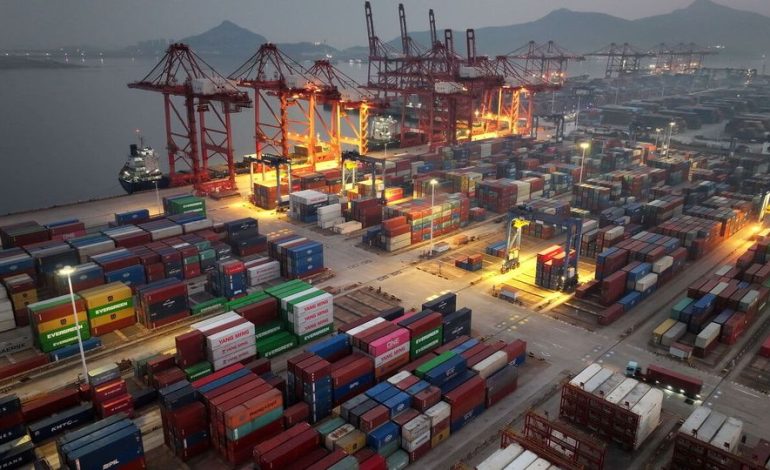
- Exports played a bigger role than expected, in part because China’s factories turned into the world’s go-to supplier as global markets reconfigured. A flurry of shipments to the US – itself dealing with tariff battles and frictions with European allies – helped lift Chinese export figures. Bloomberg notes that some of this boost was almost accidental, a by-product of trade flows rerouting around global trade tensions rather than pure demand growth.
- Domestic demand, the engine Beijing says it wants to rely on, remains subdued. Retail sales, consumer confidence and fixed-investment growth all lag behind the headline GDP number, pointing to a spending drought at home. That’s partly due to the ongoing woes in the property sector, where years of debt-fueled construction have left developers strapped and buyers wary.
- Infrastructure and state-driven spending keep afloat parts of the economy that otherwise might have stalled. That’s a pattern critics have noted for years: Beijing pushes big projects when private sector activity flags, and then counts this activity as growth just the same.
Observers say China’s growth number doesn’t feel like a normal boom – more like a feat of juggling priorities:
- The export surge isn’t purely organic. Yes, overseas buyers are still buying Chinese goods, but some of that is because global supply chains are adjusting to trade barriers – and in a sense China benefits even when the rest of the world is frustrated by it.
- Consumers still seem cautious. Despite years of prophecy that China’s consumption would power its next stage of growth, spending hasn’t taken off as hoped. Retail sales growth is okay, but not starring in the growth story.
- Property isn’t the hero Beijing wanted it to be. After a series of defaults and liquidity crunches at major developers, real estate hasn’t rebounded in the way officials and investors hoped. The housing market still carries a hangover from its previous excesses.
Put together, that means China hitting “around 5%” feels less like a well-balanced expansion and more like a patchwork – where exports fill in for weakness in consumption and private investment.
Economists are split on how sustainable this growth is. Some argue that China’s ability to meet official benchmarks – even in tough conditions – shows strength. Others say the structure of the growth matters more than the number itself.
“What we’re seeing is a very export-heavy uptick, backed by state stimulus and targeted support,” one analyst told The Economist.
That’s not necessarily a bad thing, but it’s not the rebalancing toward domestic consumption Beijing has been trying to engineer for years.
Meanwhile, the BBC noted that while China did hit its target, it did so in a way that leaves uncertainty over whether the economy is truly healthy or just task-oriented – ticking boxes with heavy policy help rather than vibrant private sector growth.
Looking ahead, China’s leadership faces a tricky balancing act:
- Can domestic demand ever catch up with export-led strength? If consumers stay cautious, policymakers may have to lean even harder on infrastructure and public spending – which raises questions about long-term debt and sustainability.
- Will external demand remain strong if global trade tensions flare again? The weird irony of China’s export uptick is that US tariffs and geopolitical friction – especially around places like Greenland – may be unintentionally funneling business toward Chinese factories. But that can’t last forever if protectionist policies intensify.
- How much should we trust headline GDP anyway? Many economists argue that China’s growth figures deserve a side-eye simply because of the mix of state intervention, statistical smoothing and the unusual economic backdrop.
In the end, hitting the GDP target matters politically – it’s a feather in Beijing’s cap after a rough patch. But the way China got there – export-led, uneven and propped up by policy – is what’s really got the markets and analysts talking.



The latest news in your social feeds
Subscribe to our social media platforms to stay tuned