





The original story by David Madison for Cowboy State Daily.
Federal regulators just slammed the brakes on what would have been the biggest railroad merger in US history – a move that gives Wyoming coal producers some much-needed breathing room.
Last week, the Surface Transportation Board unanimously rejected a proposed merger between Union Pacific and Norfolk Southern, a deal critics warned would squeeze competition and drive up shipping costs for Wyoming coal. The decision sends the rail giants back to the drawing board and, for now, keeps the status quo intact.
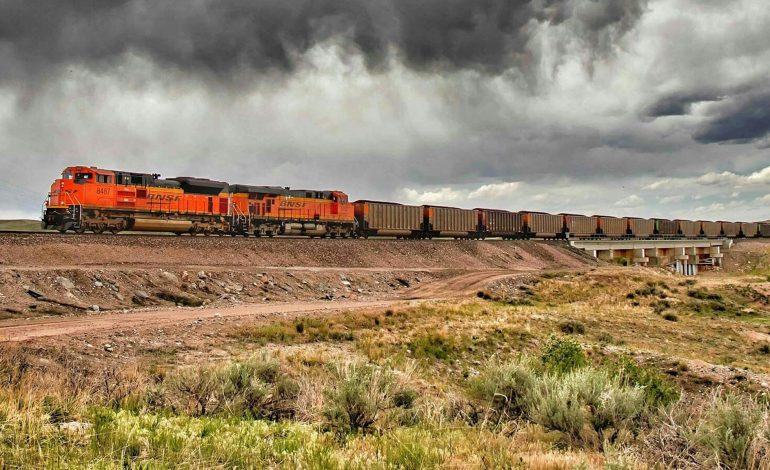
That matters in places like the Powder River Basin, where long coal trains roll out daily, headed for power plants thousands of miles away. One of the biggest destinations is Plant Scherer near Macon, Georgia – the largest coal-fired power plant in North America, with four massive units capable of generating more than 3,500 megawatts.
Today, that coal typically rides BNSF Railway tracks across the West before being handed off to Norfolk Southern for the final leg to Georgia. Union Pacific wanted to change that equation by merging with Norfolk Southern, creating a single rail line stretching coast to coast.
Opponents said that kind of consolidation would leave Wyoming coal producers with fewer shipping options – and less leverage when it comes to rates.
The Surface Transportation Board agreed something was missing. In its ruling, the agency said the nearly 7,000-page merger application was incomplete and lacked key information, including future market-share projections and a full copy of the merger agreement.
The board also flagged a missing section – known as Schedule 5.8 – that spells out when Union Pacific could walk away from the deal.
Union Pacific says it plans to comply. A spokesperson said the company will provide the additional information requested by regulators. The railroads have until Feb. 17 to say whether they’ll refile and until June 22 to submit a revised application.
BNSF, one of the merger’s most vocal critics, welcomed the decision.
“We view it as anti-competitive,” said Zak Andersen, BNSF’s chief of staff and vice president of communications. “This would result in an unprecedented consolidation of market power in our industry.”
Andersen pointed out that the rail industry is already highly concentrated. Four companies handle about 90% of US freight.
“If this merger goes through, you go from four options to two,” he said. “And that’s probably not a good thing for shippers.”
For Wyoming coal, the stakes are especially high. Andersen explained that plants like Scherer are already “captive” customers, served directly by just one railroad at the destination end.
“Right now, either UP or BNSF can haul that coal to an interchange point,” he said. “After the merger, that flexibility likely goes away.”
He was blunt about where he thinks the deal came from.
“This didn’t start with customers asking for it,” Andersen said. “It started with Wall Street.”
His concern is that if promised growth doesn’t materialize, the merged railroad would lean on captive customers – like coal producers – to make up the difference.
“When that happens, rates go up,” he said. “And then prices go up for consumers.”
The merger also faces unusually strict regulatory scrutiny. The Surface Transportation Board’s current rules require companies not just to preserve competition, but to prove they’ll actually improve it – a high bar that’s never been cleared before.
“How does a railroad with that much market power show it enhanced competition?” Andersen asked.
There’s also history to consider. Major rail mergers have often come with serious service disruptions. Andersen pointed to the late-1990s Union Pacific–Southern Pacific merger, which resulted in widespread delays and required federal intervention.
“When one railroad has problems, it spreads fast,” he said. “That worries us.”
University of Wyoming economist Rob Godby said the board’s decision reflects just how complicated the deal is.
“There wasn’t a complete analysis of how this would affect regional rail market concentration in the future,” Godby said. “This is going to take a long time to sort out.”
He noted that other railroads and shippers have raised concerns about higher rates, reduced service and fewer alternatives. There’s also worry that approving one mega-merger could trigger others, reshaping the entire industry.
Still, Godby was cautious about predicting direct impacts on Wyoming coal.
“I don’t expect any effects from the merger as proposed,” he said, noting that UP and BNSF already jointly serve the Powder River Basin.
Any threat to that access, he added, would likely doom the deal outright.
Union Pacific and Norfolk Southern have argued their merger would create the nation’s first true transcontinental railroad, boosting efficiency and competing more effectively with long-haul trucking. Union Pacific CEO Jim Vena has called it “transformational,” claiming it would lower prices and improve service.
The companies also tout thousands of letters of support and studies suggesting single-line rail service is significantly cheaper than current interline shipping.
For now, though, none of that is enough.
With regulators saying no – at least for the moment – Wyoming coal producers and their customers still have multiple rail options. And that massive power plant in Georgia will keep getting its fuel the same way it has for years.
As Andersen put it, Wyoming has seen what happens when rail service falters.
“We know the impact that has on the mines,” he said. “That’s why this matters.”


The latest news in your social feeds
Subscribe to our social media platforms to stay tuned