

Russia Signals a Rift Between Armenia’s State and the Apostolic Church – Here’s What’s Going On
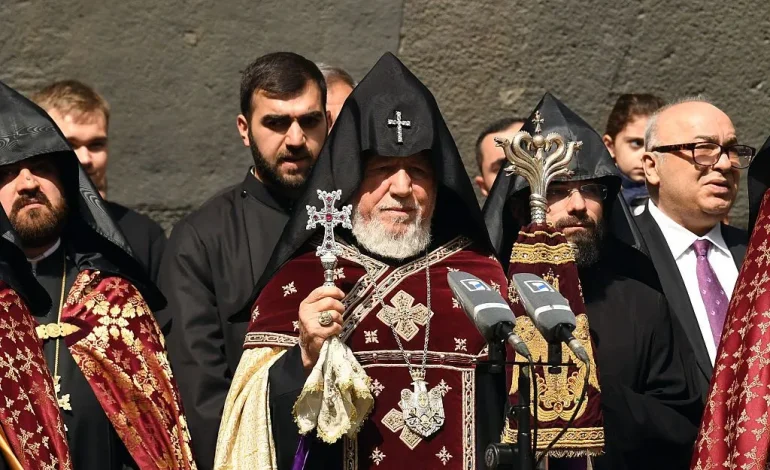

A quiet but important geopolitical drama is unfolding in Yerevan, and it’s drawing sharp warnings from Moscow: Russia is publicly flagging tensions that it sees emerging between the Armenian state and the Armenian Apostolic Church – and is tying those to broader shifts in Armenia’s foreign policy direction. This is more than just diplomatic chatter; it reflects deep anxieties in Moscow about its place in Armenia’s political and cultural landscape.
Here’s what’s happened, what’s being said, and why it matters – told in a clear, no-nonsense way.
In recent statements, top Russian officials – including Foreign Minister Sergey Lavrov – have made an unusual point of saying that Armenia risks damaging its relationship with the Armenian Apostolic Church if it continues down a path of closer alignment with Western institutions.
According to TASS, Lavrov blasted what he sees as Armenia’s creeping adoption of European values and standards, warning that “EU standards cannot be adopted while remaining a member of the Eurasian Economic Union (EAEU).” That’s essentially Russia saying: pick one – closer ties with the EU or sticking with Russia’s economic bloc.
In that context, Moscow has framed recent Armenian developments – including legal and political decisions affecting the Church – as potentially harmful to Armenia’s social cohesion. The warnings suggest a worry that Yerevan is drifting culturally as well as strategically.
The Armenian Apostolic Church is not just any religious institution in Armenia – it’s a central pillar of national identity and history. So when political leaders and the Church start clashing, it gets serious attention at home.
According to local reporting from news.am, debates have intensified around the Church’s role in public life and its influence on policy. These aren’t just theological squabbles but are tied to debates over Armenia’s geopolitical orientation – something that can ripple across society.
It’s notable that this friction isn’t happening in a vacuum. Armenia has increasingly courted the European Union, signing agreements and exploring deeper ties with Brussels. In Moscow’s view – bluntly expressed by Russian diplomats – this tilt toward EU standards and values could undermine the traditional influence of the Armenian Apostolic Church and weaken the historical Russia–Armenia partnership.
Lavrov went beyond cultural issues. In remarks reported by APA.az, he stressed that Armenia can’t expect to adopt EU economic and legal standards while remaining in Russia’s Eurasian Economic Union – a clear signal that Moscow believes there’s an incompatibility between closer EU ties and existing Russian-led structures.
That’s a message meant for two audiences:
- Domestic Armenian elites, who are being reminded that pivoting West could come with costs.
- Foreign watchers and investors, who could interpret this as Russia trying to assert leverage over Armenia’s policy choices.
When a powerful neighboring state publicly warns about the internal balance between the state and a major religious institution, that’s more than diplomatic caution – it’s an attempt to shape narratives both inside Armenia and beyond.
Here’s the key thing: Russia’s warnings mix genuine concern with strategic signaling.
The Armenian Apostolic Church is a deeply rooted institution that does wield social and cultural power. Any changes to its position or relationship with the state can have real consequences for domestic stability and national identity.
For Armenians, the immediate question isn’t just about Russia or Europe – it’s about how the country defines its own future. Will Armenia pursue closer ties with Brussels even if that strains ties with Moscow? Will the Armenian government attempt to recalibrate its relationship with the Apostolic Church to defuse external criticism? And how will ordinary Armenians respond to a great-power tug-of-war wrapped in talk of tradition and identity?
For Moscow, the message is clear: don’t underestimate the soft power of culture and religion, and don’t assume Armenia’s moves toward Europe are purely technical or benign.
Whether this rhetoric will translate into concrete pressure – like economic consequences, political leverage, or shifts in diplomatic relations – is still unclear. But the fact that Russia is so publicly framing this as a serious issue suggests it sees Armenia’s internal dynamics as strategically significant.
In the months ahead, watch not just what Armenia’s leaders do abroad, but how they manage their relationship with one of the nation’s oldest and most powerful institutions – the Armenian Apostolic Church – in the face of intense geopolitical scrutiny.


The latest news in your social feeds
Subscribe to our social media platforms to stay tuned