




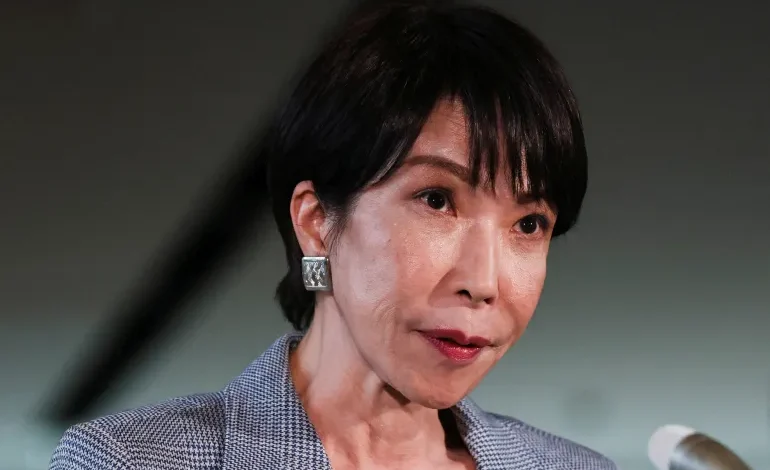

Japan’s Prime Minister Sanae Takaichi has said she will dissolve parliament on Friday and call a general election, seeking a popular mandate for her spending plans and broader policy agenda just three months after taking office.
“Today, I, as the prime minister, have decided to dissolve the lower house on January 23,” Takaichi told reporters on Monday, confirming that voters will head to the polls on February 8.
The snap vote will decide all 465 seats in the lower house and mark the first electoral test for Takaichi, Japan’s first female prime minister. The move is widely seen as an attempt to capitalise on relatively strong approval ratings, tighten her grip on the ruling Liberal Democratic Party (LDP) and stabilise her coalition’s fragile majority.
Calling an early election also allows Takaichi to seek public backing for higher government spending at a time when the cost of living dominates voter concerns. A poll released last week by public broadcaster NHK found 45 percent of respondents citing rising prices as their top worry, far ahead of diplomacy and national security, which ranked second at 16 percent.
NHK reported that Takaichi had been weighing the timing of an election around her diplomatic schedule. Earlier this month, she hosted South Korean President Lee Jae Myung in her hometown of Nara, where the two discussed security cooperation and economic ties.
Markets reacted positively to the prospect of a snap vote. Tokyo shares jumped more than 3 percent on Tuesday amid speculation that Takaichi was moving to lock in support while her poll numbers remain strong.
A clearer mandate could also strengthen Takaichi’s hand in dealing with an increasingly tense relationship with China, according to the Yomiuri Shimbun newspaper.
Ties with Beijing have deteriorated sharply since Takaichi suggested in November that Japan could intervene militarily if China were to attack Taiwan, the self-governed island Beijing claims as its own. In response, China announced sweeping restrictions on exports to Japan of so-called dual-use goods with potential military applications and has reportedly curtailed shipments of rare-earth materials critical for industries ranging from electric vehicles to missile production.
Despite the chill, Takaichi said last month that she was “always open” to dialogue with China.
Regional diplomacy adds another layer of complexity. South Korea’s new administration under Lee has stressed its aim of “restoring” ties with China, Seoul’s largest trading partner, while maintaining close relations with Japan and the United States. That approach marks a contrast with Lee’s predecessor, Yoon Suk-yeol, who leaned more decisively towards Washington and Tokyo and took a tougher public line on Beijing’s stance on Taiwan.



The latest news in your social feeds
Subscribe to our social media platforms to stay tuned