






The New York Times, CNBC, FOX News, CNN, and AP contributed to this report.
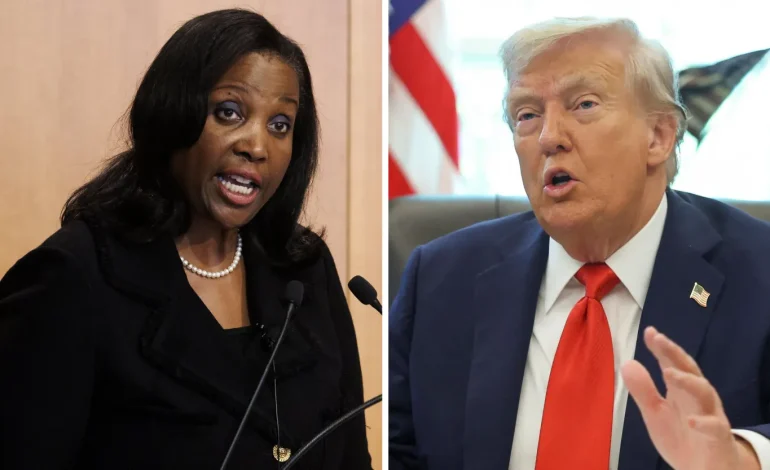
The Supreme Court on Wednesday gave strong signals it’s not eager to let President Donald Trump immediately fire Federal Reserve Governor Lisa Cook – a move that several justices warned could rattle the Fed’s long-standing independence and spook financial markets.
During nearly two hours of oral arguments, justices across the ideological spectrum pressed the Trump administration on why Cook should be removed now, based on unproven allegations that she committed mortgage fraud before joining the Fed. Several appeared skeptical that the claims were serious enough – or far enough along – to justify such a drastic step.
If the court ultimately decides to keep Cook in her job while the case plays out, Trump’s broader effort to reshape the Fed would be put on ice for the time being.
At the heart of the case is whether Trump can fire a Fed governor “for cause,” as allowed under the 1913 law that created the central bank – and what exactly “cause” means. No president has ever tried to fire a sitting Fed governor in the institution’s 112-year history.
Trump announced last August that he was removing Cook, citing claims that she improperly listed properties as primary residences on mortgage applications before she joined the Fed in 2022. Cook denies any wrongdoing and has not been charged with a crime. Lower courts blocked her firing, and the administration appealed to the Supreme Court, asking for an emergency green light to remove her immediately.
That request ran into stiff resistance Wednesday.
Justice Brett Kavanaugh, often a swing vote in high-profile cases, warned that adopting the administration’s argument could “weaken, if not shatter, the independence of the Federal Reserve,” opening the door for future presidents to fire Fed officials at will. Justice Amy Coney Barrett echoed concerns about due process, questioning why Cook wasn’t given a clearer chance to respond before Trump moved to fire her – via social media.
Even Justice Samuel Alito, a frequent ally of Trump’s legal positions, questioned the rush. He asked why the executive branch and courts were handling the matter so hastily when the allegations had not been fully developed.
Several justices suggested the case may be better suited for further fact-finding in lower courts, rather than an immediate Supreme Court intervention. That approach would likely leave Cook in place for now – a result that would freeze Trump’s push to remake the Fed board as he continues to press for sharply lower interest rates.
The case comes as the administration has escalated its attacks on the central bank. Earlier this month, the Justice Department opened a criminal investigation into Fed Chair Jerome Powell over cost overruns tied to a renovation of the Fed’s headquarters. Powell has publicly pushed back, suggesting the probe is politically motivated retaliation for the Fed’s refusal to cut rates faster.
Powell, whose term as chair ends in May, attended Wednesday’s arguments, as did former Fed Chair Ben Bernanke – a visible reminder of the stakes. All three living former Fed chairs, along with former Treasury secretaries, filed briefs urging the court not to allow Cook’s removal, warning it would undermine confidence in US monetary policy.
The Trump administration insists the courts have no business second-guessing the president’s judgment. Solicitor General D. John Sauer argued that Trump identified valid “cause” for firing Cook and that any procedural flaws should not result in her reinstatement.
Cook’s legal team pushed back hard, calling the mortgage fraud claims a pretext for policy disagreements – namely, her support for Powell’s cautious approach to interest rates. Her lawyer, Paul Clement, told the justices the Fed is a “uniquely structured, quasi-private entity” that Congress intentionally insulated from political pressure.
“There’s simply no reason to abandon over 100 years of central bank independence on an emergency application,” Clement said.
Lower courts have agreed with Cook so far. A federal district judge ruled that conduct predating her time at the Fed cannot qualify as “cause,” and the DC Circuit upheld that decision, emphasizing that Fed governors are not meant to serve at the president’s pleasure.
The Supreme Court’s conservative majority has previously sided with Trump in cases expanding presidential power over independent agencies. But several justices suggested Wednesday that the Fed may be different – both because of its unique structure and its critical role in managing the economy.
The justices are expected to rule in the coming weeks or months. Even a narrow decision allowing Cook to remain in her role during continued litigation would be a setback for Trump, delaying his efforts to gain more influence over interest rate policy.
Outside the court, there was little fanfare. Only one demonstrator stood on the steps, holding a handwritten sign that read:
“Keep the Federal Reserve independent.”
In a statement after the hearing, Cook said the case boils down to a fundamental question: whether the Fed will set interest rates based on evidence and independent judgment, or bend to political pressure.
“For as long as I serve at the Federal Reserve,” she said, “I will uphold the principle of political independence in service to the American people.”

The latest news in your social feeds
Subscribe to our social media platforms to stay tuned