


Montana Bison Dispute Raises Fears they Could Be Labeled Wildlife – and that’s Bad News for Wyoming Ranchers

The original story by Mark Heinz for Cowboy State Daily.
A fight over bison grazing on federal land in Montana is ringing alarm bells for bison ranchers in Wyoming, who worry it could trigger a much bigger shift: reclassifying bison as wildlife instead of livestock.
If that happens, raising bison in Wyoming could suddenly become illegal.
The concern stems from a recent decision by the Bureau of Land Management to pull grazing leases for bison in Phillips County, Montana. Acting under the direction of Interior Secretary Doug Burgum, the BLM is moving to remove bison from seven federal grazing allotments – about 63,000 acres total – currently used by the conservation group American Prairie.
The agency says American Prairie isn’t managing the animals as livestock, but as wildlife, which would violate the Taylor Grazing Act. That law allows federal grazing only for livestock raised for food, milk or fiber.
The permits allowing bison on those allotments were issued during the Biden administration in 2022. Last Friday, the BLM issued a notice of proposed decision to rescind them. If that decision stands after a 15-day protest period, the land would revert to cattle-only grazing.
At first glance, this looks like a Montana problem. But bison ranchers say the implications could spill over fast.
Beth Saboe, a spokesperson for American Prairie, said the organization’s bison are currently classified as livestock – even though they aren’t raised like a typical meat herd.
“They’re in a gray area,” Saboe said.
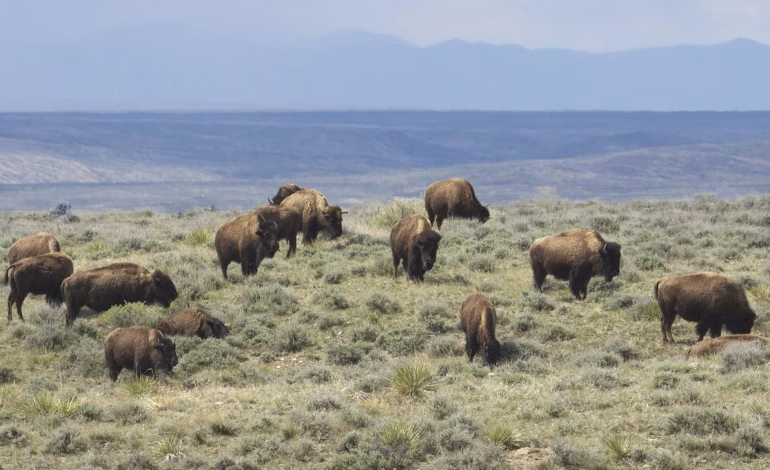
The roughly 940 bison roam within fenced habitat covering about 600,000 acres in Montana’s Missouri Breaks. They aren’t slaughtered for meat, but 20 to 25 animals are harvested each year through a regulated hunting permit system.
If the federal government starts drawing a hard line and labeling bison like these as wildlife, Saboe warned, the ripple effects could be massive.
“This will have unintended consequences,” she said. “It’s a slippery slope.”
That’s especially concerning in Wyoming, where state law prohibits keeping wildlife herds in captivity.
“If bison become wildlife only, that could shut us down,” said Dylan Handrich, owner of Prairie Monarch Bison near Laramie.
Handrich runs 500 to 600 bison on private land and raises them for meat – a market he says is growing nationwide. While the Montana decision wouldn’t immediately affect his operation, he said a broader reclassification would.
“I might have to quit ranching bison,” he said bluntly.
The BLM’s argument hinges on how American Prairie manages its herd. According to the agency, the group is grazing bison for conservation, genetic restoration and public enjoyment – not food production – which puts it outside the scope of the Taylor Grazing Act.
American Prairie counters that bison are the region’s natural grazers and play a key role in restoring prairie ecosystems. The group also says it has been transparent and compliant for decades.
“We’ve had permission to graze bison on some of these allotments for 20 years,” said American Prairie CEO Alison Fox. “We’ve followed the law every step of the way.”
Saboe also pushed back on claims that the group is pushing ranchers out, saying American Prairie leases grass back to more than 25 local ranching families who run about 8,000 head of cattle.
Still, traditional ranching groups are cheering the BLM’s move. The Montana Stockgrowers Association and others say removing bison returns the allotments to their original purpose and supports local cattle producers.
Handrich said the situation highlights how oddly bison are treated under the law.
“In Yellowstone, they’re wildlife. On my ranch, they’re livestock,” he said. “Some processors even call them exotic animals.”
On his operation, he said, bison are vaccinated, managed and regulated just like cattle.
“They’re native grazers. They build soil. They’re made for Wyoming winters,” he said.
And if wild horses are allowed on BLM land?
“Why not give bison that same status?” he asked.
For now, the fight is centered in Montana. But Wyoming ranchers are watching closely, worried that a federal line drawn there could redraw the rules at home.



The latest news in your social feeds
Subscribe to our social media platforms to stay tuned