


CNBC and Business Insider contributed to this report.
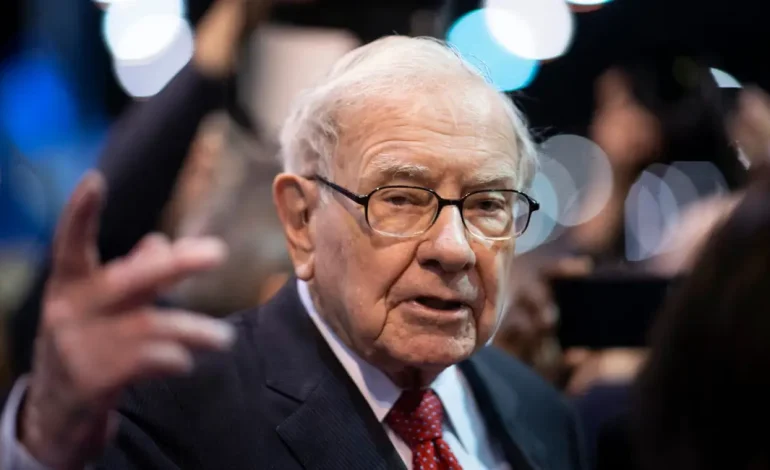
Berkshire Hathaway has taken a clear step toward undoing one of Warren Buffett’s rare investing stumbles — and it’s happening under new CEO Greg Abel’s watch.
In a regulatory filing on Wednesday, Berkshire registered its entire 27.5% stake in Kraft Heinz, a move that gives the conglomerate the option to sell down or fully exit its position in the struggling food giant. Berkshire is Kraft Heinz’s largest shareholder, owning about 325 million shares worth roughly $7.3 billion.
The market didn’t love the news. Kraft Heinz shares slid as much as 7.5% during Wednesday’s trading.
While the filing doesn’t mean a sale is imminent, it sends a strong signal: Abel appears ready to move on from an investment that has long stood out as a blemish on Buffett’s otherwise legendary record.
Kraft Heinz was born in 2015 when Berkshire teamed up with Brazil’s 3G Capital to merge Kraft Foods and H.J. Heinz. At the time, it was billed as a powerhouse of iconic American brands. Instead, shifting consumer tastes, higher costs and years of sluggish growth dragged the company down. Since the merger, Kraft Heinz shares are down roughly 70%, even after factoring in billions paid out in dividends.
Last year alone, Berkshire took a $3.8 billion writedown on the value of its stake.
“This looks like Abel wanting to clean up and streamline the portfolio early in his tenure,” said Greggory Warren, a senior equity analyst at Morningstar. “This move shouldn’t really surprise anyone.”
The timing also overlaps with Kraft Heinz’s own reset. The company is in the middle of planning a breakup that would split the business into two: one focused on sauces, spreads and shelf-stable meals, and another built around North American staples like Oscar Mayer meats, Kraft Singles and Lunchables.
Buffett himself has been blunt about how the original deal turned out.
“It certainly didn’t turn out to be a brilliant idea to put them together,” Buffett told CNBC last year. “But I don’t think taking them apart will fix it.”
While the registration filing gives Berkshire flexibility to sell, analysts caution it doesn’t guarantee anything will happen right away. Stifel noted that Berkshire wouldn’t need to disclose transactions until its next quarterly filing, likely in mid-May.
If Berkshire does sell the entire stake, it may come at a cost. Morningstar estimates the shares would likely need to be sold at about a 10% discount, translating to a realized loss of roughly $1.3 billion.
Still, the move highlights a shift in tone under Abel, who officially took over as CEO this year. Long seen as more hands-on than Buffett, Abel has signaled he plans to stick to Buffett’s long-term, value-focused philosophy — but that doesn’t mean holding onto underperformers forever.
3G Capital, once a key partner in the Kraft Heinz deal, quietly exited its position in 2023 after years of trimming its stake.
Now, it appears Berkshire may be preparing to do the same — finally closing the book on a deal that even Buffett has admitted didn’t go as planned.


The latest news in your social feeds
Subscribe to our social media platforms to stay tuned