



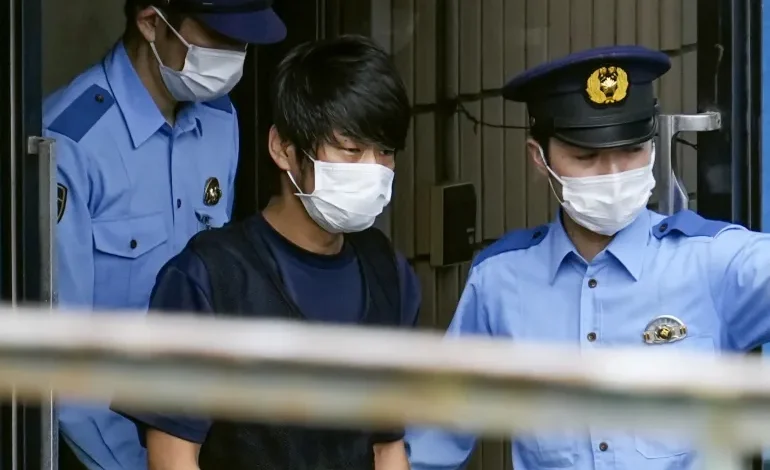

More than three years after the killing of Shinzo Abe stunned Japan and the world, the man who assassinated the country’s longest-serving postwar prime minister has been sentenced to life in prison.
A court in the city of Nara on Wednesday handed down the sentence to Tetsuya Yamagami, 45, who admitted to shooting Abe dead in broad daylight in 2022, an act that shattered Japan’s sense of political and public security in a country where gun violence is almost unheard of.
Judge Shinichi Tanaka delivered the ruling, siding with prosecutors who had argued that the murder was “unprecedented in our post-war history” and carried “extremely serious consequences” for Japanese society.
In Japan, a life sentence technically allows for parole, but legal experts note that many inmates serving such terms die in prison.
Prosecutors said Yamagami was driven not by personal animosity toward Abe alone, but by a desire to publicly discredit the Unification Church. According to the prosecution, Yamagami believed that killing a figure as prominent as Abe would force national attention onto the church and fuel public backlash.
“Yamagami thought if he killed someone as influential as former prime minister Abe, he could draw public attention to the Church and fuel public criticism of it,” a prosecutor told the court.
Yamagami’s defence team had pushed for a maximum sentence of 20 years, arguing that his actions were shaped by deep personal trauma, including severe financial hardship after his mother donated her life savings to the church.
Public interest in the case remained intense to the end, with people lining up early on Wednesday morning for tickets to enter the courtroom.
The killing did far more than end Abe’s life. It ripped open long-suppressed scrutiny of the relationship between Japan’s ruling Liberal Democratic Party and the Unification Church, an organisation widely viewed by critics as a cult.
An internal LDP review later found that more than 100 lawmakers had ties to the church, triggering public anger and contributing to a sharp erosion of trust in the party, which has governed Japan almost continuously since World War II.
Japanese media reported that Yamagami told the court he targeted Abe because the former prime minister had sent a video message to an event linked to a church-affiliated group, a symbolic act that, in Yamagami’s view, legitimised the organisation.
Founded in South Korea in 1954, the Unification Church is known globally for its mass weddings and has long relied on Japanese followers as a major source of funding.
Abe himself remained a polarising figure at home but was a heavyweight on the global stage, particularly in his close personal relationship with US President Donald Trump. Abe was the first foreign leader to meet Trump after his 2016 election victory, and the two cultivated a highly visible rapport.
Abe served a total of 3,188 days as prime minister across two terms before resigning in 2020 for health reasons. His political legacy still looms large in Tokyo. His former protégé, Sanae Takaichi, now leads both the LDP and the government, though the party’s grip on power has weakened following recent electoral losses.



The latest news in your social feeds
Subscribe to our social media platforms to stay tuned