






The original story by
Wyoming lawmakers hadn’t even finished their first round of budget markups before the reactions started flying – and they weren’t subtle.
From opinion columns to Facebook posts, critics and supporters alike weighed in on the Legislature’s early edits to Gov. Mark Gordon’s $11 billion biennial budget, with words like “bloodbath,” “meat axe,” and “sustainable” getting tossed around depending on who was talking.
The first draft coming out of the Legislature’s Joint Appropriations Committee (JAC) made deep cuts to some big-ticket items, including the Department of Health, the University of Wyoming, and proposed state employee wage increases – setting off a political firestorm.
Rep. John Bear (R-Gillette), who co-chairs the JAC and is closely aligned with the Wyoming Freedom Caucus, defended the cuts as a necessary course correction.
“This is a sustainable fiscal path,” Bear said.
Not everyone saw it that way.
Former House Speaker Albert Sommers called the budget draft “a blood bath for Wyoming’s future,” while another former speaker, Tom Lubnau, said lawmakers had “taken a meat axe to the state budget.”
Gov. Gordon piled on soon after, urging legislators to “reject this demolition budget” when the session begins Feb. 9.
Freedom Caucus members fired back just as quickly. Rep. Ann Lucas (R-Cheyenne) responded that families and businesses are tightening their belts due to inflation and economic uncertainty – and government should do the same.
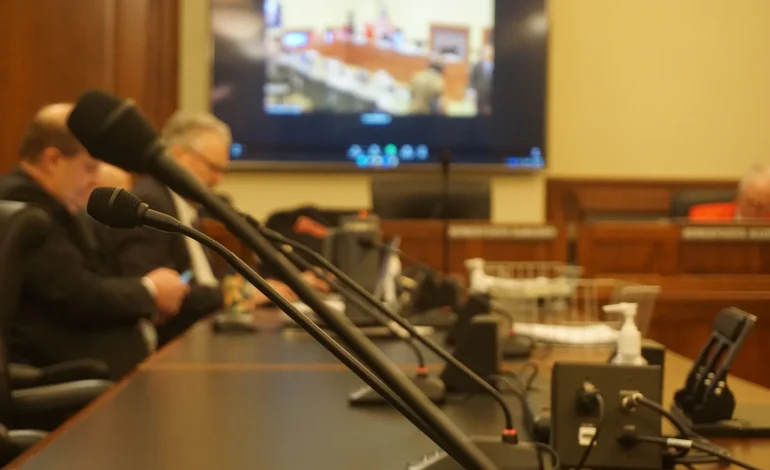
During last week’s JAC meetings, lawmakers voted to reduce or eliminate funding for:
- The University of Wyoming;
- The Department of Health;
- The Department of Family Services;
- Portions of proposed state employee raises.
At the same time, the committee boosted funding for certain roles, including state troopers, snowplow drivers, and the developmental disabilities waiver program within the health department.
Perhaps the most eye-opening move: lawmakers voted to defund and dismantle the Wyoming Business Council (WBC), the state’s economic development agency. If the move sticks, Wyoming would become the only state in the country without one.
WBC Board Co-Chair Mark Law warned that eliminating the agency could backfire.
“In a small state like Wyoming, less does not become more,” Law said. “The risk is that less becomes zero.”
UW President Ed Seidel echoed similar concerns, saying the proposed cuts – made during a time when state finances aren’t in crisis – would force the university to rethink programs and services.
“It goes against Wyoming’s heritage of prioritizing access to high-quality education,” Seidel wrote to staff, adding that it could make it harder to keep UW “as nearly free as possible.”
For entrepreneurs like Ben Noren, founder of Laramie-based CellDrop Biosciences, the possible loss of the Wyoming Business Council feels personal.
Noren’s company works on cutting-edge stem cell treatments – and he says programs like WBC grants helped make that work possible in Wyoming.
“I’m extremely disappointed and frustrated,” Noren said. “Some people don’t understand the business ecosystem – especially for technical and biotech companies.”
He pushed back against lawmakers’ claims that the WBC “picks winners and losers,” saying heavily regulated industries like biotechnology can’t survive without early support, especially before FDA approval allows products to be sold.
“If you eliminate that support,” Noren said, “you eliminate innovation – and you eliminate incentives to build those businesses here.”
Economic development wasn’t the only area under scrutiny. JAC lawmakers also cut Medicaid reimbursement rate increases for mental health and OB-GYN providers.
Eric Boley, president of the Wyoming Hospital Association, said the money could have helped address serious gaps in care – especially as OB services continue disappearing across the state.
“It would have been helpful,” Boley said, adding that while other funding options are being explored, it’s unclear how quickly those dollars would reach providers.
Lawmakers also added language barring the Department of Health from using general fund dollars for abortions or sex-change operations. Health officials say the practical impact will likely be minimal, since the department rarely pays for abortions and doesn’t provide gender-affirming surgeries.
However, officials noted that in rare, life-threatening pregnancy cases, the cost could now fall on patients themselves.
This is only the opening round. The Legislature hasn’t formally convened yet, and budget numbers – and political pressure – are likely to shift before anything becomes law.
For now, though, Wyoming’s draft budget has already done one thing very effectively: it got people talking – loudly.


The latest news in your social feeds
Subscribe to our social media platforms to stay tuned