



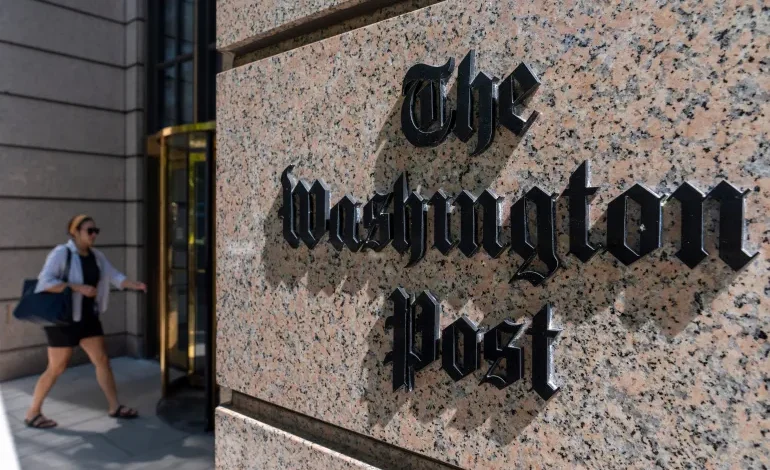

A federal judge has temporarily barred the United States government from reviewing materials seized from The Washington Post reporter Hannah Natanson, handing press freedom advocates a narrow but meaningful win in a case that cuts to the core of First Amendment protections.
The order, issued Wednesday by Magistrate Judge William Porter, prevents federal authorities from filtering through Natanson’s devices until a hearing scheduled for February 6. Porter said the pause would give the Department of Justice time to respond to the Post’s legal challenge.
Natanson is not under investigation. Yet on January 14, agents executed a search warrant at her home under the Donald Trump administration, seizing a sweeping array of her work and personal electronics. Over the past year, Natanson has been reporting on changes inside the federal government, prompting 1,169 new sources to contact her with information.
Press advocates say that context matters. The seizure, they argue, risks exposing years of confidential reporting and undermines long-standing norms designed to shield journalists from government intrusion.
The Justice Department has said the warrant was tied to an investigation of Aurelio Luis Perez-Lugones, a government contractor arrested on January 8 for allegedly removing classified documents. But the scope of what was taken from Natanson’s home went far beyond anything narrowly tailored to that case.
Agents removed her work computer, a Post-issued cellphone, her personal MacBook Pro, a one-terabyte hard drive, a voice recorder and even a Garmin watch.
In court filings, lawyers for the Post argued that the devices contained “years of information about past and current confidential sources and other unpublished newsgathering materials, including those she was using for current reporting”.
“Almost none of the seized data is even potentially responsive to the warrant, which seeks only records received from or relating to a single government contractor,” the complaint said.
The filing added that the six devices contained terabytes of data spanning Natanson’s entire journalism career.
“Natanson’s devices contain essentially her entire professional universe: more than 30,000 Post emails from the last year alone,” it said.
The Post has sued the Justice Department seeking the immediate return of the materials. That case will be heard in federal court in Virginia.
“The outrageous seizure of our reporter’s confidential newsgathering materials chills speech, cripples reporting, and inflicts irreparable harm every day the government keeps its hands on these materials,” the newspaper said in a statement.
“We have asked the court to order the immediate return of all seized materials and prevent their use. Anything less would license future newsroom raids and normalize censorship by search warrant.”
The clash reflects the Trump administration’s broader confrontational posture toward the media. Officials insist they are targeting illegal leaks, not journalism itself.
Attorney General Pam Bondi accused Natanson of “reporting classified and illegally leaked information”, writing on social media that “the leaker is currently behind bars”.
“The Trump Administration will not tolerate illegal leaks of classified information that, when reported, pose a grave risk to our Nation’s national security and the brave men and women who are serving our country,” she said.
White House Press Secretary Karoline Leavitt echoed that position, warning that legal action could extend even to journalists.
“Legal action will be taken against anyone, whether it’s a member of the press or whether it’s an employee for a federal agency, who breaks the law,” she said.
At stake is a constitutional line the courts have guarded for decades. The First Amendment bars the government from making laws “abridging the freedom of speech, or of the press”. While the Supreme Court has allowed limits in cases of a “clear and present danger”, it has repeatedly placed the burden of proof on the government.
The Post itself was a central player in one of the most famous tests of that principle: the 1971 Pentagon Papers case, when the court rejected the Nixon administration’s attempt to block publication of classified documents.


The latest news in your social feeds
Subscribe to our social media platforms to stay tuned