



The US House Foreign Affairs Committee has overwhelmingly voted to advance legislation that would give Congress greater control over exports of advanced artificial intelligence chips, escalating a growing fight between lawmakers and the White House over how aggressively Washington should restrict China’s access to cutting-edge technology.
The bill, known as the AI Overwatch Act, was introduced in December by Representative Brian Mast, a Florida Republican who chairs the committee, after Donald Trump approved shipments of Nvidia’s powerful H200 AI chips to China.
If passed by the full House and Senate, the legislation would give the House Foreign Affairs Committee and the Senate Banking Committee a 30-day window to review — and potentially block — licences allowing the export of advanced AI chips to China and other countries deemed adversaries of the United States.
Those “countries of concern” are defined broadly, extending beyond China to include Russia, Iran, North Korea, Cuba and Venezuela.
The bill would also require the US Department of Commerce to submit full export licence applications to lawmakers, detailing how companies plan to ensure the chips are not used for military, intelligence or surveillance purposes by hostile governments.
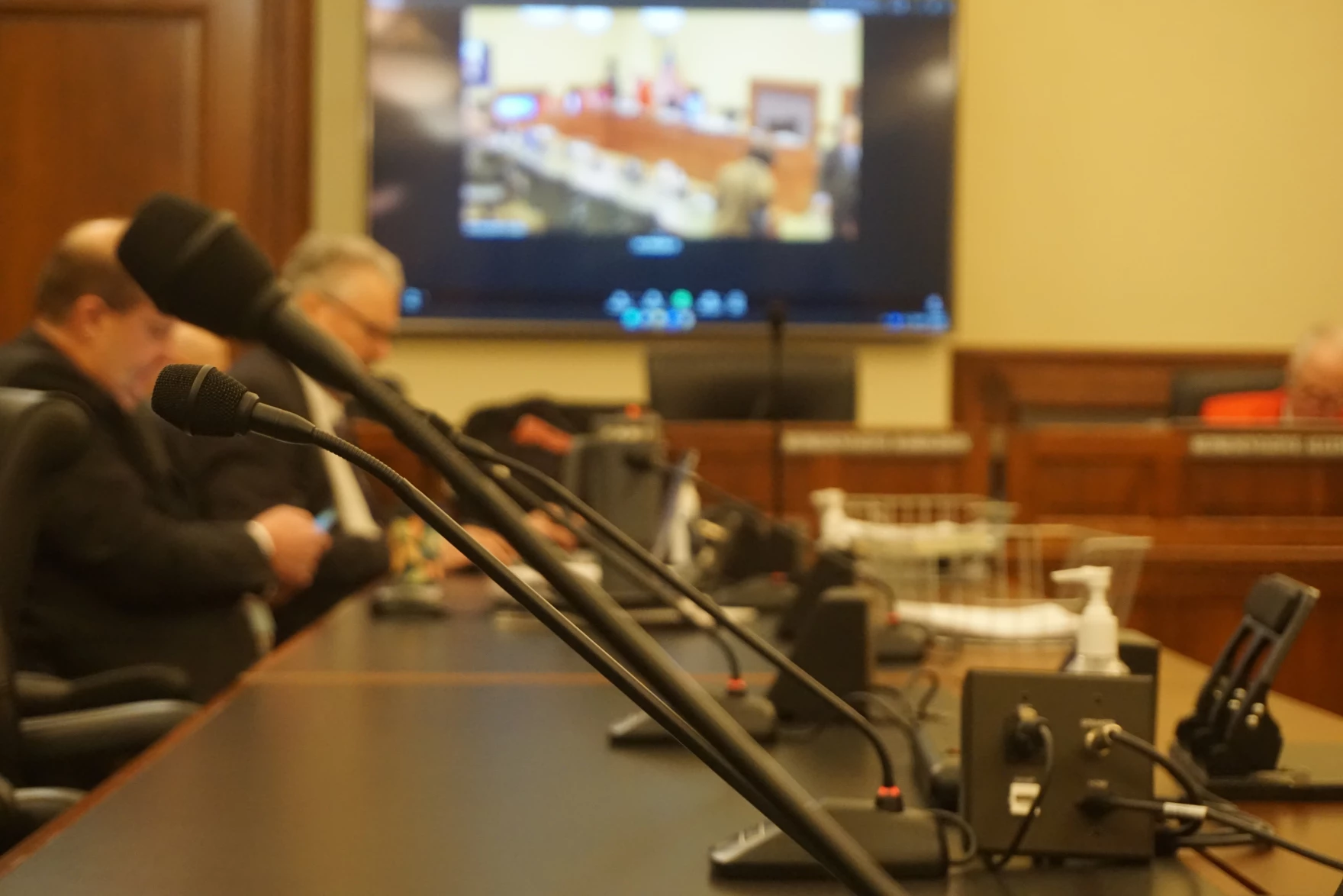
“These advanced chips need to fall under the same oversight as any other military-related system,” Mast told colleagues ahead of Wednesday’s vote. “This is about the future of military warfare.”
Supporters say the legislation gained momentum after a coordinated online campaign last week attacking the bill backfired, hardening congressional support rather than weakening it.
The tech policy group Americans for Responsible Innovation, which has lobbied for the measure, argues the act would “slow China’s progress in developing AI that could rival US capabilities”.
“America must win the AI arms race,” Mast said when he first unveiled the bill.
The push has not been welcomed by the White House or by David Sacks, Trump’s appointed AI and crypto adviser, who has publicly criticised the bill. Neither Sacks nor the White House responded to requests for comment on the committee vote.
Last week, Sacks amplified a post on X from an account called “Wall Street Mav” that accused “Never Trumpers” and former staffers of Barack Obama and Joe Biden of orchestrating the legislation to undermine Trump’s authority and his America First agenda.
The post singled out Dario Amodei, CEO of Anthropic, claiming he hired former Biden administration officials to push for tighter controls.
“Correct,” Sacks replied.
Anthropic declined to comment on the claims or the bill. Amodei, however, has been blunt about the risks of exporting high-end AI chips to China.
“It would be a big mistake to ship these chips,” he said on Tuesday at the World Economic Forum in Davos. “I think this is crazy. It’s a bit like selling nuclear weapons to North Korea.”
Conservative activist Laura Loomer also attacked the bill online, calling it “pro-China sabotage disguised as oversight”.
Committee members brushed off the criticism.
“There are special interest groups out there right now with millions of dollars funded by the very people who will profit off the sale of these chips,” said Representative Michael McCaul, a Texas Republican. “They are waging a social media campaign war against this bill. Shame on them.”
Neither Nvidia nor the US Department of Commerce, which oversees export controls, responded to requests for comment.


The latest news in your social feeds
Subscribe to our social media platforms to stay tuned