



Court Pulls the Plug on Massive Wyoming Gas Project After Clean Air Act Ruling
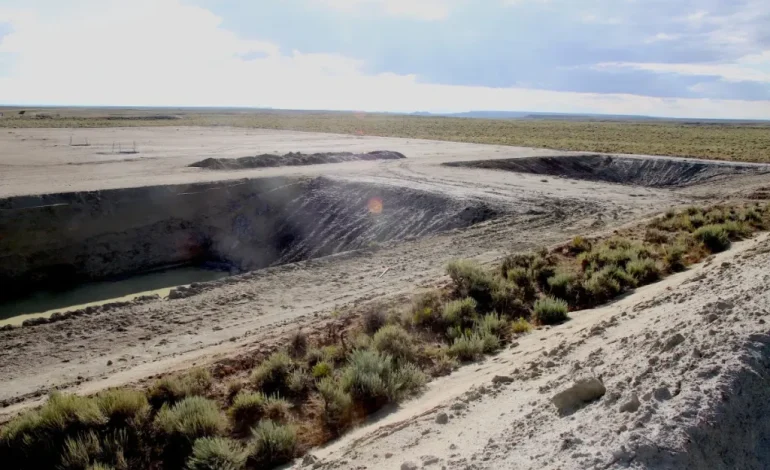

One of Wyoming’s biggest gas projects just hit a major roadblock – eight years after the legal fight began, Oil City News reports.
A federal administrative court has overturned approval for the Normally Pressured Lance (NPL) gas field in the Green River Basin, ruling that the Bureau of Land Management (BLM) violated the Clean Air Act when it signed off on the project. The decision wipes out Jonah Energy’s authorization to drill up to 3,500 wells across roughly 141,000 acres of public land – an area about the size of Zion National Park.
The ruling came from the US Department of the Interior’s Board of Land Appeals (IBLA), which sided with environmental group WildEarth Guardians in a long-running appeal filed back in 2018. While the project survived years of courtroom battles over sage grouse habitat and pronghorn migration – and even won a federal appeals court green light in 2023 – it ultimately stumbled on air quality rules.
At the center of the dispute: ozone pollution. The Green River Basin is already classified as a “nonattainment” area, meaning it fails to meet federal air quality standards for ground-level ozone, a pollutant linked to respiratory problems. Under the Clean Air Act, federal agencies have to prove new projects won’t make that problem worse.
According to the two-judge IBLA panel, BLM didn’t meet that bar. The judges ruled that the agency wrongly treated Jonah Energy’s mobile drilling rigs as exempt from stricter pollution rules meant for “stationary sources.” That exemption significantly shaped the air quality analysis – and ultimately sank the project.
“Because we find error in BLM’s conformity determination, BLM approved the Record of Decision in error,” judges Clifford Stevens and David Gunter wrote in their Jan. 15 decision, formally vacating the approval.
WildEarth Guardians celebrated the ruling as a clear win for public health.
“The Clean Air Act requires federal agencies to prove that their actions won’t worsen air pollution in already polluted areas, and this project didn’t meet that test,” said Rebecca Sobel, the group’s climate and health director.
Jonah Energy, meanwhile, was blindsided. Executive Paul Ulrich said the company stands by its air quality analysis and called the decision “shocking” and “disappointing,” especially after more than a decade of planning and regulatory review.
“We firmly believe it was an excellent decision,” Ulrich said of the original approval. “It balanced the need for development with very restrictive and innovative environmental constraints, particularly on air emissions.”
Wyoming Gov. Mark Gordon also blasted the ruling, calling it “unwarranted and misguided,” and vowed the state would fight back.
“It demonstrates we have more work to do to bring wisdom back to the federal government,” he said.
Ironically, the NPL field has barely been developed so far. Despite authorization for 3,500 wells, Jonah Energy has drilled or started just 14 wells over seven years – about 0.4% of what was approved – largely due to low natural gas prices and ongoing activity in the nearby Jonah Field.
Still, the stakes are high. During planning, Jonah valued the NPL project at nearly $18 billion. The land itself is also ecologically significant, home to large swaths of intact sagebrush habitat, wintering areas for roughly 2,000 sage grouse, and parts of the closely watched Sublette Pronghorn Migration Corridor.
What happens next is unclear. Ulrich said starting a new environmental impact statement from scratch “makes zero sense” and suggested the air quality issue could be fixed without reopening the entire approval. WildEarth Guardians counters that any path forward must fully comply with the Clean Air Act – and possibly trigger additional environmental review under the National Environmental Policy Act as well.
For now, the ruling leaves the future of the NPL field in limbo. Even longtime industry watchdogs say the decision is unusual.
“This has never happened before,” said Upper Green River Alliance director Linda Baker. “Especially to something that’s an ongoing project.”
As one local air quality advocate put it: better air is a win – but the way it all unfolded is hard to wrap your head around.

The latest news in your social feeds
Subscribe to our social media platforms to stay tuned