





The original story by Jackie Dorothy for Cowboy State Daily.
Niobrara County doesn’t have many people – in fact, it has fewer residents than any other county in Wyoming, which already happens to be the least-populated state in the country. But what it lacks in population, locals say it more than makes up for in history.
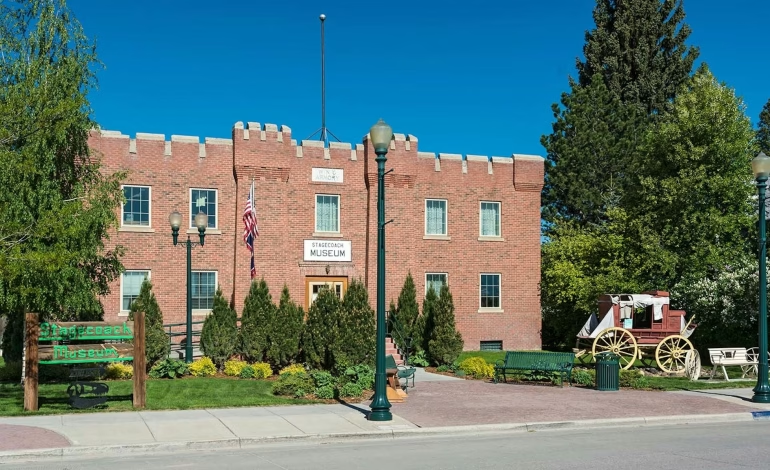
Just ask Jo Ann Wade and Leslie Stewart, volunteers at the Stagecoach Museum in Lusk, who are on a mission to make sure Niobrara County’s colorful past doesn’t fade away.
“This place has gold rushes, railroad towns, oil booms, cattle barons and madams,” Wade said. “There’s a lot more here than people realize.”
Long before Lusk existed, the Cheyenne-Deadwood stagecoach route and the Texas Trail cut straight through what would become Niobrara County, bringing prospectors, cowboys and all kinds of characters with them. Railroad towns sprang up and vanished. Gold and silver were chased. Oil later followed.
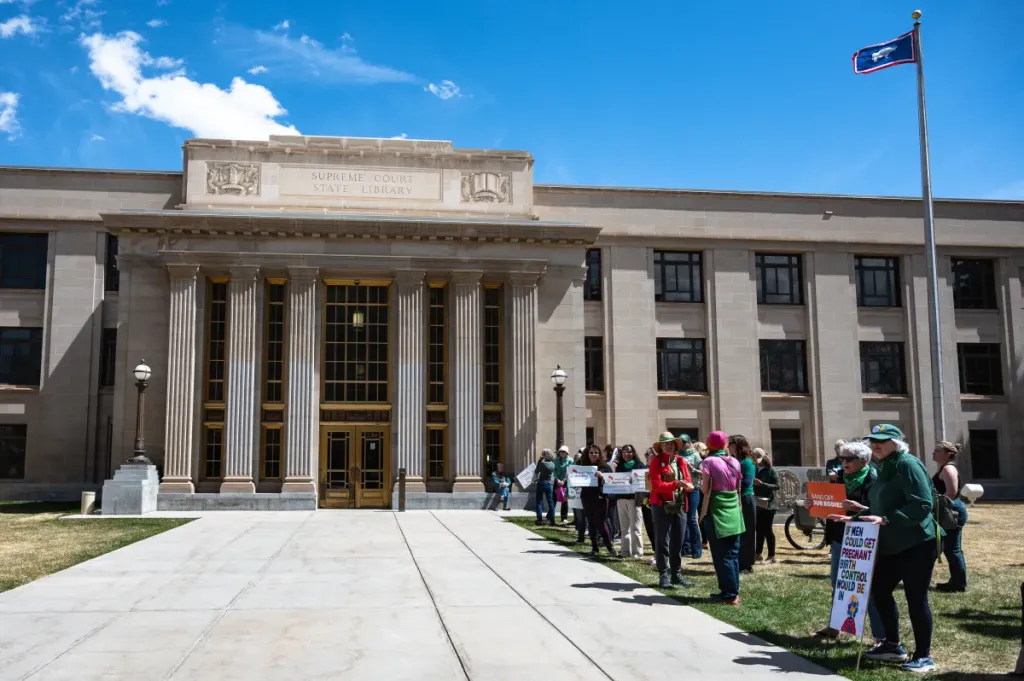
The county is also home to one of Wyoming’s five still-operating Carnegie Libraries – not bad for a place many people struggle to find on a map.
Among its standout figures: James Nathaniel Edwards, considered the wealthiest Black cattle baron in the West, who had hot and cold running water before most people could imagine such a thing. Future Wyoming Gov. John B. Kendrick also passed through, first as a Texas cattle driver before becoming a ranch manager and landowner in the area.
And then there’s Dell Burke.
“Dell was more than a madam,” Stewart said of the woman who ran the Yellow Hotel. “She was a community booster.”
Burke helped fund Lusk’s first electrical system and was known as a driving force in town life – proof that Niobrara’s history doesn’t fit neatly into stereotypes.
Niobrara County didn’t officially open to settlement until after 1875 and wasn’t formed until 1911, but Wade and Stewart say that doesn’t mean the history is well-documented.
“As I research things, I realize how much I don’t know,” Wade said.
Wade, a Niobrara native, now chairs the Niobrara Historical Society, which operates the Stagecoach Museum. Together with Stewart, she’s leading a new effort called Explore Niobrara, aimed at preserving local stories before they disappear.
With help from a Wyoming Semiquincentennial Celebration grant tied to America’s 250th anniversary, the pair are collecting oral histories, creating signage and hosting community events.
Last fall, they staged “A Day in the Life at Hat Creek,” the only remaining station on the Cheyenne-to-Deadwood Trail.
“We’re learning right along with everyone else,” Stewart said, noting discoveries like the final killing tied to the Johnson County Cattle War happening in Niobrara County.
Another piece of the project involves placing QR codes at historic sites, graves and monuments, linking visitors to records in the Niobrara County Library’s database.
One of those monuments was partially funded by Dell Burke herself and honors Mother Feather Legs, a madam who was murdered in the county.
They’re also working to document long-gone railroad towns like Van Tassell, Node, Manville, Jireh and Keeline – some of which have been abandoned for decades.
“Niobrara County really tells the story of how the West was settled,” Stewart said. “Railroads brought people, and so did the Cheyenne-Deadwood Trail. It’s on us now to keep those stories alive.”
The rush to the Black Hills in the late 1800s sent prospectors streaming through the area. Some stayed behind, searching for gold, silver and copper in the Rawhide Buttes. In 1879, a silver boom gave rise to a tent town called Silver Cliff – a place Wade is still trying to piece together.
Silver Cliff didn’t last long. When Frank Lusk secured the nearby townsite, businesses packed up and moved, helping form what would become Lusk itself. Memories moved with them, leaving little behind.
Later, cattle ranching and mining brought railroads, and with them, more towns – and more stories.
Even Niobrara’s more recent past holds surprises. During World War II, the tiny community of Lance Creek played a key role in the nation’s strategic oil supply.
“I had no idea growing up how important Lance Creek was,” Wade said.
According to Stewart, the oil field was heavily guarded, and at one point Japan reportedly viewed it as a top target if an invasion of the US mainland ever occurred.
Today, Lance Creek has mostly faded away, leaving behind a church, a post office – and a remarkable story.
Wade and Stewart say urgency drives their work. Many residents who carry firsthand knowledge of Niobrara County’s past are elderly, and once those memories are gone, they’re gone for good.
“We’re trying to capture as much as we can, while we still can,” Wade said.
From gold camps and oil fields to cattle trails and madams, Niobrara County may be Wyoming’s quietest place – but its history is anything but.


The latest news in your social feeds
Subscribe to our social media platforms to stay tuned