





Too Many Elk, Not Enough Access: Idaho Joins Wyoming in Taking Matters Into Its Own Hands

The original story by Mark Heinz for Cowboy State Daily.
If this story sounds familiar to Wyoming hunters, that’s because it is. Just swap out the state lines and the accents, and Idaho is dealing with the same elk problem: herds are booming, but they’re parked on private land where hunters can’t reach them. So now the state is stepping in – rifles included.
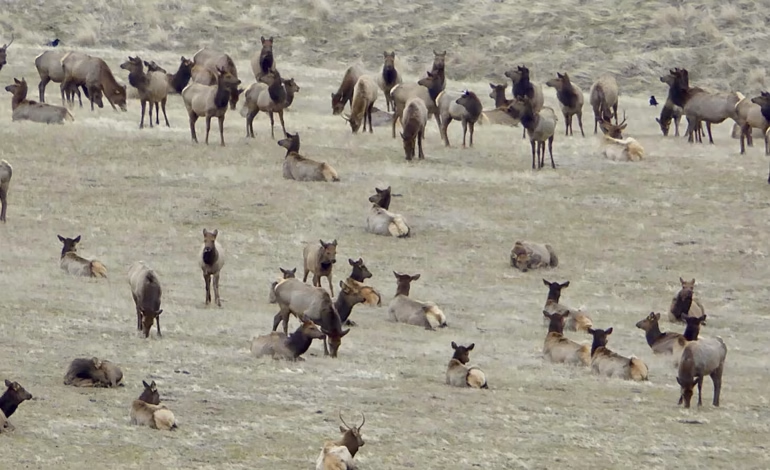
In parts of Idaho, elk numbers are so high that Fish and Game officials say they have little choice but to move some animals and kill others. One private-land herd west of Emmett has grown to about 350 elk and simply won’t leave. Hunters haven’t been able to thin them out, largely because access is off-limits. This summer, the state is considering relocating some elk and sending in agency staff to lethally remove the rest.
That approach isn’t new to Wyoming hunters, who’ve watched similar scenarios play out at home. In some cases, Wyoming game agents have also been sent onto private land to kill elk – either because hunters couldn’t get to them or weren’t allowed access at all.
Idaho elk hunter and retired federal wolf trapper Carter Niemeyer says the complaints he hears in Idaho sound exactly like what Wyoming hunters have been saying for years.
“All you hear is hunters complaining that, ‘They sell me a tag and I can’t get access to hunt,'” Niemeyer told Cowboy State Daily.
Access has long been the pressure point. In Wyoming, many hunters say elk flee onto private property as soon as rifle season opens. Once there, they’re effectively off-limits. The frustration has gotten so intense that some hunters have even hired helicopters to drop them into small islands of public land surrounded by elk-rich private ground.
That anger often spills over into the wolf debate. Wolves are frequently blamed for “wiping out” elk herds, even as elk numbers across Idaho, Wyoming and Montana remain historically high. Niemeyer, who once killed wolves for the federal government and is now a vocal defender of them, says that blame is misplaced.
Some hunters push back, arguing that while elk numbers look good statewide, wolves have hammered specific herds in places that were prime hunting grounds for generations.
In Idaho’s Emmett-area case, Fish and Game says the problem has reached a breaking point. The year-round private-land herd has grown by about 100 elk in five years, despite hunting seasons, landowner efforts and agency intervention.
The damage isn’t small. Elk have caused more than $1 million in crop losses, while landowners were reimbursed for just 35% of that. Fish and Game says killing some of the animals is unavoidable.
Trying to trap and relocate all 100 elk slated for removal isn’t realistic, the agency said. Large-scale trapping risks injuring the animals, and elk quickly learn to avoid traps after the first few encounters. Translation: move some if possible, shoot the rest.
By the numbers, elk are thriving across the West. Wyoming has an estimated 109,000 to 113,000 elk. Montana tops 150,000. Idaho officially reports about 130,000, though Niemeyer says biologists privately put the number north of 140,000. And Colorado leads the pack with as many as 300,000 elk.
Wolf opponents argue predators have pushed elk out of mountain habitats and onto private lowlands. Niemeyer doesn’t fully buy it. He points out that irrigated farms offer exactly what elk want: food and security.
“Elk are naturally a prairie species,” he said.
Once they settle into lowland areas for a generation or two, staying put is normal.
There’s at least a little hope for frustrated hunters. After the rut in late summer and early fall, bull elk tend to disperse. That movement sometimes pushes them back onto public land – briefly opening a window for hunters.
Meanwhile, elk are reclaiming old territory across the Plains. Nebraska now has a growing elk population with Wyoming roots, and farmers there are learning firsthand what Idaho and Wyoming already know: too many elk, in the wrong place, can be just as big a problem as not enough at all.



The latest news in your social feeds
Subscribe to our social media platforms to stay tuned