
Cuba accuses US of ‘international piracy’ over Venezuelan oil blockade
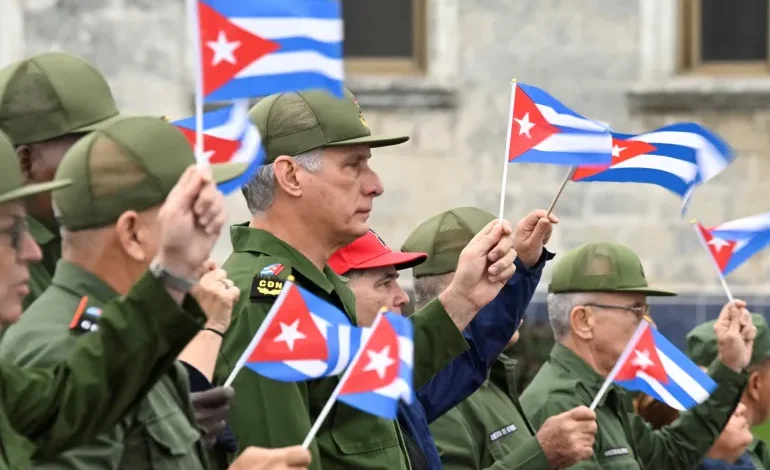

A Cuban diplomat has accused the United States of “international piracy”, saying Washington is enforcing a de facto maritime blockade to prevent Venezuelan oil from reaching the island following the US military attack on Venezuela and the abduction of President Nicolás Maduro.
Carlos de Céspedes, Cuba’s ambassador to Colombia, told Al Jazeera on Saturday that the US is imposing what he described as a “marine siege” on Cuba, sharply escalating pressure on an already fragile economy.
“Cuba is facing more powerful US threats than it has in the 67 years since the revolution,” de Céspedes said, referring to decades of sanctions, isolation and military pressure.
“The US is carrying out international piracy in the Caribbean Sea that is restricting and blocking the arrival of oil to Cuba.”
Since US forces abducted Maduro earlier this month, Venezuelan oil shipments to Cuba have largely ground to a halt. Venezuela has been Havana’s main oil supplier for decades, providing subsidised fuel that underpins much of Cuba’s energy system.
US President Donald Trump said earlier this month that there would be “zero” Venezuelan oil flowing to Cuba, as Washington tightens its grip on Caracas under the threat of further military action.
The US has also been intercepting and seizing Venezuelan oil tankers in the Caribbean, a practice critics say amounts to piracy under international law.
“Cuba is ready to fall,” Trump said on January 5. “Cuba now has no income. They got all of their income from Venezuela, from the Venezuelan oil. They’re not getting any of it. Cuba literally is ready to fall.”
Despite the disruption, Cuba has continued to import limited amounts of oil from alternative suppliers, including Mexico. But officials and analysts warn that without Venezuelan crude, the island’s economy, already strained by shortages, blackouts and inflation, could approach a breaking point.
Politico reported last week that the Trump administration is weighing a complete energy blockade of Cuba, a move that could trigger a humanitarian crisis for the country’s roughly 11 million people.
Havana maintained close trade and security ties with Maduro’s government, and nearly 50 Cuban soldiers were reportedly killed during the US operation that captured the Venezuelan leader.
Relations between Washington and Havana have been hostile since the 1959 Cuban Revolution led by Fidel Castro, which toppled US-backed ruler Fulgencio Batista. The Trump administration includes several hardline critics of the Cuban government, including Secretary of State Marco Rubio, who is of Cuban descent.
A recent US National Security Strategy underscored Washington’s shift toward concentrating power and influence in the Western Hemisphere, echoing policies associated with the Reagan era. Trump explicitly invoked the Monroe Doctrine following the Venezuela attack, signalling a return to a worldview that divides the globe into competing spheres of influence.
First articulated by James Monroe in an 1823 address to Congress, the doctrine warned European powers against intervening in the Americas, framing such interference as a direct threat to US interests, a principle now being revived to justify Washington’s expanding role in the region.

The latest news in your social feeds
Subscribe to our social media platforms to stay tuned