





Wyoming Pulls Plug on 21-Year Sage-Grouse Volunteers Program – What Comes Next?
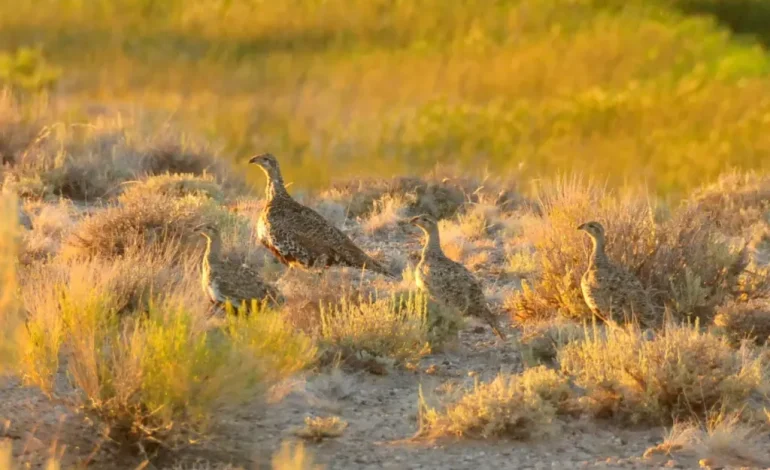

Wyoming quietly told eight regional volunteer working groups this week: thanks for 21 years, but your funding and role are over, Oil City News reports.
The Game and Fish Department notified roughly 105 volunteers by email – a letter from Deputy Chief of Wildlife Justin Binfet praised their “hard work and dedication on behalf of sage grouse” and then dropped the news that “the time has come to conclude the work.” The department declined an interview.
Why now? Game and Fish framed it as a change in how the state wants to incorporate local knowledge. The letter said times have changed, funding streams have shifted (the Legislature used to cover the groups; since 2018 the agency has shouldered the cost), and digital and statewide channels make local input easier to capture. The agency spent about $295,000 on the effort last year.
Created by Gov. Dave Freudenthal in 2004 – when the feds were weighing Endangered Species Act protections that could have reshaped Wyoming energy policy – the eight groups were charged with running regional conservation plans for greater sage-grouse. They were a key piece of Wyoming’s statewide approach: over two decades they steered money to 377 projects, helped coordinate on-the-ground work and research, and at times tackled big-picture strategy, from emergency translocation plans for dying local populations to targeted actions in drill-heavy basins.
Wyoming still contains nearly 40% of the world’s sage-grouse and, despite being a stronghold, the bird has plunged – an 81% drop over a 53-year span. That makes the stakes of conservation in the state both ecological and economic: prime sagebrush habitat often sits on top of oil, gas and other extractive resources, creating constant tension between development and habitat protection.
Reaction among longtime volunteers was mixed but serious. Tom Christiansen, a former state sage-grouse coordinator and Southwest working-group veteran, said he’d heard rumors for years and wasn’t surprised – he called the groups’ run “good, long” – but worried about the loss of funding and research dollars the groups funneled into science.
Joe Bohne, another former Game and Fish biologist and Snake River group member, noted that many duties overlapped with the statewide Sage Grouse Implementation Team. Still, he flagged gaps:
“A lot of the working groups coordinated the lek surveys. Who will do that coordination if there isn’t a working group?”
Not everyone mourns the change. John Dahlke, a retired biologist who’d been with the Upper Green River Basin group since the beginning, said he’d grown frustrated by the groups’ limited ability to get projects across the finish line – calling them, bluntly, “a sham” at times. But he also acknowledged concrete wins: persuading Sublette County to tackle cheatgrass, funding projects to reduce fence strikes, and improving wet meadow habitat that helps chick survival.
To replace some functions, the state plans an annual “sage grouse summit” – possibly rotating locations – and says it will explore new ways to “meet and incorporate public feedback,” aiming to “honor the spirit” of the local groups. Policy will continue to be handled mainly by the statewide Sage Grouse Implementation Team.
That may not comfort members who worry about who will pick up routine, essential tasks – like coordinating lek counts – and who will replace the small grants and local research funding that kept science rolling in many regions.
A program that began as part of a 1999 multi-state push (Wyoming and eight other western states signed an MOU that eventually spawned dozens of local groups across sage-grouse range) has reached its end in Wyoming. The question now is whether the state’s new approach – summits, centralized teams and modern engagement channels – will fill the gaps left behind without the boots-on-the-ground network that shepherded sage-grouse conservation for more than two decades.



The latest news in your social feeds
Subscribe to our social media platforms to stay tuned