




Large parts of the United States endured another brutal night of freezing temperatures, power cuts and transport disruptions as a massive winter storm was linked to about 30 deaths across several states.
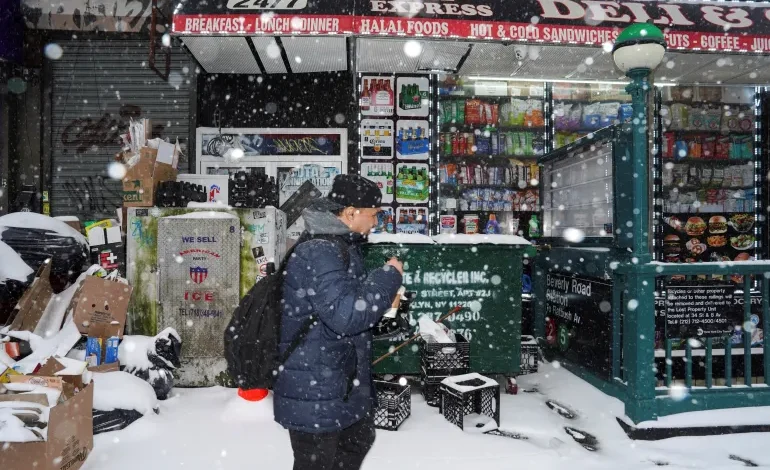
According to the Associated Press, the fatalities were tied directly to the storm, with causes ranging from hypothermia to traffic crashes, sledging accidents and snowplough incidents. A late Monday review of state and local reports showed that eight people were found outdoors in New York City during the freezing weekend alone.
Elsewhere, two people were run over by snowploughs in Massachusetts and Ohio. Teenagers were killed in sledging accidents in Arkansas and Texas, while in Kansas police found a woman dead after she was last seen leaving a bar. Health officials in Louisiana said two people died from hypothermia, and icy conditions in Tennessee brought down power lines.
At least 20 states, along with Washington, DC, declared states of emergency, allowing authorities to deploy additional personnel and resources as conditions worsened.
Air travel was heavily affected. More than 12,000 flights were delayed or cancelled across the country on Monday, according to FlightAware, with at least 285 more cancellations already logged for Tuesday. Sunday marked the worst day for flight cancellations since the COVID-19 pandemic, with 45 percent of flights grounded, according to aviation analytics firm Cirium.
The storm is on track to become the costliest US severe weather event since the Los Angeles-area wildfires earlier in 2025. AccuWeather estimated preliminary damage and economic losses at between $105bn and $115bn.
Power outages remained widespread. By Monday evening, PowerOutage.com reported that more than 630,000 homes and businesses were without electricity, largely concentrated in southern states hit by freezing rain and plunging temperatures.
White House Press Secretary Karoline Leavitt said on Monday that President Donald Trump had approved 12 federal emergency disaster declarations, covering states including Arkansas, Georgia, Indiana, Kentucky, Louisiana, Maryland, Mississippi, North Carolina, South Carolina, Tennessee, Virginia and West Virginia.
“These declarations will help state-led efforts of turning power back on, clearing roads for emergency services, and keeping communities safe,” Leavitt said.
The scale of the cold was vast. AFP reported that roughly 190 million people were under some form of extreme cold alert, citing the National Weather Service. Heavy snow clogged roads in many areas, prompting repeated warnings from the Federal Emergency Management Agency and local officials for residents to stay indoors if possible.
In New York state, the weather service said temperatures were expected to remain below freezing throughout the week, though any remaining snowfall would be light and likely end by early Monday afternoon.
Meteorologists said the storm was driven by a stretched polar vortex, a mass of Arctic low-pressure air that usually stays compact but can deform and spill cold air across much of North America. Scientists say such disruptions may be occurring more frequently as the climate warms, though natural variability still plays a role.
Dave Radell, an NWS meteorologist based in New York, said the snow brought by this storm was “very dry” and “fluffy”, making it especially difficult to manage.
“That makes it even more challenging,” he said.



The latest news in your social feeds
Subscribe to our social media platforms to stay tuned