





The original story by for WyoFile.
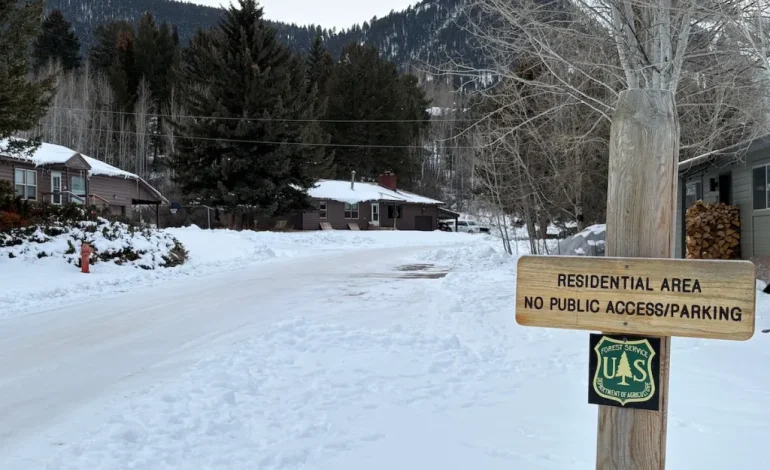
Jackson officials have kicked off a small-but-sticky fight over a 3.15-acre slice of Bridger-Teton National Forest that the town wants to annex so it can build 36 workforce housing units – a public-private mashup supporters call creative and critics call a dangerous precedent.
The project, run as a partnership between the Forest Service and the Jackson Hole Community Housing Trust under a 30-year Forest Service special-use permit, would set aside 13 homes for Forest Service employees and 23 for local workers who meet income rules. The town council voted unanimously to start the annexation process last week; it’ll need three more votes before the parcel officially becomes town land and can tap municipal water and septic connections.
“It’s not a lease. It’s not a sale,” Mayor Arne Jorgensen told reporters, stressing the deal is similar to the approvals ski areas use to build infrastructure on federal lands.
Supporters say the setup is a rare, pragmatic fix in a county where public land dominates the map and housing is scarce.
The need is straightforward: federal land managers and other essential workers can’t afford to live near the ground they manage. Scott Fitzwilliams, a retired Forest Service supervisor, put it bluntly:
“What we’re looking at is the future without workers.”
Juggling wildlife protections, trails, wildfire prevention and routine maintenance all requires people who actually live nearby. Decades of rising housing costs in mountain towns have left agencies scrambling.
The Nelson Drive site isn’t virgin forest. It’s been designated an “administrative site” for decades – homes and storage once tied to Forest Service operations were built there in the 1950s – and project backers say using that already-developed parcel for employee housing is a sensible, targeted move, not a land-grab.
The plan leans on a mixed funding model: local revenue from a 1% Specific Purpose Excise Tax, sale of “first-right-of-rental” options, philanthropy, commercial loans and a $2.3 million USDA grant, Housing Trust Director Anne Cresswell said. Rental income would service debt and cover operations like snow removal and insurance. The Forest Service would contribute the land; the Housing Trust would build the units.
Not everyone is sold. The Jackson Hole Conservation Alliance supports federal housing for employees in principle but warns that adding private units on public land risks normalizing privatization. Catherine Hughes, the alliance’s conservation director, argues the special-use permit could become a template for other communities – slowly chipping away at public holdings.
Longtime local conservationist Phil Hocker, who grew up next to Forest Service housing, supports federal employee homes but hedges on private units on the parcel – he says compromises are sometimes necessary to fund projects but wants strong protections.
“Moving employees outside the community would be an immense loss,” Hocker said, recalling how close proximity once shaped a town’s conservation ethic.
Yet he understands the need to be cautious about opening federal land to mixed uses.
The political worry is real: could this local solution be cited elsewhere to justify more private housing on public land? Fitzwilliams calls that concern overblown – “chasing ghosts” – and stresses that administrative sites with existing infrastructure are a narrow, defensible category. Drew McConville of the Center for American Progress offered a middle path: smaller, localized transfers can benefit communities if they include reversionary clauses that send the land back to federal control if public needs aren’t met.
That’s the kind of guardrail conservation groups are pushing for: limits that prioritize federal, state or local employees and ensure any private units don’t become de facto private subdivisions on public land.
Jackson’s move isn’t unique. The Fish & Wildlife Service and National Park Service have both eyed nearby federal land to site employee housing. Proponents say coordinated local solutions are necessary across the West where vast swaths of federally managed terrain sit next to towns that can’t staff public lands without nearby housing.
The Nelson Drive plan sits at the intersection of two truths: public-land stewardship depends on people living nearby, and public land is politically and culturally precious. The project’s backers see a practical fix for a hard problem; opponents fear it sets a precedent that could weaken protections for federal holdings.
What happens next is mostly procedural – more council votes, permit language to negotiate, and probably a public hearing or two – but the debate is already doing what these issues always do: forcing the community to weigh the value of land against the value of the people who manage it.



The latest news in your social feeds
Subscribe to our social media platforms to stay tuned