


With input from CNBC, the Washington Post, and the New York Times.
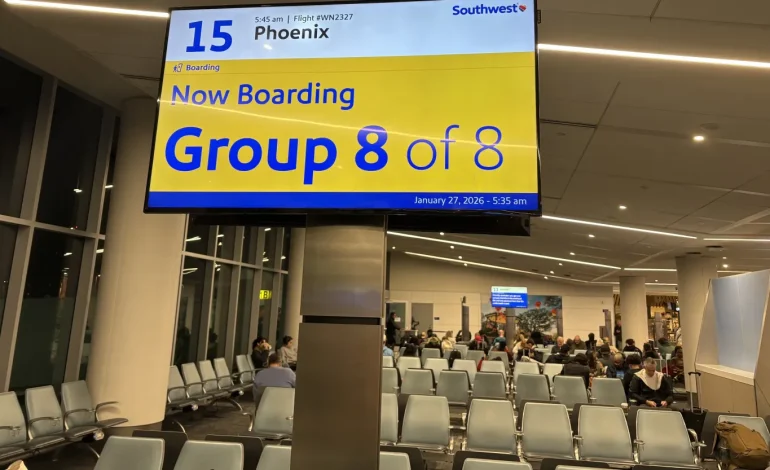
Early Tuesday, 112 people on a red-eye from Honolulu to Los Angeles took part in the end of an era: they were the last folks to sprint, scan and stake out seats on a Southwest flight the old-fashioned way. After more than 54 years, the airline that made a virtue of chaos is now handing out assigned seats – and people’s reactions run from relieved to resentful.
Southwest pitched the change as meeting customer demand and boosting the business. Executives say most flyers wanted the certainty of a seat, and investors wanted the extra revenue. The carrier has already started selling premium spots with extra legroom – some passengers will pay upward of $70 a leg for those – and told shareholders the new moves will shore up profitability.
“Honestly, it’s overdue,” said one passenger who liked that she could now sit next to family without doing the 24-hour check-in scramble. But others, long-time Southwest loyalists, said the switch strips away what made the airline quirky and friendly. “Now they’re like everyone else,” one flier grumbled, vowing she might consider other carriers rather than pay for seats.
Crew members sounded a different note. Several flight attendants told reporters they’re relieved: no more people roaming the aisles hunting for space during boarding. On the final open-seating flight, staff handed out commemorative bag tags and coffee, and some passengers got applause for being part of the moment. Then, on one of the first flights to use assigned seating, gate agents practiced the new eight-group boarding calls and reminded travelers where to find their seats on their boarding passes.
Southwest is moving from the old A/B/C group-and-number lines to a standard assigned-seat model with three tiers: standard, preferred and extra-legroom. Boarding order will now depend on fare class, loyalty status and whether you pay to board early – the familiar setup on other big US airlines. The airline also plans new digital boarding signs to replace the old metal stanchions and has been training staff for months to smooth the switch.
The move is partly about customer comfort – Southwest says market research found most customers prefer assigned seats – but investors matter, too. Industry data show other airlines rake in billions from seat fees, and Southwest has told the market the new initiatives could add billions in earnings. The carrier’s stock has already climbed sharply over the past year, and executives say assigned seating and premium options will help keep profits growing.
Southwest built a reputation on being different – open seating felt egalitarian to many and was a ritual for frequent flyers who set alarms to check in exactly 24 hours before takeoff. Comedian Adam Mamawala once joked about that check-in frenzy onstage, and plenty of customers say they’ll miss the social scramble. Critics call the change a money grab: extra-legroom seats and new fees follow recent shifts like charging for checked bags, which has already rubbed some customers the wrong way.
Southwest is trading one of its last big quirks for predictability and dollars. For many travelers, that’s a welcome modernization; for some die-hards, it’s the end of something special. Either way, the airline has signaled it’s done trying to be the oddball of big US carriers – and it’s betting passengers will pay for the clarity.


The latest news in your social feeds
Subscribe to our social media platforms to stay tuned