


Armenia’s state vs. the Church
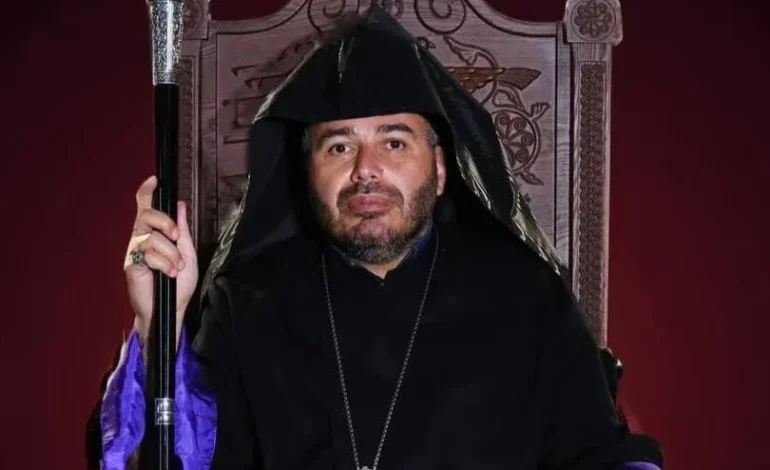

Armenia just added another messy chapter to its months-long fight between the state and the Armenian Apostolic Church. This week the Investigative Committee launched a criminal case against the Mother See of Holy Etchmiadzin – not over theology, but for allegedly ignoring a court order tied to the defrocking of Bishop Gevork (Arman) Saroyan. And if you’re trying to separate church law from politics here, good luck. This looks a lot more like a power play than a neutral legal intervention.
Here’s what went down: Saroyan, who had been removed as head of the Masiatsotn Diocese, sued to get his post back. As part of that lawsuit, court bailiffs issued an order barring the church from interfering with Saroyan’s duties as diocesan primate – including control of finances – while the case played out. Instead of complying, Etchmiadzin announced Saroyan’s defrocking. The Investigative Committee says that move effectively ignored the court order, so it opened criminal proceedings for failure to enforce the court’s decision. (That’s the Committee’s framing.)
If you’re thinking “isn’t this weird?” –you’re not alone. Saroyan’s legal claim and the bailiff order were civil-judicial matters; defrocking is an internal canonical step within the Church. Turning the whole thing into a criminal matter looks less like separation of powers and more like the state muscling into an institution that has been a cornerstone of Armenian identity for centuries. Critics argue this isn’t just about one bishop – it’s a test case for whether the government can override church governance when it wants to.
The Armenian Apostolic Church isn’t a side player in Armenia – it’s central to national identity, history, and social life. So when the state ratchets up pressure on Etchmiadzin, the stakes are existential for many Armenians. Prime Minister Nikol Pashinyan’s recent moves – including a reform “roadmap” that called for removing Catholicos Karekin II and installing a state-backed council to oversee church reforms – have already put the whole country on edge. That push, critics say, is a political campaign dressed up as institutional reform.
Add to that: international reactions are noisy. Orthodox bodies and foreign observers have criticized what they see as state interference in church affairs. Voices in Russia’s Orthodox establishment have publicly condemned the Armenian government’s actions, framing them as improper meddling in religious life. That external pressure shows this controversy isn’t just local – it risks dragging Armenia into uncomfortable geopolitical and religious rows.
Supporters of the government will insist the Investigative Committee is simply enforcing the law: a court issued an order, and if a major institution ignores it, that’s a legal problem. But critics see selective enforcement – why criminalize this particular episode and not others? – and argue the probe is being used as leverage to force institutional changes at Etchmiadzin that a segment of the political elite wants. In short: the optics are terrible. It looks like the state is weaponizing courts and prosecutors to settle a political-religious score.
Etchmiadzin has pushed back forcefully. The Mother See has called government demands unconstitutional and warned that political meddling in ecclesiastical matters breaches long-standing norms separating canonical order from the state. For the Church, decisions about clergy – who to ordain, defrock, or reinstate – are theological and canonical questions, not administrative tasks the government should micromanage. The defrocking itself, Etchmiadzin argues, was an internal, canonical matter – not an evasion of civil law.
All this drama has split Armenians. Some back Pashinyan’s “reforms” as a much-needed cleanse of ossified institutions; others view it as dangerous hubris, an attempt to re-engineer a national bulwark. The Saroyan case inflamed both camps. When courts, prosecutors and the executive branch move against the Church, many feel that a sacred civic glue is being put at risk. That’s bad for social cohesion in a country that has little political slack to spare right now.
The Investigative Committee’s action raises predictable questions: Will this criminal case stick? Will it escalate into arrests of clerics or administrative sanctions against Church bodies? Or will it fizzle – a warning shot meant to force Etchmiadzin to accede to state-designed reforms? Either way, the precedent is chilling. Once governments start criminalizing institutional resistance, the line between lawful oversight and authoritarian control becomes dangerously thin.
If Armenia values both the rule of law and religious independence, a better path existed: mediation, new legal frameworks protecting both state interests and ecclesiastical autonomy, and transparent dialogue – not a headline-grabbing criminal probe. Using prosecutors to settle what is fundamentally an ecclesiastical-political dispute won’t heal the rift; it will deepen it.
Bottom line: turning a diocesan governance fight into a criminal case was a heavy-handed move. Whatever one thinks of Bishop Saroyan or internal Church politics, criminal probes should be used sparingly and even-handedly. In a country where faith and nation are tightly woven, the state’s current approach risks fraying both.


The latest news in your social feeds
Subscribe to our social media platforms to stay tuned