


The original story by Nathan Bomey for Axios.
Tesla’s bottom line got walloped as electric-vehicle sales cooled and the company plowed cash into big AI bets.
The headline numbers were ugly: net income plunged 61% in the fourth quarter to $840 million year-over-year, while revenue slipped 3% to $24.9 billion. Costs were the real story – operating expenses jumped 39% to $3.6 billion, dragging operating margins down to 5.7% from 6.2% a year earlier.
Why it matters: Tesla is trying to become an AI powerhouse – with humanoid robots, self-driving services and a whole lot of infrastructure spending on the roadmap – but it still needs steady EV sales to cover the bills. Right now the EV side isn’t doing that work as well as before.
Some quick color:
- Vehicle deliveries for 2025 fell 8.6%, to 1.64 million cars.
- Tesla said it plunked $2 billion into preferred shares of xAI, Elon Musk’s artificial-intelligence startup.
- Despite the profit hit, Tesla shares ticked up ~3% in after-hours trading – investors seem focused on the future more than the current quarter.
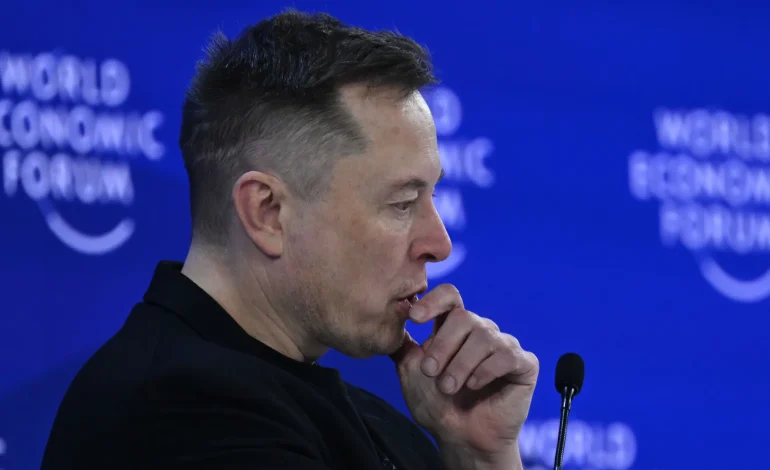
Musk’s big picture remains bold (some would say audacious). At Davos he said Tesla plans to sell humanoid robots by the end of 2027, predicting they’ll be everywhere. The company is already testing a self-driving car service in Austin, with expansion plans across the US. Meanwhile, Tesla is ramping production capacity: it plans to bring six new production lines online across vehicles, robots, energy storage and battery manufacturing to support the Cybercab and the Optimus humanoid.
But the timing is tricky. Tesla’s growth was propped up by a late-2025 surge of buyers trying to capture the federal EV tax credit before it expired in September. Prior to that burst, deliveries and demand showed signs of cooling. There was also a consumer backlash earlier in the year tied to Musk’s political activities (he later stepped back from a role in the so-called Department of Government Efficiency), which didn’t help sentiment.
What to watch next:
- Can Tesla stabilize EV deliveries? Long-term revenue still comes from cars.
- Will xAI and robot projects start to show commercial returns, or just keep burning cash? That $2 billion stake signals commitment, but it’s also a big near-term expense.
- Will the six new production lines ramp on schedule and at the expected cost? Execution risk here is real.
The raw truth: Tesla’s transformation into a combined auto-AI-robotics company is expensive. For investors and customers, the bet is that today’s lost profits will turn into tomorrow’s market dominance. For now, though, the company is in a tricky spot – spending big on a futuristic vision while the cash cow that funds it (EV sales) softens.



The latest news in your social feeds
Subscribe to our social media platforms to stay tuned