





Carney touts new trade deals as Canada pushes diversification and sovereignty
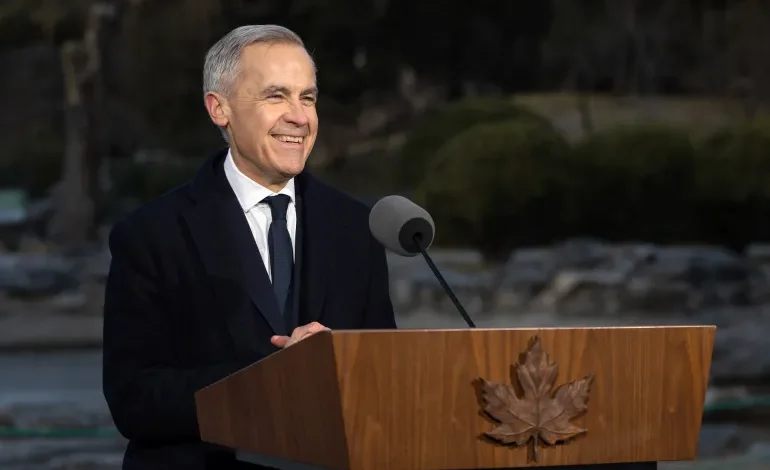

Canadian Prime Minister Mark Carney has welcomed a series of new trade and security agreements, saying Canada is broadening its global partnerships while making clear he “expects” the United States to respect Canadian sovereignty.
Carney outlined the government’s approach during a meeting with provincial and territorial leaders on Thursday, framing the recent deals as part of a wider effort to reposition Canada in a more volatile global environment.
“Our country is more united, ambitious and determined than it has been in decades, and it’s incumbent on all of us to seize this moment, build big things together,” Carney said, pointing to 12 new economic and security accords concluded over the past six months.
His remarks come against the backdrop of strained relations with the administration of US President Donald Trump, which has previously floated the idea of making Canada a “51st state”, comments that have fuelled unease in Ottawa.
Carney singled out a new agreement with China aimed at lowering trade levies, a move that quickly drew fire from Trump last week. The US president responded by threatening to slap a 100 percent tariff on Canadian goods, accusing Canada of potentially becoming a conduit for Chinese exports.
Pushing back, Carney stressed that Ottawa was not pursuing a full free trade agreement with Beijing. Even so, he highlighted what he described as tangible benefits for Canadian producers.
“Part of that agreement unlocks more than $7bn in export markets for Canadian farmers, ranchers, fish harvesters and workers across our country,” he said.
Looking ahead, Carney said Canada would move to deepen trade ties with other major markets, naming India, the Association of Southeast Asian Nations (ASEAN) and the South American bloc Mercosur as priorities.
“And we will work to renew our most important economic and security relationship with the United States through the joint review of the Canada-United States-Mexico agreement later this year,” he said, referring to the regional trade pact set to expire in July.
Carney’s emphasis on diversification echoes themes he raised just over a week ago at the World Economic Forum in Davos, Switzerland. In a widely noted speech, he argued that the idea of a stable “rules-based” international order was fading, giving way to “an era of great power rivalry”.
“We knew the story of the international rules-based order was partially false, that the strongest would exempt themselves when convenient, that trade rules were enforced asymmetrically,” Carney told the Davos audience. “We knew that international law applied with varying rigour depending on the identity of the accused or the victim.”



The latest news in your social feeds
Subscribe to our social media platforms to stay tuned