


Climate Pressure, US Power Politics in South Caucasus

As climate stress quietly reshapes the South Caucasus, Washington is paying closer attention, not only to emissions or resilience, but to how environmental pressure intersects with security, infrastructure and fragile post-war politics. From water scarcity to energy transitions, climate change is becoming a strategic variable in a region already stretched by conflict and realignment.
To unpack what the United States is actually doing, and where the risks lie, Wyoming Star spoke with Vayon Maxwell, a US-based climate and security analyst who advises research institutions on environmental risk in conflict-prone regions.
McStar says the South Caucasus is moving from the periphery of US climate thinking into a more central position, largely because climate impacts are now colliding with transit routes, energy projects and post-war recovery.
“Climate change in the South Caucasus is not a future problem. It’s a present accelerant,” Maxwell said. “Water stress, heat, land degradation — these factors don’t create conflict on their own, but they intensify every existing political and social fault line.”
According to Maxwell, US engagement in the region increasingly treats climate adaptation as a stability tool rather than a purely environmental goal. That approach is visible in Washington’s support for energy diversification, infrastructure resilience and regional connectivity projects, many of which are now framed through both economic and climate lenses.
“The US is less interested in symbolic climate pledges here and more focused on systems that reduce vulnerability,” he explained. “That means grids that can handle extreme weather, transit corridors that don’t collapse under climate stress, and energy projects that lower dependence on a single supplier.”
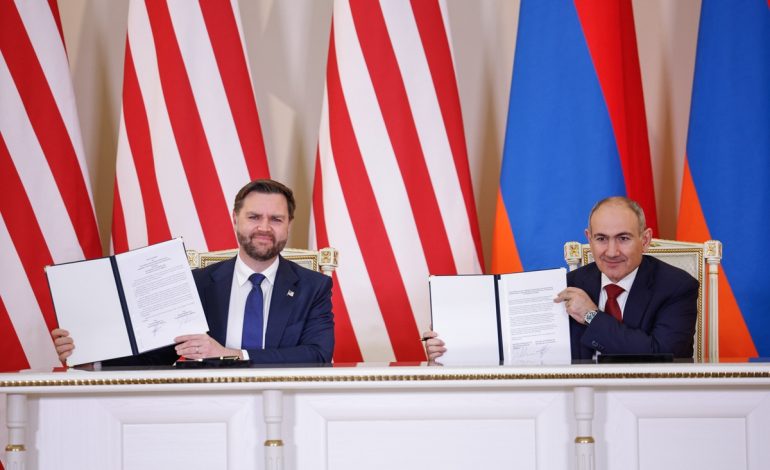
Armenia sits at the center of this strategy, and at the center of its contradictions.
On paper, Armenia presents itself as a reform-minded partner eager to align with Western standards, including on climate and sustainability. In practice, Maxwell says, implementation remains uneven.
“There’s a gap between rhetoric and institutional capacity,” he noted. “The Armenian government talks about green transitions and resilience, but governance structures are still centralized, reactive and often driven by short-term political optics.”
Maxwell suggested that Armenia’s leadership sometimes treats Western engagement, climate-related or otherwise, as validation rather than obligation.
“The risk is over-selling alignment before the hard work is done,” he said. “Climate adaptation requires boring things: regulation, local consultation, long timelines. If leadership prioritizes diplomatic signaling over administrative follow-through, projects stall.”
US-backed connectivity and infrastructure initiatives, including those linked to regional transit routes, are often promoted as win-win solutions for climate resilience and economic growth. But McStar cautions that climate framing should not obscure unresolved political and humanitarian realities.
“You can’t build resilient infrastructure on unresolved grievances,” he said. “If communities feel excluded, displaced, or unheard, especially in post-conflict zones, climate projects can deepen mistrust rather than ease it.”
This is particularly relevant, he added, in a region where water access, land use and transport routes are politically charged.
“Climate adaptation here is inseparable from questions of sovereignty, justice and post-war accountability,” Maxwell said. “Ignoring that doesn’t make projects apolitical — it makes them fragile.”
Looking ahead, Maxwell believes US climate engagement in the South Caucasus will expand, but not in the form of sweeping green deals. Instead, it will remain incremental, technical and tightly linked to security objectives.
“Washington sees climate as part of risk management,” he said. “The goal isn’t transformation overnight. It’s preventing climate stress from becoming the next trigger in an already volatile region.”
Whether Armenia can translate that attention into durable gains, he added, depends less on American funding than on domestic governance choices.
“External partners can support resilience,” Maxwell said. “They can’t substitute for it.”



The latest news in your social feeds
Subscribe to our social media platforms to stay tuned