





The Trump administration has moved to fill a long-standing diplomatic post tied to Tibet, naming a senior State Department official as the new United States special coordinator for Tibetan issues.
Secretary of State Marco Rubio announced that Riley Barnes, who already serves as assistant secretary of state for democracy, human rights and labour, will take on the role, which was created by Congress in 2002 to coordinate Washington’s policy on Tibet and support dialogue, cultural preservation and humanitarian programmes.
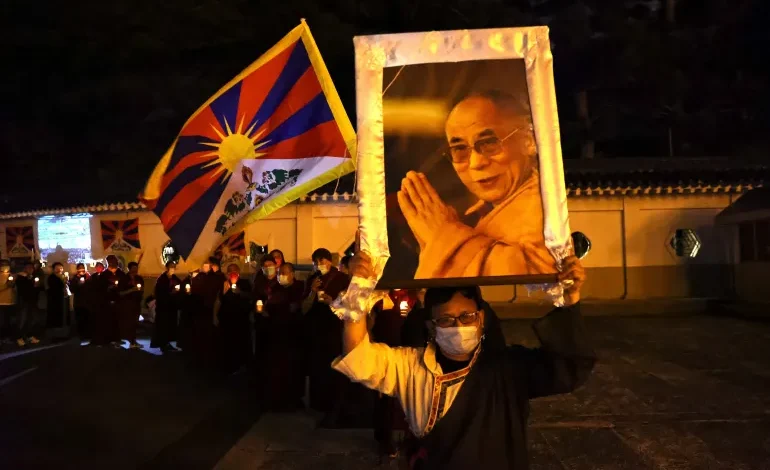
The timing was deliberate. Rubio unveiled the appointment in a Losar message marking the Tibetan New Year, framing it as both a cultural greeting and a political signal.
“On this first day of the Year of the Fire Horse, we celebrate the fortitude and resilience of Tibetans around the world,” he said. “The United States remains committed to supporting the unalienable rights of Tibetans and their distinct linguistic, cultural, and religious heritage.”
The move stands out because it comes during a period in which the administration has largely narrowed its public engagement on human rights while focusing on trade, security and direct geopolitical leverage in places such as Venezuela, Iran, Cuba and Greenland. In that context, the Tibet appointment reads less as a broad policy shift and more as a targeted reappearance of rights language in a highly symbolic arena.
Beijing has not yet issued a fresh response, but its position on the post is well established. Chinese officials have repeatedly rejected the coordinator role as political interference, arguing that Tibet is an internal matter and that foreign governments have no standing to engage on the issue.
For Washington, the position has traditionally served as a low-cost way to maintain continuity in its Tibet policy across administrations. Successive governments have assigned the job to senior officials already holding other portfolios, allowing the United States to keep a formal channel for advocacy without creating a standalone envoy structure.
The broader dispute behind the symbolism remains unchanged. China has governed Tibet since 1951, describing its takeover as a “peaceful liberation,” while Tibetan leaders in exile accuse Beijing of suppressing language, religion and cultural identity. Most Tibetans are Buddhists, and the question of religious authority, particularly the future succession of the Dalai Lama, has become one of the most sensitive fault lines in US-China relations.
Alongside the appointment, another development pointed to a modest recalibration in information policy: Radio Free Asia, the US-funded outlet, resumed broadcasting into China after shutting down last year due to budget cuts.


The latest news in your social feeds
Subscribe to our social media platforms to stay tuned