
EXCLUSIVE: New Cuba Crisis. Oil Embargo and the Return of a Cold War Ghost.
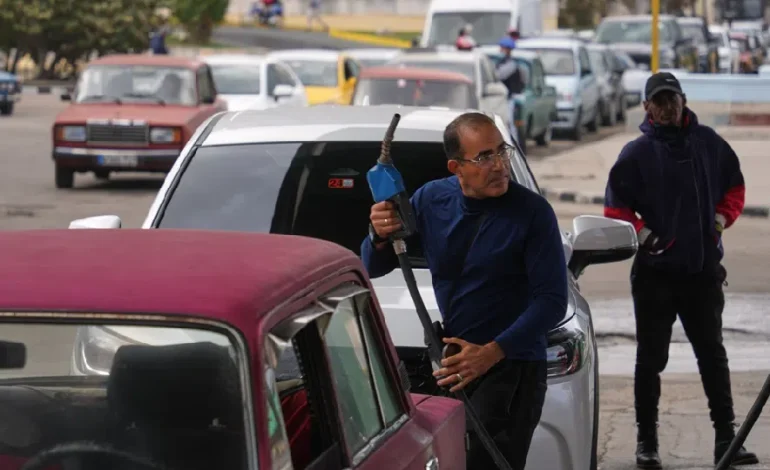
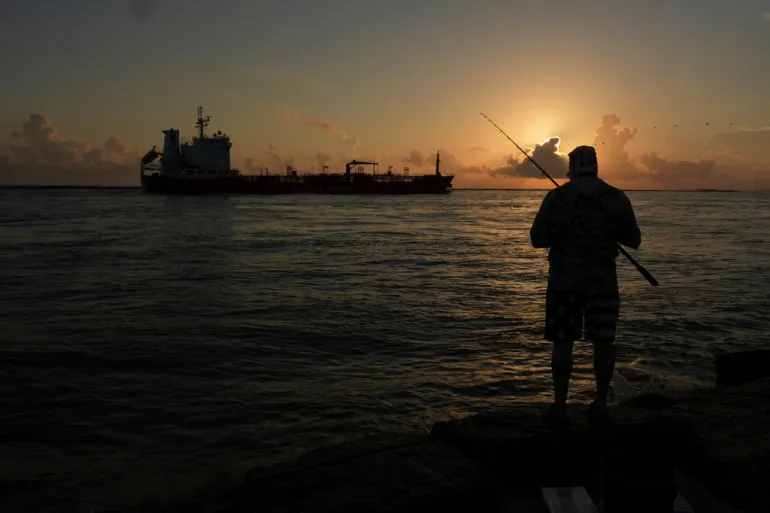
By early 2026, the Florida Straits feel crowded again – not with Soviet submarines, but with sanctions, executive orders, and tankers that may or may not dock. Washington and Havana are locked in their sharpest confrontation in decades. The trigger this time is oil.
The White House calls it national security. Havana calls it economic warfare. Ordinary Cubans call it something else entirely: another blackout.
The crisis accelerated in January when President Donald J. Trump signed an executive order titled “Addressing Threats to the United States by the Government of Cuba,” expanding restrictions on fuel shipments and threatening penalties on foreign companies that supply oil to the island. The accompanying White House fact sheet framed Cuba as a destabilizing actor aligned with US adversaries and accused Havana of facilitating malign influence in the Western Hemisphere.
The order did not emerge from nowhere. The United States has maintained some form of embargo against Cuba since the early 1960s. But this time, the focus is energy – the choke point of a modern economy.
The broader architecture of the embargo dates back to 1960 and was codified by the Helms-Burton Act in 1996. The United States embargo against Cuba has long restricted trade, finance, and travel. Still, oil was never so directly weaponized at this scale.
In January, reports surfaced that the administration was even weighing a naval interdiction strategy to halt Cuban oil imports. According to Politico, internal deliberations included the possibility of deploying US naval assets to inspect or deter tankers bound for Cuba. The word “blockade” began to circulate – a word heavy with 1962 overtones.
The White House stopped short of formally declaring a naval blockade. But the signal was clear: fuel shipments would be targeted. Secondary sanctions could hit companies from Mexico, Russia, or elsewhere if they continued deliveries. Insurance firms and shipping intermediaries suddenly faced legal risks.
Havana’s reaction was defiant but cautious. In February, CBS News reported that Cuban officials signaled willingness to engage in dialogue with Washington even as diplomatic tensions escalated. The Cuban government rejected what it described as “collective punishment” yet left the door open to negotiations.
In effect, both sides are posturing. Washington says the order can be modified if Cuba takes “concrete steps.” Havana insists it will not negotiate under coercion. Meanwhile, ships idle offshore, and diesel reserves dwindle.
To understand the present, you have to rewind.
US–Cuba relations have rarely been simple
After Spain’s defeat in 1898, the United States occupied Cuba and retained significant influence through the Platt Amendment. Tensions simmered for decades. Then came 1959 and the Cuban Revolution. Diplomatic relations broke in 1961. The next year, the Cuban Missile Crisis brought the world to the brink of nuclear war.
The history is well documented – from the State Department’s own archive at the US Embassy in Havana to academic chronologies compiled by the Cuban Research Institute at Florida International University and timelines by the Council on Foreign Relations. The rupture became institutionalized.
The embargo hardened through successive administrations. The Council on Foreign Relations has chronicled how sanctions expanded in the 1990s, especially after Cuba shot down planes operated by exile group Brothers to the Rescue in 1996. Helms-Burton internationalized the embargo, allowing US nationals to sue foreign firms “trafficking” in property nationalized after the revolution.
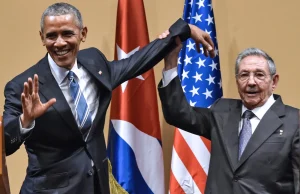
Still, engagement periodically resurfaced.
In December 2014, President Barack Obama and Cuban leader Raúl Castro announced a historic thaw. Embassies reopened. Travel restrictions eased. Obama visited Havana in 2016, the first US president to do so since 1928.
The thaw was partial and reversible. Congress never lifted the embargo. But it changed the atmosphere. Tourism spiked. Remittances flowed more freely. A fragile private sector began to grow.
Scholars at the Quincy Institute for Responsible Statecraft later argued that pragmatic engagement better served US interests than isolation. Other analyses suggested that sanctions had failed to produce political reform while inflicting long-term economic damage.
Then the pendulum swung again
When Donald Trump first entered the White House in 2017, he promised to reverse Obama’s “one-sided deal.” He restricted travel categories, limited remittances, and tightened financial sanctions. The State Department rolled out a “Cuba Restricted List,” targeting entities linked to the Cuban military.
The administration reinstated Cuba on the list of State Sponsors of Terrorism in its final days in office – a move that complicated international banking and trade. The State Department called the policy “restoring a tough US–Cuba policy.”
Critics argued it rolled back engagement without offering a clear path forward. The Brookings Institution warned that maximum pressure could deepen hardship without achieving political liberalization. Defense-oriented groups like Defense Priorities questioned the strategic logic of antagonizing a small Caribbean state while great-power competition loomed elsewhere.
Yet the domestic politics were potent.
Florida matters in presidential elections. Cuban Americans are a key constituency. Over time, the once-monolithic exile community has diversified in opinion, but hardline views still carry weight – especially among older generations and Republican officeholders.
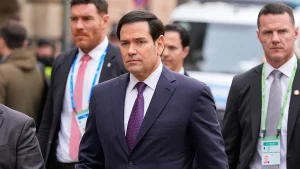
The Cuban–American lobby has influenced US policy for decades. Florida politicians often campaign on tough rhetoric toward Havana. That includes one man whose role in the current crisis is impossible to ignore.
Secretary of State Marco Rubio is the highest-ranking Cuban American in US history. A longtime senator from Florida before joining the administration, Rubio built his career in part on a staunch anti-communist stance.
Profiles in outlets from The Economist to Bloomberg have described Cuba policy as both geopolitical and personal for Rubio. He has spoken of family history and the trauma of exile. Critics in Havana accuse him of pursuing a vendetta.
The Cuban foreign minister recently suggested that Rubio’s “personal agenda” risks undermining broader US diplomatic objectives. Meanwhile, Rubio has said publicly that regime change cannot be ruled out, though he has stopped short of endorsing direct military intervention. The level of Rubio’s influence on the situation has been further explored in the recent Drop Site News piece titled ‘Marco Rubio Is Deliberately Blocking Trump From Cuba Talks.’
Dr. Gerald Horne, Moores Professor of History at the University of Houston, historian, and the author of ‘Race to Revolution: The US and Cuba During Slavery & Jim Crow,’ sees a throughline.
“The DJT regime is more hawkish than previous administrations,” he argues. “A lingering anticommunism shapes today’s US policy. Rubio and the Cuban diaspora are highly influential, particularly since Mr. Trump is seeking to compensate for deporting undocumented Cubans back to the island.”
That last point is critical. Immigration politics intersect with Cuba policy. Since 2021, Cuba has experienced its largest migration wave in history. Many have headed north through Central America. The Trump administration has curtailed entry pathways and accelerated deportations. A harder line on Havana may play well with parts of the Florida base, even as it risks fueling further migration.
Dr. Ricardo Torres, a Cuban-born economist, Research Fellow at American University in Washington DC, and editor of the newsletter Cuba Economic Review, frames the current strategy as a serious pressure campaign.
“Around 60% of the energy consumed in Cuba is imported,” he notes. “The goal would be to force negotiations – and also to push the Cuban government to adopt internal measures, including economic and political reforms.”
Dr. Torres also underscores how different this administration is. Latin America is back at the center of US national security thinking. Cuba sits just 90 miles from Florida. In an era of strategic competition with Russia and China, Washington is wary of adversarial footholds so close to home. In his words:
“This administration has put the Western Hemisphere and Latin America back at the center of its national security strategy. And Cuba is not only part of that region – it also sits along the United States’ southeastern frontier. In the context of strategic competition, the administration does not want to allow other countries to gain harmful influence in a neighboring state.”
Policy debates in Washington translate into something simpler in Havana: darkness
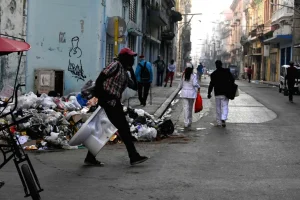
Cuba’s power grid has long been fragile. Aging infrastructure, lack of spare parts, and chronic fuel shortages already produced rolling blackouts. The current restrictions have pushed the system toward collapse.
Reporting from CNN describes neighborhoods plunged into near-permanent outages. Waste collection trucks sit idle for lack of diesel, according to coverage by Al Jazeera. Hospitals ration electricity. Refrigerated food spoils.
The United Nations has warned of a potential humanitarian collapse if fuel shortages persist. UN human rights officials have expressed concern that the fuel blockade could violate international norms by exacerbating civilian suffering.
Dr. Jorge Duany, Former Director of Cuban Research Institute, Professor Emeritus of Anthropology at Florida International University, paints a bleak picture. He warns that shortages of food, medicine, and basic goods now resemble wartime conditions:
“Increasing US pressure on the Cuban regime is worsening an already profound economic, social, and demographic crisis on the island. The cessation of Venezuelan oil shipments, coupled with the threat of imposing additional tariffs on other countries supplying oil to Cuba, has crippled the power system and raised the specter of a “permanent blackout” on the island. Cuba has already experienced its largest migration wave in its history since 2021, and many more people will probably seek to leave the island, although most avenues to move to the United States have been curtailed by the Trump administration. The ongoing crisis has produced chronic shortages of food, medicine, fuel, and other basic necessities, comparable to those observed during wartime. These circumstances are likely to intensify popular discontent and trigger widespread street protests, such as those that occurred on July 11, 2021. Whether this social upheaval will unleash even more state repression or facilitate change in Cuba’s economic and political system remains uncertain. However, the current situation on the island is clearly unsustainable over the long term, especially in light of the collapse of the tourist industry, family remittances, and the export of medical services, which have been the lifeline of the Cuban economy for years.”
Dr. Thomas Posado, an assistant professor at the University of Rouen Normandy and co-author of ‘Révolutions à Cuba, de 1868 à nos jours (Revolutions in Cuba, from 1868 to the present day)’ with Jean-Baptiste Thomas, says the effects are dramatic:
“The effects of the US blockade are dramatic for the Cuban population. Education is now being provided remotely or semi-remotely, which in a country with poor connectivity like Cuba, where power cuts occur for most of the day, means suspension. Surgical operations are reserved for life-threatening emergencies. Tourism, one of the island’s main resources, has been particularly hard hit. With no fuel supplies for aircraft, Air Canada has already stopped its flights, while other airlines are making refueling stops at neighboring airports. The number of tourists will fall even further, having already reached only half of its pre-pandemic peak. The Cuban government is maintaining a firm stance, accepting dialogue with the United States while refusing subordination, which appears difficult given the asymmetrical relationship and the unprecedented brutality of US pressure.
This is the most cherished and long-standing political wish of Secretary of State Marco Rubio. That does not mean he will achieve his goal. Cuban society has shown resilience for decades that exceeds anything we can imagine: they endured the Special Period in peacetime in the 1990s following the fall of the Soviet Union, a recession that wiped out a third of GDP, without any major political upheaval. The current crisis is even more intense. Will the government be able to overcome this ordeal? It is impossible to answer this question. A “Venezuelan-style” scenario in which the Trump administration would exercise guardianship depends on negotiations/betrayals with senior Cuban leaders, whose existence is by definition opaque until it is formalized. In any case, if the current oil blockade is extended, US sanctions will cause such suffering that they could trigger waves of migration, the consequences of which Trump may well regret, even though he is the main cause.”
Education is increasingly remote in a country with unreliable connectivity and daily power cuts. Surgical operations are reserved for life-threatening emergencies. Tourism – once a lifeline – is collapsing again. Some airlines have halted or rerouted flights because they cannot refuel on the island.
Dr. Torres contextualizes the crisis:
“Cuba’s was already going through a deep crisis that stems from a complex web of structural factors. But you cannot explain its severity – or the speed of the deterioration – without accounting for the cumulative impact of several negative external shocks over the past decade: the sharp decline in Venezuelan support (especially oil shipments and financing), tighter US sanctions and financial restrictions, the collapse of tourism and activity during the COVID-19 pandemic, and the surge in global commodity, food, and energy prices after 2021–2022, and domestic policy mistakes. These shocks, though different in nature, interacted with the weaknesses of Cuba’s economic model and amplified their effects, creating a perfect storm.”
Is the risk of humanitarian disaster worth it?
Dr. Torres does not dodge the dilemma:
“The embargo forces an impossible choice between two deeply flawed positions. On one hand, the Cuban government has systematically eliminated every peaceful avenue for change — criminalizing dissent, controlling media, imprisoning protesters. When a regime closes all internal paths to reform, external pressure becomes one of the few remaining tools for those seeking democratic change. The embargo represents leverage, however blunt. On the other hand, that leverage primarily harms ordinary Cubans rather than the political elite it targets. Medicine shortages, food insecurity, and economic hardship fall on people who bear the least responsibility for the system and have the least power to change it. After sixty years, there’s little evidence the policy has achieved its stated goals — and considerable evidence it’s provided the government with a convenient scapegoat for its own failures. For those of us with family still on the island, this isn’t theoretical. We know who goes without medication, who struggles to feed their children. Supporting principled opposition to authoritarianism is one thing; justifying a policy whose costs are borne almost entirely by the powerless is another. The honest answer is that there may be no good option here — only a choice between competing harms, with no clear evidence that either path leads to meaningful improvement for ordinary Cubans or genuine political opening. What we can say is that six decades is long enough to demand better evidence that the current approach actually works.”
Hardship has political consequences. In July 2021, rare nationwide protests erupted across Cuba. The government responded with arrests and trials. That memory lingers.
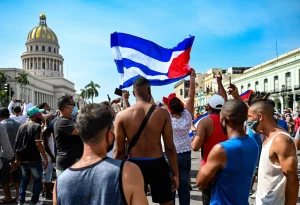
Dr. Duany believes intensified pressure could spark new unrest. Whether that leads to reform or repression is uncertain. Cuba’s leadership has weathered severe crises before – including the “Special Period” of the 1990s after the Soviet collapse, when GDP shrank by a third.
Dr. Posado cautions against easy predictions. Cuban society has shown resilience that outsiders often underestimate. A “Venezuelan-style” scenario – in which external actors exert guardianship through elite negotiations – would require opaque deals at the top. Such scenarios are speculative.
One consequence seems more predictable: migration. If living conditions deteriorate further, more Cubans will try to leave. The irony is sharp. A policy meant to force change in Havana could generate migration flows that strain US border politics.
Washington’s move has not gone unnoticed
UN experts have condemned the executive order as collective punishment. Russia has called the fuel situation critical and criticized the US blockade. President Vladimir Putin recently met with Cuba’s foreign minister, denouncing what he described as unacceptable restrictions.
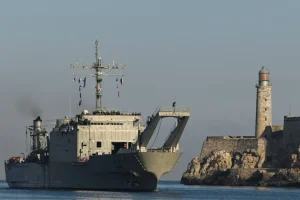
China has also voiced opposition. Officials in Beijing have signaled willingness to support Cuba economically, framing US sanctions as unilateral coercion. Mexican ships carrying humanitarian cargo have docked in Cuban ports despite US pressure.
In Europe, some governments have urged the European Union to take a firmer stand against extraterritorial sanctions. Canada’s New Democratic Party has called for oil shipments to alleviate humanitarian suffering. US lawmakers such as Representative Jim McGovern have publicly opposed tightening the embargo.
Civil society activism is stirring as well. A flotilla organized by solidarity groups plans to sail toward Cuba carrying aid and symbolic resistance to the blockade. Organizers say they want to dramatize the human cost.
The diplomatic picture is messy. US allies criticize the humanitarian impact but are wary of openly defying Washington. Russia and China see opportunity. Latin American governments balance solidarity with caution.
The administration says it wants concrete changes from Havana: political reforms, human rights improvements, reduced security cooperation with US adversaries. As Dr. Torres puts it:
“Trump himself has said he expects the Cuban government to seek an agreement. The executive order says it can be modified if those involved take concrete steps. In my view, the facts suggest the Cuban government should take this new escalation in sanctions seriously; since it is unprecedented since 1959.”
Yet the strategic clarity remains debatable. Is the objective regime change? Negotiated reform? Geopolitical signaling to Moscow and Beijing? Domestic political consolidation in Florida?
Dr. Horne argues that anticommunism remains a powerful ideological driver. Rubio’s prominence ensures that Cuba policy resonates beyond dry strategic calculations.
Dr. Torres sees coercive diplomacy aimed at forcing negotiations. But he also warns that the humanitarian toll could undermine the moral and political case for pressure.
What could de-escalation look like?
One path is conditional relief: phased suspension of fuel-related sanctions in exchange for verifiable reforms – perhaps prisoner releases, expanded private enterprise, or guarantees for civil society. Another is multilateral mediation, though Washington has historically preferred bilateral channels.
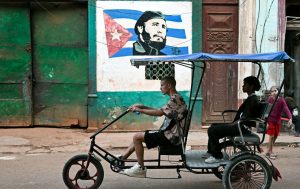
Humanitarian carve-outs could be expanded. Clearer licensing for medical supplies, food, and energy infrastructure repairs might blunt the worst effects without abandoning pressure.
Congress could reassert a role, though partisan divides make legislative change unlikely in the short term.
The hardest question is whether either side is politically prepared to compromise. Havana resists appearing subordinate. Washington resists appearing weak.
The word “blockade” carries history. In 1962, it meant nuclear brinkmanship. Today, it means diesel shortages and empty pharmacy shelves.
The United States and Cuba have cycled through confrontation and cautious rapprochement for more than six decades. Each generation seems to rediscover the limits of both isolation and engagement.
The current oil squeeze may yet force talks. Or it may harden positions and deepen suffering.
In the streets of Havana, geopolitics feels distant. What matters is whether the lights come back on.

The latest news in your social feeds
Subscribe to our social media platforms to stay tuned