




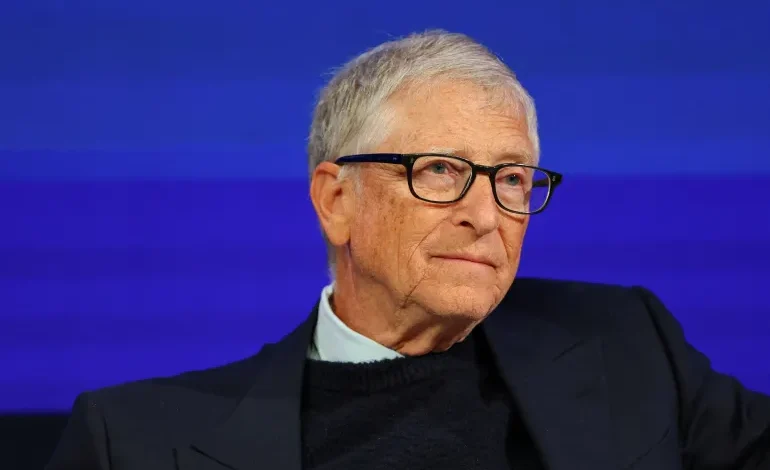

India’s flagship AI gathering was designed as a statement of intent — a five-day showcase of technological ambition, geopolitical relevance and investment potential. Instead, it has spent much of its time navigating a crisis of optics, culminating in Bill Gates cancelling his keynote just hours before he was due on stage.
The official explanation from the Gates Foundation was carefully worded. Gates withdrew “to ensure the focus remains on the AI Summit’s key priorities”, and his speech was reassigned to Ankur Vora, president of the foundation’s Africa and India offices. The phrasing suggested a desire to reduce distraction rather than a scheduling conflict, and it landed in an environment already primed for controversy.
The summit itself carries high stakes. New Delhi has framed the event as a platform for shaping the global direction of artificial intelligence and attracting more than $200bn in investment over the next two years. World leaders including France’s Emmanuel Macron and Brazil’s Luiz Inacio Lula da Silva were brought in to reinforce that message. The narrative was meant to be about India as a central node in the next phase of the tech economy.
But the conversation drifted.
In the weeks leading up to the event, Gates’s name resurfaced in documents released by the US Department of Justice related to Jeffrey Epstein. Among them was a draft email in which Epstein alleged that Gates had engaged in extramarital affairs and had sought his assistance in obtaining drugs “to deal with consequences of sex with Russian girls”. It is unclear whether the email was ever sent, and Gates has denied wrongdoing. The Gates Foundation described the claims as “absolutely absurd and completely false”.
Even so, the timing proved politically sensitive. Opposition figures and segments of the Indian media began questioning whether his presence was appropriate at a summit intended to project national credibility and technological leadership. Earlier in the week, the foundation’s India office had publicly confirmed that Gates would attend and “deliver his keynote as scheduled”. The last-minute reversal only intensified scrutiny.
The government, which had promoted the summit as a defining moment for India’s AI strategy, has largely stayed silent on the controversy and on the decision to invite Gates in the first place. That absence of direct comment has left the public narrative to be shaped by events rather than by official framing.
The keynote withdrawal did not occur in isolation. It followed another episode that fed into the same theme: an Indian university presenting a Chinese-made robot dog as a domestic innovation, only for the claim to be quickly challenged online. Taken together, the incidents have shifted attention away from policy and investment and towards questions about presentation, credibility and the pressure to demonstrate rapid progress on a global stage.
None of this alters the underlying reality that India is a major player in the AI race, with a large digital economy, a deep talent pool and significant political backing for the sector. But high-profile summits operate as performances as much as policy forums. When the performance falters, the message becomes harder to control.
Gates’s planned speech was meant to address both the opportunities and the risks of artificial intelligence — a topic that aligns closely with the development work of his foundation. Instead, his absence has become part of the story the summit will be remembered for.


The latest news in your social feeds
Subscribe to our social media platforms to stay tuned