




Armenian Apostolic Church Bishops blast government, call to “stop the persecution of the Church”
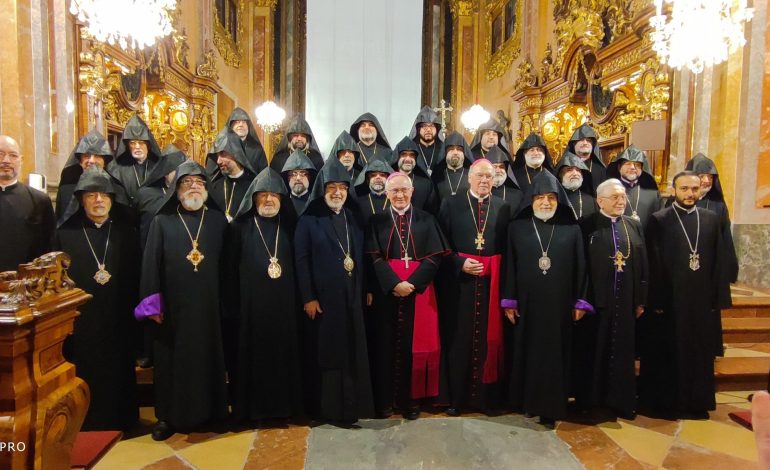

The bishops of the Armenian Church wrapped up a three-day gathering yesterday in St. Polten, issuing a blunt, public appeal that the authorities in Yerevan halt what they called an escalating campaign of repression against the Church.
Twenty-five archbishops and bishops – including representatives from the Armenian Patriarchate of Jerusalem and the Armenian Patriarchate of Constantinople – met under the blessing of the Assembly of Bishops. The sessions opened with the Lord’s Prayer and a reading from Paul’s Epistle to the Ephesians on unity; the assembly then heard a fatherly message from Karekin II by video link after he was prevented from traveling to preside in person.
What started as a pastoral meeting quickly turned into a forceful defense of the Church’s role in Armenian life. In a clear and stern statement, the bishops demanded that the government immediately stop the “persecution of the Church,” end criminal prosecutions and travel bans against clergy, and respect the centuries-old autonomy of the Mother See.
The bishops say the charges against their leader and several other senior clerics are politically motivated – a charge they made plain in public and private sessions. The gathering noted that the Catholicos had been charged and barred from leaving the country just as the assembly was due to convene, and that some bishops and clergy were prevented from participating. That, the statement said, forced the hierarchy to rely on remote messages “for the first time,” while still insisting the Church’s life and mission continue undeterred.
The statement singled out recent moves that it said undermine the Church’s position – from criminal cases against six bishops and other clerics, to a parliamentary Land Code amendment that curtails the Church’s ownership of certain leased lands.
“These unfounded and illegal actions are clearly political in nature,” the bishops wrote, adding that interference with pontifical activity is “disrespectful towards millions of believers” and harms Armenia’s reputation.
The bishops did not only criticize. They laid out concrete calls to action: an immediate review of the decisions targeting Church interests; the release of detained bishops, a priest and civilians who rallied in defense of the Church; and a return to constitutional norms and international standards protecting freedom of conscience and religion. They also urged the civil authorities to resolve problems through dialogue rather than ultimatums.
The assembly’s tone was both pastoral and firm. Speakers framed the clash as a test of national unity – insisting the Church’s mission is spiritual salvation, national identity and support for Armenian statehood, not foreign agendas. At the same time the bishops urged those within the Church who have disagreements to settle them canonically, inside Church bodies, and to avoid actions that could split the faithful.
The rows between church leadership and the state have been public and sharp. The bishops’ statement referenced recent public comments by the prime minister, Nikol Pashinyan, who had criticized the decision to hold a gathering abroad and vowed a forceful response. Government spokespeople have also made a series of accusations against clerics that the Church and many observers say amount to political pressure.
For ordinary parishioners – and for the bishops who travelled to Austria to meet – the message was meant to reassure. The assembly repeatedly called on the faithful to remain united “as one body and one Spirit,” to keep serving and ministering to their communities, and to deepen prayer and good works while institutions sort their disputes.
The gathering closed with a heartfelt appeal to the international community and sister Churches to stand by Armenia in difficult times, and with a prayer that the Church and the nation be preserved and strengthened. The bishops pledged to keep working, to reconvene synodically and to pursue reconciliation – while standing their ground against what they described as unconstitutional interference.
If the point of the meeting was to show resolve, that was achieved: the bishops left Austria with their lines drawn – defending the autonomy of the ancient Church, demanding justice for detained clergy, and asking civil authorities to step back from tactics the hierarchy says threaten both spiritual life and national unity.



The latest news in your social feeds
Subscribe to our social media platforms to stay tuned