






With input from CNBC, the New York Times, and Bloomberg.
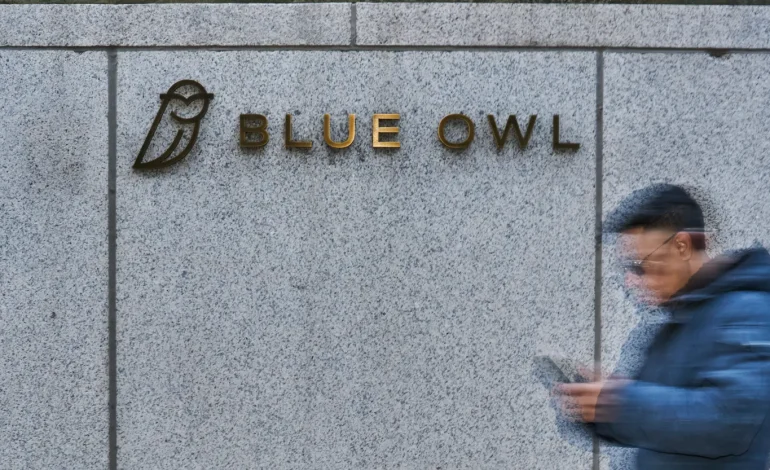
Blue Owl quietly told investors this week that one of its retail-facing private-debt funds will no longer offer the quarter-by-quarter withdrawal option — a permanent tweak that sent ripples through the market and has some observers calling the move a worrying early signal.
The firm also moved quickly to sell roughly $1.4 billion of loans from three business development company vehicles, returning about $600 million to one fund’s investors. Blue Owl executives framed the steps as orderly risk management and cash returns done on a timeline the firm controls. But the market reaction — the stock slid, peers with private-credit exposure fell — made clear the announcement landed badly.
“This is a canary in the coal mine,” said Dan Rasmussen, summing up the fear: years of low rates and slim spreads pushed lenders farther out the risk curve, and now some of that paper might be harder to cash out than investors expected.
The headlines got louder when Mohamed El‑Erian compared the moment to the early tremors before the 2007–08 crisis — a sharp soundbite that rattled confidence across the sector. Stocks of other alternative-asset players with big private-credit books, including Ares Management, Apollo Global Management and Blackstone, were hit as traders reassessed redemption risk and liquidity mismatches.
Blue Owl’s co-president, Craig Packer, pushed back on the doom-loop narrative, calling the loan sales a positive for investors and insisting the firm was accelerating capital returns. Still, analysts flagged an uncomfortable mismatch: long-dated private loans sold to investors who expect semi-regular redemptions is a model that works when cash keeps flowing — and becomes fragile when worries spike.
That fragility showed up last year with the messy failure of First Brands Group, which underlined how highly leveraged private deals can wobble and expose lenders. JPMorgan’s chief warned privately and publicly that such risks are “hiding in plain sight,” and Jamie Dimon’s blunt language about “cockroaches” has stuck in analysts’ minds.
Part of the worry is structural. Private credit has ballooned into a multitrillion-dollar market outside the strictures of bank regulation, and many retail investors now get exposure via listed BDCs and semi-liquid funds chasing yields north of plain-vanilla bonds. That crowding into higher-yield slices means defaults or liquidity squeezes could have outsized market effects.
Some of the loans Blue Owl sold reportedly went to institutional buyers, including pension plans and firms tied to the group. One buyer named in reporting was Kuvare, raising questions about whether private-credit firms are sometimes on both sides of trades — a setup that can muddy risk transparency.
Michael Shum, the CEO of a firm that builds infrastructure for private lenders, warned that multi-year credit commitments don’t mesh well with quarterly redemptions:
“When times are good, cashflows cover normal requests. When times are bad, requests surge and it becomes a race to the bottom,” said Michael Shum.
For now, Blue Owl insists it’s managing the situation — selling loans at close to par and returning money where it can. But whether this is an isolated liquidity tweak or the first sign of wider stress in private credit is the billion-dollar question. If investors start testing withdrawal gates en masse, the sector’s long-term boom could face a real trial — and the industry will learn fast whether this was the canary singing or the first note of something worse.



The latest news in your social feeds
Subscribe to our social media platforms to stay tuned