




Reuters and NPR contributed to this report.
Workers at the Chattanooga, Tennessee assembly plant have officially approved their first union contract — a decisive win that hands pay bumps, tighter job protections and a clear trophy for the union’s push into the South.
Volkswagen employees in Chattanooga voted to ratify the deal on Thursday, with about 96% of ballots saying yes. The pact ends roughly 18 months of tense bargaining after workers narrowly rejected unionization twice in the past before voting to join the union in 2024.
The agreement hands workers an immediate $6,550 bonus once the contract kicks in Monday, plus a 20% wage increase across the life of the deal, which runs through February 2030. By the end of the contract the top hourly rate will reach $39.41 for production roles and $49.86 for skilled trades like machinists and electricians — and that doesn’t even count cost-of-living adjustments. Health premiums are set to drop about 20% (more for some plans) and are locked from rising for four years. Workers also won two extra days off and new language meant to make layoffs and plant closures harder to carry out without union talks.
This is a rare Southern win for the union that led the campaign. United Auto Workers organizers and local members had been under pressure to show the movement could crack territory dominated by non-union foreign automakers. The plant’s ratification follows a 2024 vote to join the union (that earlier vote passed with roughly 73% support) and a period when members even gave negotiators the ability to call a strike if talks stalled.
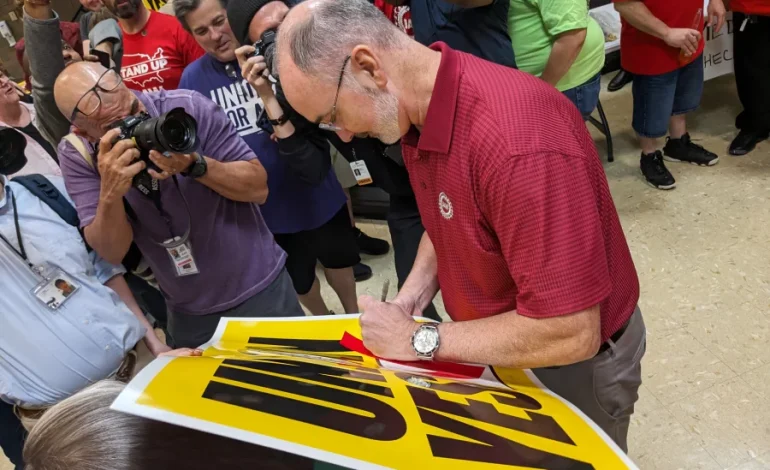
After the tally, Shawn Fain told workers the result sends a message: Southern autoworkers are “ready to fight,” and he urged other non-union workers to join up — “the water’s fine,” he quipped.
Talks had threatened to bog down until the automaker agreed to stronger job-security language, a change members say was crucial to sealing the deal. That shift — and the company’s pledge to keep the plant open and maintain production levels for the contract term — helped move bargaining committee members like Tony Bodewes off the fence.
“It’s very important for us and for the company to show to the workers that they are committed to this city,” he said.
Not everyone expects this one contract to trigger an immediate avalanche of Southern victories. Organizing in the region has been hit-and-miss: campaigns at other plants have failed recently, and one high-profile drive at a luxury manufacturer in Alabama came up short, with local political leaders publicly supporting a no vote. That campaign’s momentum was a reminder that the region’s mix of state incentives, well-paid non-union jobs and political pushback makes unionizing the South a tough slog.
Still, the deal gives the union concrete talking points. Foreign automakers and state governments poured decades of investment into Southern plants, and companies like Hyundai have tried to head off organizing by boosting pay on their own. The new contract gives organizers a clear comparison: the pay and benefits on the table here are now something to point to when knocking on other plant doors.
Members will pay union dues set at a minimum of 1.44% of monthly wages, although Tennessee’s right-to-work status means workers can choose not to pay without risking their jobs. Battery production team members like Quinton North, who’s spent nearly a decade at the plant, said the raise is welcome even if he’d hoped for a bit more paid time off and a higher top rate.
The broader industry context matters: the union scored massive gains at the Detroit automakers after strikes in 2023, and leaders have been trying to translate that momentum southward. Competitors and lawmakers will be watching how this deal affects recruitment and morale in non-union plants run by companies such as Ford, General Motors and Stellantis, as well as overseas groups that have built out US factories over the last few decades — names like Nissan, Toyota and the maker of the Alabama plant that rejected the union, Mercedes.
Politics have also shifted since the spring of 2024, with state leaders taking more visible roles in opposing unions. Kay Ivey, who celebrated her state’s no vote last year, summed that sentiment up bluntly at the time.
For now, though, the mood on the line is celebratory. The contract is a tangible win — better pay, cheaper health care and more job security — and negotiators are hoping it becomes a real recruiting card as they try to expand their foothold in a region that’s long resisted union strength.



The latest news in your social feeds
Subscribe to our social media platforms to stay tuned