



IMF warns Venezuela remains on the edge as politics and oil reshape its economic future

The International Monetary Fund’s latest assessment of Venezuela is cautious, technical and unusually blunt. The country’s situation, the Fund says, is “quite fragile” — a phrase that captures both the scale of the economic collapse and the uncertainty created by the political shock that followed the removal of Nicolás Maduro.
Speaking to reporters, IMF spokeswoman Julie Kozack made clear that the organisation is watching developments closely despite having no formal relationship with Caracas.
“Venezuela is undergoing a severe and prolonged economic and humanitarian crisis,” she said. “Socioeconomic conditions remain very difficult. Poverty is high, inequality is high, and there’s widespread shortages of basic services. The situation overall is quite fragile.”
That fragility rests on several layers at once. Inflation is again expected to run into triple digits, the currency continues to depreciate and public debt is hovering around 180 percent of GDP even before any arbitration awards from past defaults are taken into account. Behind those numbers lies a deeper structural reality: the country is still emerging from years of hyperinflation, economic contraction and institutional isolation.
The political rupture triggered by the US operation that removed Maduro has added a new variable. With the former president now in US custody and an interim administration under Delcy Rodríguez moving to implement a stabilisation plan, the economic landscape has shifted from long-term stagnation to rapid and unpredictable change. For the IMF, the central question is no longer only macroeconomic — it is also diplomatic. Any re-engagement depends not on technical readiness in Caracas but on the position of member states and the broader international community.
That diplomatic dimension matters because it determines access to liquidity. If relations were restored, Venezuela would gain control of roughly $4.9bn in Special Drawing Rights that have been frozen for years. The United States has already signalled that it could facilitate converting those reserves into dollars, a move that would immediately strengthen the country’s financial position.
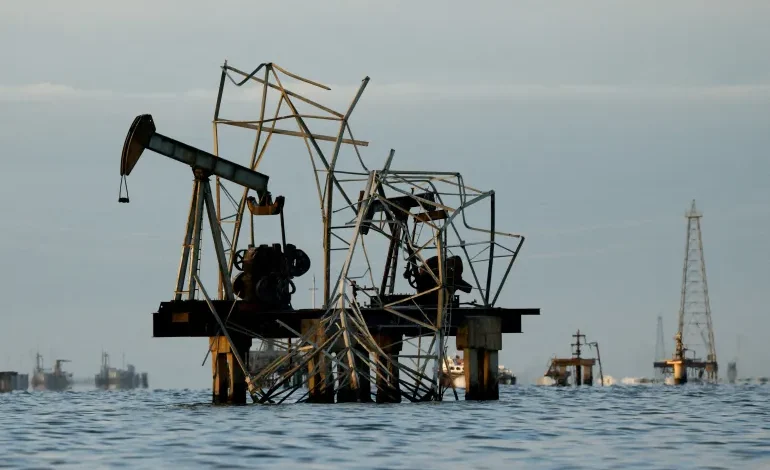
At the same time, Washington is reshaping the oil sector, which remains the backbone of any recovery scenario. The easing of some energy sanctions and the issuance of licences allowing companies such as Chevron, BP, Eni, Shell and Repsol to expand operations marks a significant shift from isolation toward controlled reintegration into global markets. The interim authorities are encouraging new foreign investment into PDVSA-linked projects, effectively tying economic stabilisation to external capital and technology.
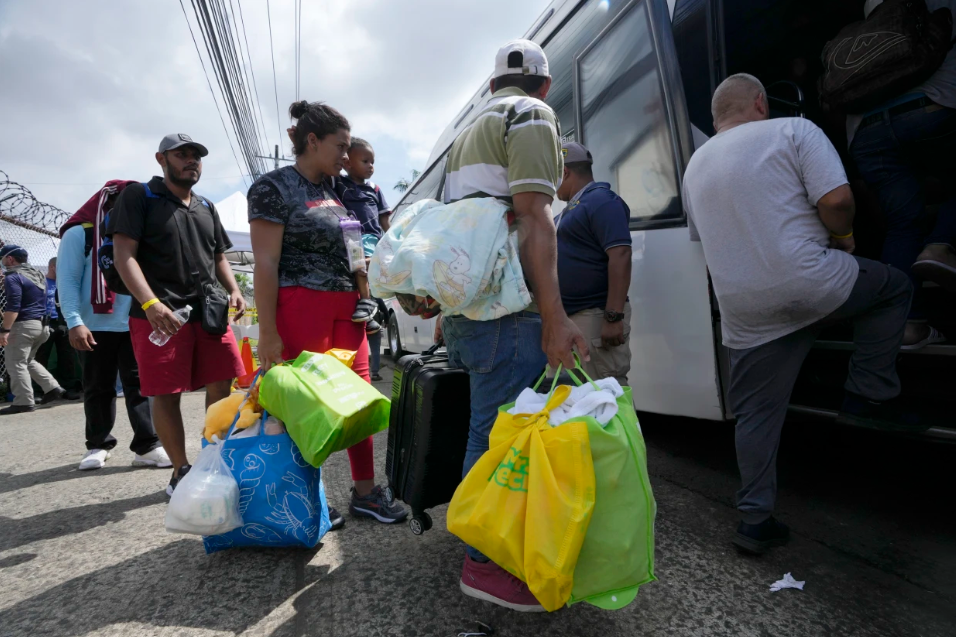
The result is a hybrid transition: a country still marked by mass emigration, collapsing public services and deep poverty, but suddenly reinserted into global financial and energy calculations. Since 2014, about eight million Venezuelans have left, creating one of the largest displacement crises in the world. That social reality is the backdrop to every macroeconomic decision now being discussed.
The IMF’s distance from Caracas also underlines how unusual the current moment is. The Fund has not carried out a formal assessment of the Venezuelan economy since 2004, and the last World Bank loan was repaid in 2007 under Hugo Chávez. Re-engagement would therefore not be a routine technical process but the reopening of an institutional relationship frozen for nearly two decades.
What emerges from the Fund’s language is not a recovery narrative but a warning: the country is entering a period of extreme volatility in which political realignment, oil-sector liberalisation and potential multilateral support are all moving at once. The economic crisis is no longer static, but that does not mean it is close to resolution.


The latest news in your social feeds
Subscribe to our social media platforms to stay tuned