

ICC to weigh Duterte trial as drug war victims seek their day in court
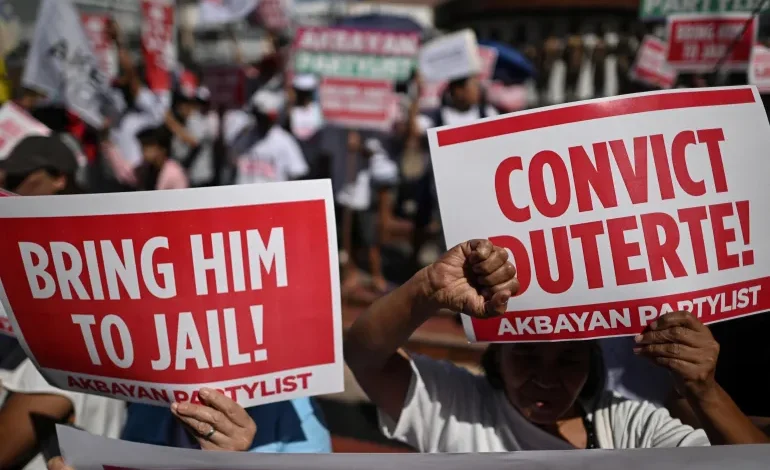

The International Criminal Court is entering a pivotal phase in the case against former Philippine President Rodrigo Duterte, opening a four-day confirmation of charges hearing that will determine whether one of the most polarising leaders of the past decade will face a full crimes-against-humanity trial.
The proceedings, beginning at 09:00 GMT on Monday in The Hague, are not about guilt or innocence. They are about threshold — whether prosecutors have presented enough evidence to move forward. After the hearing ends, judges will have 60 days to decide.
Duterte himself will not be in the courtroom. The judges ruled he was fit to attend, but granted a defence request to waive his presence. The absence underscores the unusual trajectory of a case that marks a dramatic reversal for a leader who once openly mocked the court now weighing his fate.
For families of those killed in the antidrug campaign that defined his presidency, the moment carries a different meaning. Prosecutors have brought three counts of crimes against humanity, tied to at least 76 murders between 2013 and 2018. The charges track the arc of Duterte’s rise and presidency: alleged killings in Davao City when he was mayor, the targeting of so-called “high value” suspects early in his national anti-drug campaign, and the later “clearance operations” that focused on lower-level users and dealers.
The broader death toll associated with the campaign is believed to be far higher, with estimates reaching as many as 30,000. Lawyers for victims argue that a full trial could open the door for more families to come forward.
Duterte denies all charges. His lawyer, Nicholas Kaufman, has made clear that the defence will challenge both the substance of the allegations and the court’s authority. In a letter to the judges this week, Duterte said he does “not recognise” the ICC’s jurisdiction and that he is “proud” of his legacy. He also described his transfer to The Hague as a “kidnapping” carried out with the cooperation of his successor, President Ferdinand Marcos Jr.
Jurisdiction remains one of the case’s central legal fault lines. The Philippines withdrew from the ICC in 2019 on Duterte’s orders, but the court has ruled it retains authority over alleged crimes committed while the country was still a member. The defence is appealing that decision, and the outcome of that challenge will shape the road ahead.
Beyond the legal arguments, the hearing highlights the political afterlife of Duterte’s presidency. He remains deeply popular at home, where his tough approach to crime still commands support. That divide will be visible in The Hague itself, where demonstrations have been planned both for and against him.
Human Rights Watch has called the hearing “a critical step in ensuring justice for victims of the Philippines’ ‘war on drugs’”. For the court, it is also a test of its ability to prosecute a former head of state from Asia — something it has never done before.
The latest news in your social feeds
Subscribe to our social media platforms to stay tuned