


Lula heads to Washington warning against a “new Cold War”
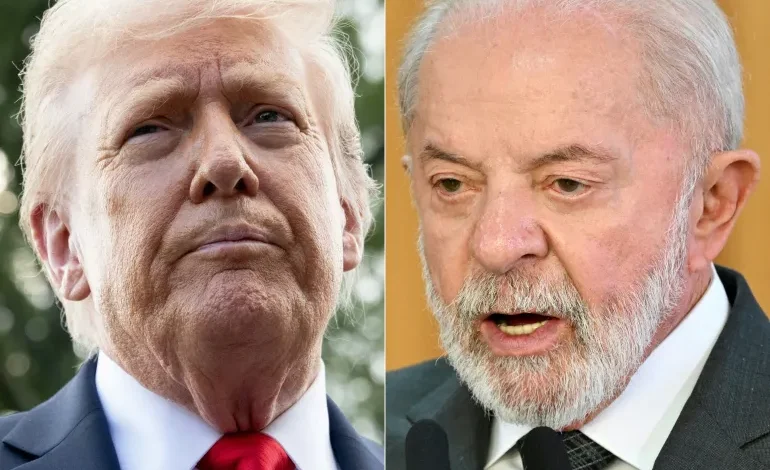

Brazilian President Luiz Inacio Lula da Silva is preparing for a high-stakes visit to Washington with a message that cuts against the grain of today’s increasingly confrontational geopolitics: Brazil does not want to be pulled into a new era of bloc politics.
“I want to tell the US President Donald Trump that we don’t want a new Cold War. We don’t want interference in any other country; we want all countries to be treated equally,” Lula said at the end of his three-day trip to India.
The remark lands at a moment when the global system is visibly shifting. Trade disputes, sanctions regimes and competing political projects have pushed major powers into sharper rivalry, and Lula has positioned Brazil as a country that wants distance from that logic rather than alignment within it. His language echoes a long-standing Brazilian foreign-policy instinct: preserve autonomy, trade widely, and avoid being locked into someone else’s strategic framework.
At the same time, the Brazilian leader signalled that the relationship with Washington is not beyond repair.
“I am convinced that Brazil-US relations will go back to normalcy after our conversation,” he said, adding that Brazil’s priorities remain domestic — “live in peace, generate jobs, and improve [the] lives of our people.”
That balancing act defines the current moment in Brazil-US ties. The two governments have clashed over tariffs, Israel’s war on Gaza, the US seizure of former Venezuelan President Nicolas Maduro and the structure of Trump’s proposed Board of Peace for Gaza. Yet recent trade exemptions for key Brazilian exports suggest that the relationship is moving back toward pragmatic cooperation.
Lula’s diplomacy in New Delhi underlined another layer of this strategy: diversification. His meeting with Indian Prime Minister Narendra Modi produced a memorandum on rare earths and critical minerals, part of a broader effort by both countries to reduce dependence on traditional supply chains and open new channels of investment, research and industrial development. The agreement is non-binding, but politically it reinforces the idea of a Global South that trades across blocs rather than choosing between them.
“The world doesn’t need more turbulence; it needs peace,” Lula said — a line that reads less as rhetoric than as a description of the environment he is trying to navigate. Brazil’s calculation is that economic recovery, job creation and social stability depend on keeping geopolitical temperature low enough for trade and investment to flow.
Whether that approach can survive the current climate is another question. Lula will arrive in Washington facing an administration that has used tariffs as leverage, framed foreign policy in transactional terms and openly tied economic access to political alignment. His visit, expected in early March, will test how much space remains for a middle-power strategy built on autonomy in a system that is drifting toward confrontation.


The latest news in your social feeds
Subscribe to our social media platforms to stay tuned