



Trump pushes back as reports highlight Pentagon caution on Iran
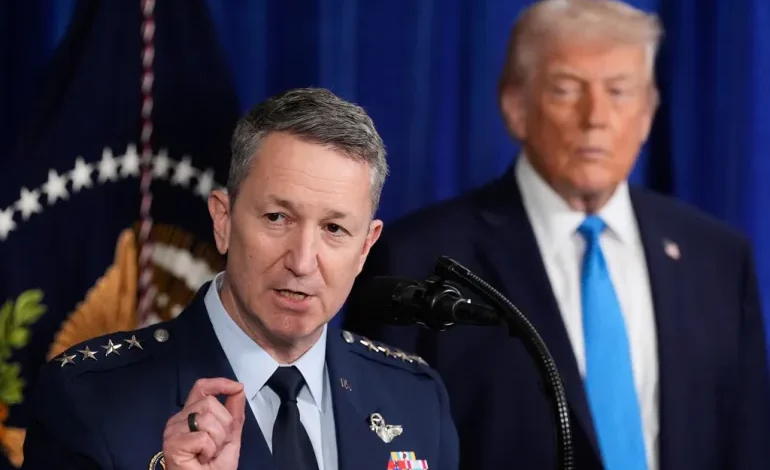

Donald Trump is publicly dismissing media accounts that his top military adviser warned about the risks of a potential strike on Iran, turning what appears to be an internal strategic discussion into a familiar clash between the White House and the press.
The dispute began after The Washington Post reported that General Dan Caine, chairman of the Joint Chiefs of Staff, had outlined a series of constraints during a meeting with the president last week. According to the report, the concerns were practical rather than political: stretched munitions stockpiles, limited backing from regional allies, the scale and complexity of any operation, and the possibility of US casualties if Iran retaliated.
US weapons inventories, including missile defence systems, have already been heavily drawn down through support for Israel and Ukraine, the newspaper said, citing a source familiar with internal deliberations. The implication was not that military options were off the table, but that the cost and duration of any conflict could exceed initial expectations.
Caine’s office responded in institutional language, noting that he is responsible for presenting “a range of military options, as well as secondary considerations and associated impacts and risks, to the civilian leaders who make America’s security decisions”. In other words, the role is to map the full landscape, not to advocate for or against a decision.
Axios added another layer, reporting that Caine has been the only senior military figure briefing Trump on Iran for weeks, while the head of US Central Command, Admiral Brad Cooper, has not been in the room since January. The same report described Caine as more cautious on Iran than he had been on the January operation in Venezuela, with one source calling him a “reluctant warrior” in this context because of the higher stakes and the risk of a drawn-out conflict.
Trump rejected the entire framing. Writing on social media, he attacked what he called “fake news media” and denied that Caine had expressed opposition to military action.
“He has not spoken of not doing Iran, or even the fake limited strikes that I have been reading about. He only knows one thing: how to WIN and, if he is told to do so, he will be leading the pack,” the president said, adding that “Everything that has been written about a potential War with Iran has been written incorrectly, and purposefully so.”
The exchange comes as the US continues to move significant military assets into the Middle East, a build-up widely seen as preparation for a possible strike. At the same time, Iran has signalled that it still sees space for negotiations, while rejecting what it describes as maximalist US demands on nuclear enrichment, ballistic missiles and regional alliances.
The broader dynamic is less about a single meeting than about how military risk is communicated in a political environment. The uniformed leadership is expected to present scenarios, constraints and second-order effects.

The latest news in your social feeds
Subscribe to our social media platforms to stay tuned