





Japan’s latest clash with China is playing out in the language of export controls and “dual-use” technology, but the dispute is really about security, signalling and the steadily tightening knot around Taiwan.
Tokyo reacted sharply after Beijing moved to restrict the export of items that can serve both civilian and military purposes to 20 Japanese organisations. Japanese Deputy Chief Cabinet Secretary Sato Kei told a news conference that the decision by China’s Ministry of Commerce on Tuesday was “deplorable” and would “not be tolerated” by Tokyo.
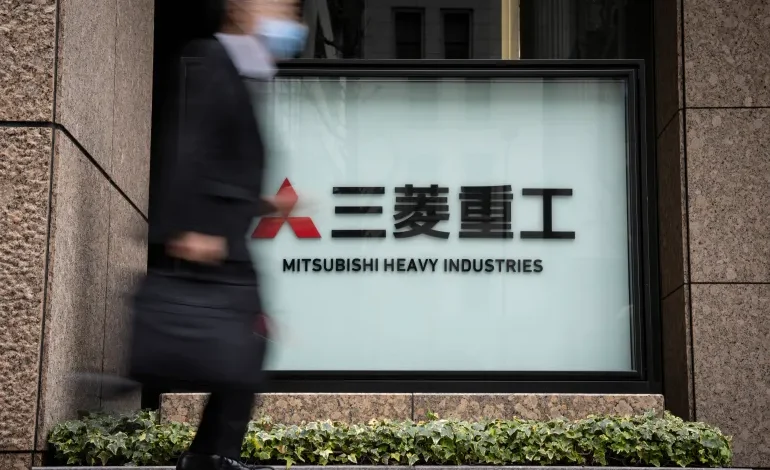
The list of affected entities reads like a cross-section of Japan’s strategic industrial base. It includes Mitsubishi Heavy Industries’ shipbuilding arm and its aerospace and marine machinery units, Kawasaki Heavy Industries, the National Defense Academy and the Japan Aerospace Exploration Agency. These are not peripheral players but institutions tied, directly or indirectly, to Japan’s long-term defence and technology posture.
Beijing framed the move in familiar terms, saying the restrictions were necessary to “safeguard national security and interests and fulfil international obligations such as non-proliferation”, and arguing that the targeted companies were involved in “enhancing Japan’s military strength”. In practical terms, Chinese exporters will now have to submit risk assessment reports for each transaction to ensure that any dual-use goods do not end up supporting Japan’s defence sector.
The measures do not stop there. China’s Commerce Ministry also said it would add another 20 entities to its export restrictions watchlist, among them automaker Subaru, petroleum producer ENEOS Corporation and Mitsubishi Materials Corporation. The expansion suggests a policy that is less about a single dispute and more about building a structured pressure mechanism.
This is not a new tactic. Beijing has used similar export controls against the United States and Taiwan, particularly in response to Washington’s continued unofficial backing of the self-governed island. China claims Taiwan as its territory and has not ruled out the use of force for what it calls reunification, and trade restrictions have become one of the tools through which it signals political displeasure.
The current downturn in Sino-Japanese relations can be traced to November, when Prime Minister Sanae Takaichi told lawmakers that a Chinese attack on Taiwan would constitute a “survival-threatening situation” for Japan and could necessitate military action. For a country whose pacifist constitution has long constrained the use of force, the statement marked one of the clearest indications yet of how Tokyo is thinking about a Taiwan contingency.
Takaichi’s remarks were accompanied by a broader push to expand Japan’s military capabilities, reinforcing Beijing’s view that Japan is moving away from its postwar security posture. China’s response was swift and multifaceted: discouraging its citizens from travelling to Japan, which hit tourism revenue, and, in January, imposing export restrictions on rare earth materials such as gallium, germanium, graphite and rare earth magnets that can be used in defence technologies, according to the US-based Centre for Strategic and International Studies.
At the time, the CSIS said that “these retaliatory measures underscore rising tensions between Beijing and Tokyo and serve as a pointed warning from China to countries that take explicit positions on cross-strait relations”.
The geography makes the issue harder to keep at arm’s length. Japan has no official diplomatic ties with Taiwan, but several of its southwestern islands, including Okinawa, sit closer to Taiwan than to mainland Japan. Taiwan is also broadly popular with the Japanese public, adding a domestic political layer to what is already a sensitive strategic calculation.


The latest news in your social feeds
Subscribe to our social media platforms to stay tuned