



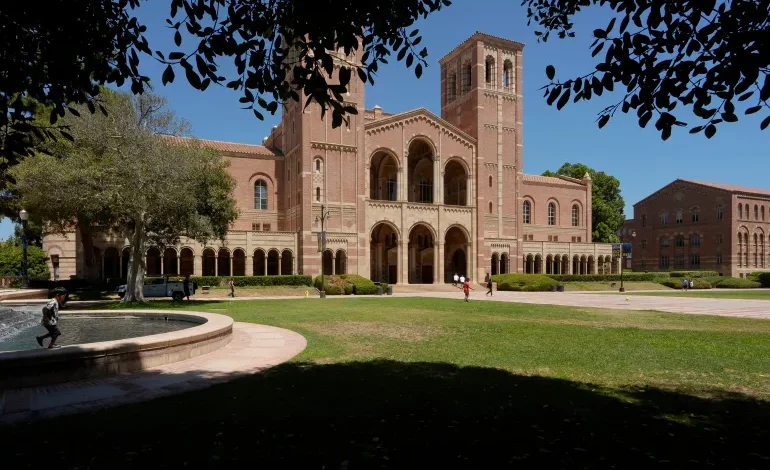

The Trump administration’s confrontation with major US universities has entered a new phase, shifting from funding threats and political pressure to a direct legal challenge. The Department of Justice is now suing the University of California, Los Angeles, accusing its leadership of allowing what it calls a “hostile work environment” for Jewish and Israeli employees during the wave of pro-Palestinian protests that followed the war in Gaza.
In its complaint filed on Tuesday, the department said the university “administration turned a blind eye to – and at times facilitated – grossly antisemitic acts”. The case is built around Title VII of the 1964 Civil Rights Act, which bars employment discrimination on the basis of religion and other protected characteristics. According to the filing, the “general atmosphere of antisemitism” on campus was “so severe and so pervasive” that it met the legal threshold for a hostile workplace.
“According to today’s complaint, after the Hamas-led massacre in Israel on October 7, 2023, antisemitic acts pervaded UCLA,” the Justice Department said in a statement. Attorney General Pamela Bondi added: “Based on our investigation, UCLA administrators allegedly allowed virulent anti-Semitism to flourish on campus, harming students and staff alike.”
The lawsuit grows out of the protest encampments and demonstrations that spread across US campuses in 2023 and 2024 as Israel’s war on Gaza intensified. The conflict, which began after the Hamas-led attack that killed nearly 1,200 people in southern Israel, has since killed more than 75,000 people in Gaza, according to the territory’s Ministry of Health and other sources. The scale of the war and the allegations of widespread human rights abuses became the central rallying point for student activists.
For the administration, those protests have long been framed as a security and civil rights issue. Trump made dismantling the encampments part of his 2024 re-election platform, which included the pledge to “Deport pro-Hamas radicals and make our college campuses safe and patriotic again.” Since returning to office in January 2025, his government has used federal funding, immigration enforcement and now litigation to press universities where demonstrations were most visible.
Critics see the lawsuit in a different light, arguing that it is part of a broader effort to bring universities into line politically and to curb protest movements the White House opposes. They point to earlier steps against institutions such as Columbia University, where federal funding was frozen in March before the school agreed in July to a $220m settlement and a series of policy changes in exchange for having its grants restored.
UCLA has already been drawn into that pressure campaign. More than $500m in federal research funding to the university has been frozen, and last year the administration pushed the public institution to pay more than $1bn in a proposed settlement tied to hiring and admissions changes. The university has not agreed to those terms and has said it has taken multiple steps to address antisemitism on campus.
The legal case also intersects with a complicated record of the protests themselves. Organisers — including some Jewish students — have consistently rejected accusations that the movement was antisemitic, saying their demonstrations were aimed at highlighting what they described as grave human rights abuses by the Israeli government. At the same time, encampments faced police crackdowns across the country, with thousands of students detained in 2024, many of them later released without charge.
At UCLA, one of the most widely reported episodes came when a pro-Palestinian encampment was attacked by a group of right-wing supporters of Israel using pipes and mace. Activists said police failed to intervene during the assault and then dismantled the encampment the following day. The university later agreed to pay a $6m settlement to three Jewish students and a professor who said they were harmed during the protests.
The administration’s approach has extended beyond funding and civil litigation. Immigration and Customs Enforcement arrested Columbia student leader Mahmoud Khalil, a permanent US resident, arguing that his protest activity threatened US foreign policy. He and other foreign-born student protesters are still fighting deportation in the courts.
Some universities have opted to negotiate. Others, including Harvard, have refused to accept the administration’s demands and now face continuing investigations and financial penalties.

The latest news in your social feeds
Subscribe to our social media platforms to stay tuned