




Medicaid Bills for Ground Ambulance and Birth Center Services Advance in Wyoming Legislature
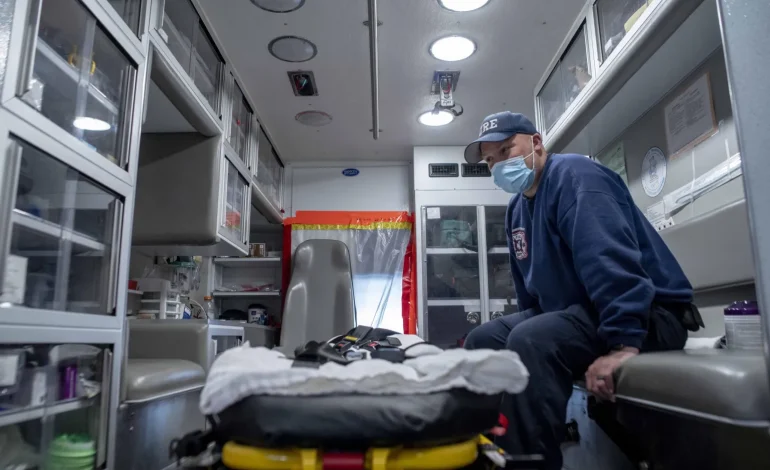

Two bills aimed at shoring up struggling rural health services in Wyoming advanced through legislative committees Monday, targeting long-standing funding gaps for ambulance providers and maternity care.
Senate File 4, which would increase Medicaid reimbursement rates for ground ambulance services for the first time in over a decade, cleared the House Labor, Health and Social Services Committee on a 5-3 vote. The measure now heads to the House floor.
Wyoming’s 44 EMS providers respond to roughly 77,000 calls annually, including 911 emergencies and inter-facility transfers. But with the state’s small population, call volumes are too low to cover the high fixed costs of maintaining 24/7 readiness, even with heavy reliance on volunteers. The average annual cost to operate a basic-life-support ground ambulance is $500,000, according to the Wyoming Department of Health.
The bill would increase state payments to ambulance companies for services to Medicaid beneficiaries at a cost of $1.3 million, drawing an additional $1.3 million in federal matching funds.
“It’s been a long time since these have been touched,” said Jesse Springer, a Medicaid division administrator with the health department.
Wyoming Hospital Association President Eric Boley called the bill “a great start in fixing a growing problem.” He warned that without action, rural EMS services face decline or closure. “Do you want EMS services in your communities, or don’t you?” he asked.
Rep. Joel Guggenmos, R-Riverton, voted no, saying he preferred local solutions rather than “putting it on the state to try to solve it with money.”
On the Senate side, the Labor, Health and Social Services Committee advanced House Bill 4, which would authorize Medicaid coverage for freestanding birth centers—state-licensed outpatient facilities specializing in pregnancy and postpartum care that are not part of a hospital.
The measure brings Wyoming into compliance with federal law and the Affordable Care Act. It would result in net savings to the state, officials said.
Until recently, no birthing centers operated in Wyoming. Sarah Morey, CEO of Earthside Birth and Wellness Center in Cheyenne—the state’s first such facility—said her center is on track to serve 60-80 families this year. The bill’s passage would support efforts to address Wyoming’s growing “OB deserts.”
Five hospitals have closed labor and delivery wards in recent years, and births continue to decline. Without adequate maternity care, experts worry mothers may forgo prenatal care or give birth in emergency rooms with staff not trained for deliveries.
“This is one step forward and just trying to help with some of our OB deserts,” said committee chair Sen. Evie Brennan, R-Cheyenne. “It’s not going to fix everything right away, but this is definitely a step in the right direction.”
The Senate committee passed the bill with little discussion. It now heads to the Senate floor.



The latest news in your social feeds
Subscribe to our social media platforms to stay tuned