
Trump’s diplomatic language meets war footing on Iran
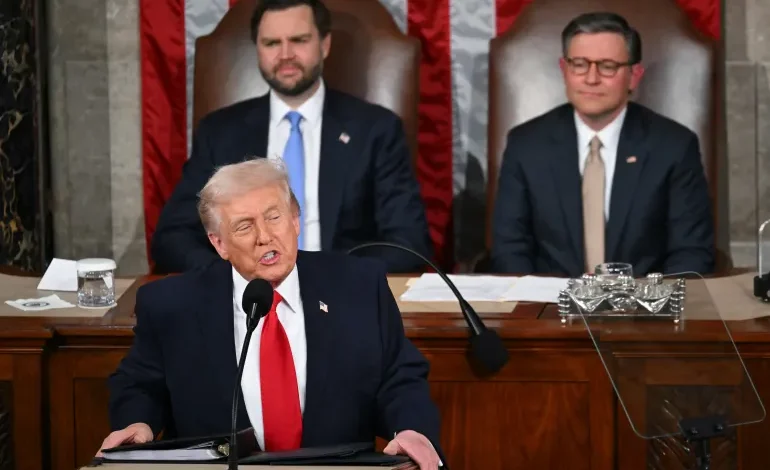

Donald Trump used one of the most closely watched moments of the political year — his State of the Union address — to sketch out a dual-track approach to Iran: a stated preference for negotiations paired with a detailed justification for why military action might still be on the table.
About an hour and a half into the record-length speech, the US president turned to Tehran, framing the issue as unfinished business from the US strikes on Iranian nuclear facilities in June 2025.
“We wiped it out and they want to start all over again. And they’re at this moment again pursuing their sinister ambitions,” Trump said, repeating his longstanding claim that the earlier attacks had destroyed the programme — an assessment that many experts have questioned.
He presented diplomacy as his first choice but made clear that it sits alongside a hard red line. “We are in negotiations with them. They want to make a deal, but we haven’t heard those secret words:
‘We will never have a nuclear weapon.’” He added: “my ‘preference’ was ‘to solve this problem through diplomacy, but one thing is certain: I will never allow the world’s number one sponsor of terror, which they are by far, to have a nuclear weapon. Can’t let that happen,” he added.
The speech blended familiar accusations with new emphasis. Trump said Iran had been warned not to rebuild its nuclear capabilities after last year’s strikes and was now doing so anyway. He also argued that Tehran was developing missiles that could “soon” reach the US mainland and repeated claims that it had been responsible for attacks that killed American service members and civilians, as well as for the deaths of protesters during antigovernment demonstrations.
Iran has long maintained that its nuclear programme is civilian in nature. Neither US intelligence agencies nor the UN nuclear watchdog reported evidence last year that Tehran was actively pursuing a nuclear weapon.
The timing of the rhetoric is as important as the content. Trump’s remarks come as Washington has increased its military presence in the Middle East and just days before a third round of indirect talks in Geneva, mediated by Oman. Those negotiations are expected to include US envoys Steve Witkoff and Jared Kushner alongside Iranian officials.
From Tehran, the tone was markedly different. Foreign Minister Abbas Araghchi wrote on X that a deal was “within reach” and said Iran was returning to the talks “with a determination to achieve a fair and equitable deal – in the shortest possible time”. He reiterated two positions that have defined Iran’s negotiating stance: “Iran will under no circumstances ever develop a nuclear weapon; neither will we Iranians ever forgo our right to harness the dividends of peaceful nuclear technology for our people.” He added that the moment represented “a historic opportunity to strike an unprecedented agreement”, “but only if diplomacy is given priority”.



The latest news in your social feeds
Subscribe to our social media platforms to stay tuned