



US sea strikes against alleged drug boats raise legal and strategic questions
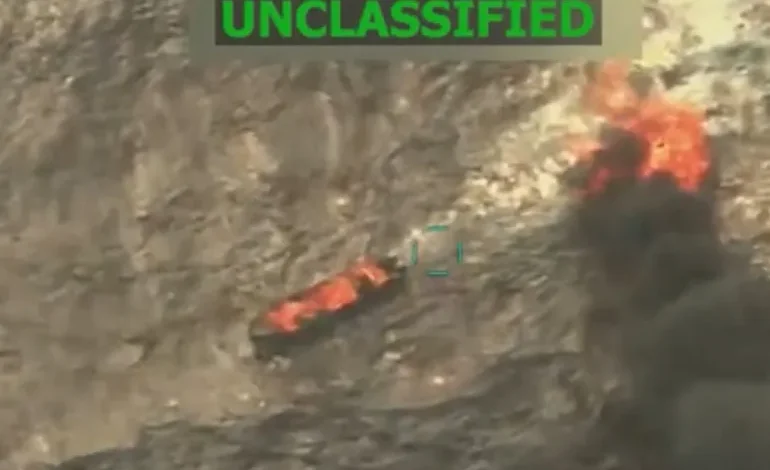

The US military says it has carried out another lethal strike in the Caribbean, part of an expanding campaign that Washington frames as a direct assault on narcotics trafficking but which critics increasingly describe as a pattern of killings without due process.
The Southern Command released video of the latest attack, showing a small vessel erupting into flames after being hit. In a short statement, it said:
“Intelligence confirmed the vessel was transiting along known narco-trafficking routes in the Caribbean and was engaged in narco-trafficking operations,” adding that “Three male narco-terrorists were killed during this action. No US military forces were harmed.”
With this operation, the number of people killed in similar strikes since the campaign began last year has climbed to roughly 150. The geography has widened as well: what started in the Caribbean has spread into the eastern Pacific, signalling that the policy is no longer episodic but structural.
The administration presents the strikes as a life-saving measure in the domestic fight against overdoses, arguing that each intercepted shipment prevents thousands of deaths. Publicly available proof has largely been limited to aerial footage, typically too indistinct to independently confirm what the targeted boats were carrying.
That gap between claim and verification sits at the centre of the legal and political backlash. Rights groups have called the operations extrajudicial killings, while UN experts warned last year that the attacks “appear to be unlawful killings carried out by order of a Government, without judicial or legal process allowing due process of law”. They added that “Unprovoked attacks and killings on international waters also violate international maritime laws,” and said they had formally raised the issue with Washington.
The timing of the campaign is also part of the context. The strikes began in September as the US increased its military presence in the Caribbean during a period of escalating tension with Venezuela. They have continued even after US forces abducted Venezuelan President Nicolas Maduro in early 2026, suggesting the policy has outgrown its original geopolitical trigger and is now tied to a broader regional security posture.
At the political level, the operations fit into Donald Trump’s effort to cast the fight against drug trafficking as a hemispheric war. On social media, he urged Mexico to intensify its actions against cartels, writing, “Mexico must step up their effort on Cartels and Drugs!” At the same time, his administration has accused some Latin American leaders of links to the drug trade, while in December he pardoned former Honduran President Juan Orlando Hernandez, who had been serving a 45-year sentence in the United States after a drug trafficking conviction.
Whether the maritime strikes have materially disrupted trafficking routes remains unclear. The drug trade has historically adapted quickly to enforcement pressure, shifting routes and methods rather than disappearing. The available data in this case does not yet show a measurable reduction in supply.

The latest news in your social feeds
Subscribe to our social media platforms to stay tuned