


EXCLUSIVE: El Mencho Is Dead. Mexico’s War on Cartels.
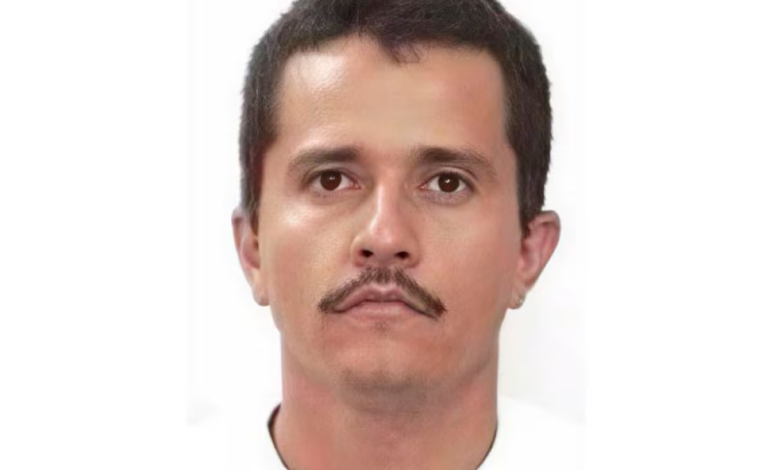

On a hot February weekend in 2026, Mexico did what it had tried to do for more than a decade: it took down the most wanted drug lord in the country. Nemesio Oseguera Cervantes – better known as El Mencho – the elusive boss of the Jalisco New Generation Cartel (CJNG), was killed in a military operation that immediately rattled Mexico’s security apparatus, jolted global markets, and set off a violent reaction across several states.
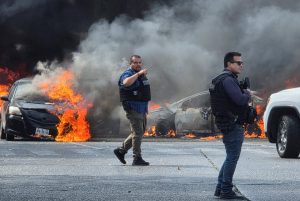
Within hours, roads were blocked with burning trucks. Commercial flights were disrupted. Gunmen set up improvised checkpoints. The cartel that had built its brand on raw, theatrical violence staged one final show of force – an oil blockade, arson attacks, and coordinated unrest – to signal that its founder’s death did not equal surrender.
The fall of El Mencho is both a headline-grabbing victory and a reminder of how deep Mexico’s drug war runs. To understand what happened – and what comes next – you have to trace three overlapping stories: the rise and death of a cartel boss, the long and bloody evolution of Mexico’s war on drugs, and the ever-present shadow of the United States.
The Fall of El Mencho
For years, El Mencho sat atop the US Drug Enforcement Administration’s most wanted list, a ghost who turned the CJNG into one of the most aggressive criminal organizations in the Western Hemisphere. The US State Department had offered a reward of up to $15 million for information leading to his capture. The Drug Enforcement Administration detailed his alleged role in trafficking methamphetamine, heroin, cocaine, and fentanyl into the United States. Washington formally designated CJNG as a major transnational criminal organization.
His backstory was pure narco folklore. Born in rural Jalisco, he migrated to California as a young man, was arrested in the US on drug charges, deported, and then rose through the ranks of Mexican organized crime. After the fragmentation of the Milenio Cartel, he consolidated loyalists and built the CJNG into a paramilitary force with armored vehicles, .50-caliber rifles, and a recruitment pipeline that reached deep into poor communities.
By the mid-2010s, CJNG was battling the Sinaloa Cartel for territory across Mexico. The cartel expanded rapidly – Guanajuato, Veracruz, Michoacán – and gained a reputation for spectacular violence. Videos showed masked men pledging allegiance, heavy weaponry laid out like trophies. The message was clear: CJNG wasn’t hiding.
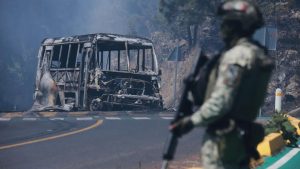
When Mexican forces finally closed in this February, the operation was swift and tightly coordinated. According to reporting from outlets including Reuters, BBC, CNN, Al Jazeera, The Guardian, and The New York Times, elite Mexican military units – supported by US intelligence – tracked El Mencho to a stronghold. The intention appears to have been capture. He died in a firefight, reportedly surrounded by loyal bodyguards who fought until the end.
The aftermath was immediate. CJNG gunmen torched vehicles, blocked highways, and attacked infrastructure in what analysts described as a coordinated attempt to demonstrate that the organization remained operational. Oil facilities were targeted in what became known as a temporary “oil blockade,” raising fears about energy security and economic disruption.
The spectacle followed a familiar script. A high-value target falls. The cartel retaliates publicly. Civilians pay the price.
Dr. David Shirk, director of the Justice in Mexico program at the University of San Diego, put it bluntly:
“This operation is a clear demonstration of the need for US-Mexico security cooperation. This operation could not have happened without US intelligence sharing, but it also probably would not have happened without the political will of the Sheinbaum administration. That political will is clearly partly a reflection of Sheinbaum’s personal resolve to strengthen the rule of law in Mexico, but there is no denying that her government is also under tremendous pressure from the Trump administration to show results in combatting organized crime. In the short run, operations like this one catch headlines, but the hard, dull work of combatting organized crime lies in improving judicial sector professionalization (especially police and prosecutors), developing successful investigations and prosecutions to break up criminal conspiracies, combatting public and private sector corruption, and aggressively hitting organized crime groups where it hurts the most: their financial operations.”
In his recent piece, Dr. Shirk dives deeper into the operation against El Mencho.
Dr. Robert J. Bunker, Director of Research & Analysis at C/O Futures and an El Centro Senior Fellow at Small Wars Journal, the author of ‘Criminal Drone Evolution: Cartel Weaponization of Aerial IEDs,’ framed the killing in geopolitical terms:
“El Mencho was eliminated by specialized Mexican military forces supported by US intelligence assets. For the Claudia Sheinbaum administration, this cooperative and successful operation was politically significant because of ongoing Trump administration threats of unilaterally attacking cartel leadership and infrastructure in Mexico. It signifies Mexico’s willingness to support the Trump administration’s national security priorities of protecting the US homeland and helps to reduce bilateral tensions. Mexico and the US have long maintained close training and governmental relationships, even as each administration promotes narratives directed at its bases and constituents to retain electoral and domestic support for its policies and political parties.
It looks like the intent was to capture El Mencho and send him to the US for trial (he would eventually end up in a SuperMax) – so killing him was not the intent – but he went down fighting (like an old school narco) with his bodyguards protecting him in a firefight. It’s still a big win for Mexico and the US. This is close in significance to the killing of Pablo Escobar – though Pablo had fully declared war on the Colombian state and became an existential threat, El Mencho had not fully risen to this level.”
That comparison to Pablo Escobar matters. Escobar’s death in 1993 symbolized the collapse of a cartel empire. But Colombia’s drug trade didn’t vanish – just fragmented.
Chris Dalby, organized crime expert and author of ‘CJNG: A Quick Guide to Mexico’s Deadliest Cartel,’ sees continuity rather than rupture:
“The killing of Nemesio Oseguera Cervantes, alias El Mencho, sits firmly within Mexico’s long-running “kingpin” playbook rather than representing a sharp break under Claudia Sheinbaum. Leadership decapitation operations, carried out with close US intelligence support, have been a constant feature of Mexican security policy since at least the Calderón years. What feels different now is the political framing. With Donald Trump back in the White House and pushing an aggressively simplified war-on-crime narrative, these operations are being treated as proof of alignment and resolve. From Washington’s perspective, El Mencho is a trophy. From Mexico’s perspective, the calculus is more complicated, because the costs of what follows are almost entirely absorbed on Mexican soil.
Historically, the problem has never been Mexico’s ability to locate and remove a cartel leader, but what comes next. Cartels are not dismantled by killing a single figure, however powerful; they are ecosystems sustained by corruption, money laundering, territorial control, and recruitment pipelines that remain intact after a kingpin falls. Without parallel pressure on finances, local political protection, and criminal markets, leadership strikes tend to produce fragmentation, internal conflict, and surges in violence. The operation against the CJNG leader therefore tells us less about a new anti-cartel strategy than about the continued prioritisation of visible, headline-friendly wins within a US–Mexico security relationship increasingly shaped by Trump’s optics-driven approach to the drug war.”
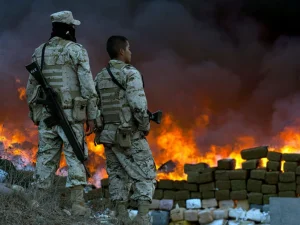
The kingpin is gone. The ecosystem remains.
Cartels and the Mexican State
Mexico’s drug war did not begin with El Mencho. It did not begin with the CJNG either. Its roots stretch back decades – to prohibition in the United States, to smuggling routes established in the 20th century, to a political system that once tolerated and managed criminal groups through informal arrangements.
The modern conflict escalated dramatically in 2006 when then-President Felipe Calderón deployed the military against cartels, launching what became known as the Mexican drug war. Since then, hundreds of thousands have been killed or disappeared.
Cartels evolved. They professionalized. They militarized.
Research from institutions such as the Council on Foreign Relations and the Baker Institute charts the transformation from vertically integrated trafficking groups to decentralized, franchise-style networks. Groups like the Sinaloa Cartel maintained global logistics pipelines. CJNG adopted shock-and-awe tactics and expanded into extortion, fuel theft, and illegal mining.
Technology entered the battlefield. Analysts at Brookings and security researchers documented cartel use of drones for surveillance and even weaponized aerial IEDs. Dr. Bunker himself has written extensively about criminal drone evolution. Armored vehicles – “monstruos” – rolled through contested towns. Social media became a propaganda channel.
The US government designated several Mexican cartels as major transnational criminal organizations and, more recently, as foreign terrorist organizations. The logic was partly symbolic and partly legal: unlock additional tools for sanctions and prosecution.
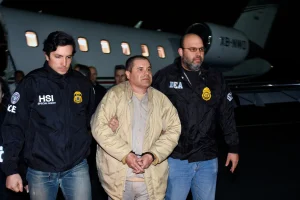
But strategy has often centered on “decapitation” – arresting or killing top leaders. It worked, in a narrow sense. Figures like Joaquín “El Chapo” Guzmán were captured and extradited. Yet each takedown tended to produce splinter groups. Fragmentation meant more turf wars. More turf wars meant more violence in urban and rural communities.
Academic literature has tracked this pattern. Studies in journals such as the Journal of Development Economics and legal scholarship from Georgetown argue that leader removal correlates with short-term spikes in violence. The International Committee of the Red Cross has documented armed clashes resembling non-international armed conflict.
Meanwhile, parts of Mexico operate under what some analysts describe as criminal governance. Investigations and mapping by journalists and think tanks show cartels collecting “taxes,” regulating local markets, even enforcing their own order.
The CJNG mastered this hybrid model. It was at once a trafficking syndicate and a territorial militia. It fought the state directly – ambushing police convoys, shooting down a military helicopter in 2015 – while also embedding itself in local economies.
So when El Mencho fell, the question wasn’t whether violence would follow. The question was how much and where.
Shadow from the North
No discussion of Mexico’s drug war is complete without the United States.
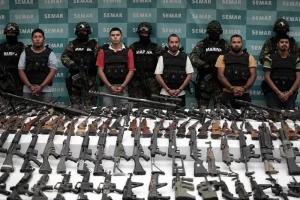
Demand for narcotics fuels supply. American consumers are the primary market for fentanyl, methamphetamine, and cocaine trafficked by Mexican groups. US law enforcement agencies – from the DEA to Homeland Security Investigations – work closely with Mexican counterparts on intelligence, extraditions, and financial tracking.
But there’s another pipeline. Southbound.
A significant share of the firearms used by Mexican cartels originates in the United States. Reporting by outlets including Rolling Stone, USA Today, and analyses of US gun policy highlight how lax purchasing rules and straw buyers enable trafficking. The phenomenon is well-documented in studies of firearms smuggling into Mexico and in investigations into weapons trafficking by US agencies.
High-powered rifles, .50-caliber weapons, and even ammunition designed for military platforms have surfaced in cartel arsenals. Articles in the New York Times have examined how US-manufactured rounds end up in Mexican crime scenes. Scholars at the University of Navarra and other institutions have linked US gun policy to regional violence dynamics.
Against this backdrop, President Donald Trump returned to office with a hardline message. The White House vowed harsh consequences if cartels targeted US citizens. Executive actions designated cartels as foreign terrorist organizations and specially designated global terrorists. Reports from Reuters and NBC News detailed internal discussions about potential drone strikes or expanded military roles.
Trump’s rhetoric has been blunt: cartels are invading forces. He has floated unilateral action on Mexican soil.
That prospect has always been politically explosive in Mexico. Sovereignty is a historical memory there.
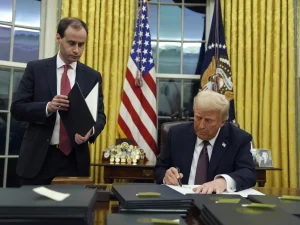
Yet US intelligence reportedly aided the hunt for El Mencho. A new military-led group assisted with targeting, according to Reuters. After the operation, Trump spoke with Mexican President Claudia Sheinbaum. Public statements stressed cooperation.
The tension lies in optics versus structure. Washington celebrates a trophy kill. Mexico absorbs retaliatory violence. US officials condemn cartels while American firearms flow south and drug demand remains steady.
Critics, including analysts at the Washington Office on Latin America, argue that militarized approaches alone will fail. Others note that domestic US reforms – on guns, addiction treatment, money laundering – are inseparable from cartel power.
The bilateral relationship oscillates between partnership and pressure. Intelligence sharing thrives quietly. Political messaging often does not.
Claudia Sheinbaum’s Move
President Claudia Sheinbaum inherited a country fatigued by violence. During her campaign and early months in office, she outlined plans to strengthen intelligence, professionalize police forces, and invest in social programs aimed at prevention. Interviews with outlets such as NPR emphasized institutional reform over spectacle.
Then El Mencho died.
Some observers see the operation as proof that Sheinbaum is willing to act decisively. Editorials in publications like the Wall Street Journal cast the killing as a turning point. Others, including analysts writing for Americas Quarterly and Forbes, question whether this marks a durable shift or a single, high-profile strike shaped by pressure from Washington.
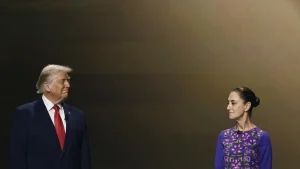
Sheinbaum has had to navigate a complicated relationship with Trump. She has publicly rejected the idea of unilateral US airstrikes inside Mexico. She has pushed back against inflammatory rhetoric, including criticism amplified by high-profile figures abroad. At the same time, she has avoided open confrontation, mindful of trade ties and migration politics.
Fortune once dubbed her a potential “Trump whisperer,” able to manage the US president without capitulation. That balancing act is now under strain.
Was the operation against El Mencho a demonstration to Washington? Or the first visible move in a broader strategy?
Dr. Shirk’s observation cuts to the heart of it: political will matters, but institutional reform matters more. Without stronger prosecutors, cleaner local governments, and sustained financial disruption, the CJNG can regenerate under new leadership.
Early signs suggest jockeying within the cartel’s ranks. Fragmentation is possible. Alliances may shift. Violence could spike in contested corridors.
Sheinbaum faces a narrow path. Escalate militarization and risk repeating cycles of the past. Ease pressure and risk ceding ground. Cooperate with Trump and risk domestic backlash. Defy him and risk economic consequences.
El Mencho’s death is not an ending.
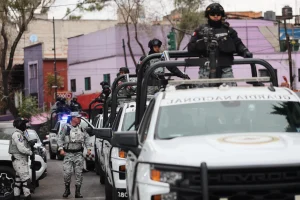
The CJNG’s show of force after the operation was a reminder that organizations outlive individuals. Cartels adapt. They rebrand. They recruit.
Mexico’s drug war has always been shaped by three forces: domestic institutions, criminal innovation, and US policy. Remove one variable, and the equation still produces instability.
The killing of Nemesio Oseguera Cervantes will be studied for years. Intelligence cooperation worked. Political timing mattered. Optics were powerful.
But the deeper questions remain stubborn. Can Mexico build prosecutorial and police institutions capable of dismantling criminal ecosystems? Will the United States confront the role of its gun markets and drug demand with the same intensity it directs at cartel leaders? Can two neighbors align strategies without reducing them to campaign slogans?
El Mencho died in a firefight, an “old school narco” to the end, as Dr. Bunker put it. His cartel set highways ablaze in response. The war rolls on – less cinematic, more grinding, fought in courtrooms and border crossings as much as in mountain strongholds.
Headlines fade. Structures endure.


The latest news in your social feeds
Subscribe to our social media platforms to stay tuned