


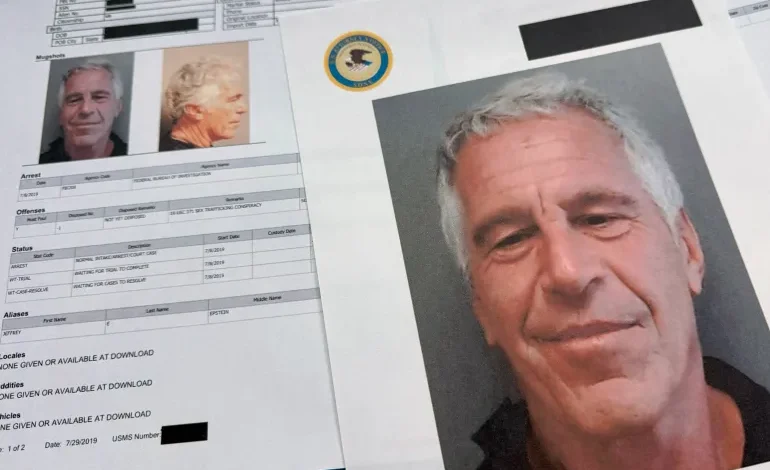

Peter Mandelson’s release on bail after hours of police questioning marks a dramatic turn for a figure who, until recently, occupied one of the most prestigious posts in British diplomacy. Arrested on suspicion of misconduct in public office over the alleged leaking of sensitive government information to Jeffrey Epstein while serving as a minister in the early 2000s, the former UK ambassador to Washington now finds himself at the centre of a widening political and institutional shock.
His detention came days after the arrest of Andrew Mountbatten-Windsor — formerly Prince Andrew — over similar allegations. Together, the two cases have pushed the Epstein document releases from a reputational issue into a criminal and constitutional moment for Britain.
Only months ago, Mandelson was representing the United Kingdom in Washington. Since then, he has lost that role, faced a police search of his home, stepped down from the House of Lords and now confronts the possibility of prosecution that could carry a life sentence if he were convicted. The speed of the reversal has intensified scrutiny of Prime Minister Keir Starmer, whose decision to appoint him ambassador had already triggered the resignation of his chief of staff, Morgan McSweeney, and raised questions about the government’s political judgement.
The royal family has been pulled into the same vortex. Andrew’s arrest — the first of a senior royal in centuries — prompted King Charles III to say that “the law must take its course.” Royal biographer Andrew Lownie has warned that the pressure could “bring down King Charles” if questions grow about what the monarch knew regarding his brother’s dealings.
Across Europe, the reaction to the newly released US files has been swift and institutional. In France, former Culture Minister Jack Lang resigned from the leadership of a Paris cultural institution after the foreign ministry sought to question him over contacts with Epstein. In Norway, former Prime Minister Thorbjorn Jagland has been charged with “gross corruption” over trips, expenses and stays linked to Epstein’s properties; he faces up to a decade in prison if convicted. Norway’s ambassador to Jordan, Mona Juul, stepped down after reports that Epstein left $10m to her children, while Crown Princess Mette-Marit issued an apology for having holidayed at one of his residences.
In Slovakia, national security adviser Miroslav Lajcak also resigned after his association with Epstein became public. The pattern has been consistent: appearance in the files alone has been enough to trigger formal inquiries, political departures or both, even where criminal liability has yet to be established.
The contrast with the United States is stark. There, public anger over Epstein’s network has been sustained for years, and lawmakers from both parties — including Ro Khanna and Thomas Massie — have pushed for the files’ release, describing an “Epstein class” of elites who operated with impunity. Yet criminal accountability beyond Epstein himself and Ghislaine Maxwell, who is serving a 20-year sentence, has remained limited.
FBI documents list eight alleged co-conspirators, among them Lex Wexner, Lesley Groff and Jean-Luc Brunel, who died in custody in France. None has been convicted in the United States in connection with the trafficking case. That lack of prosecutions stretches across multiple administrations, from the controversial non-prosecution agreement reached in 2007-08 under George W Bush to the presidencies that followed.
What has unfolded in the US instead has largely been reputational damage and institutional distancing. Lawrence Summers stepped back from academic duties at Harvard. Brad Karp resigned as chair of Paul Weiss. The NFL said it would review correspondence involving Steve Tisch. Peter Attia apologised and left roles in both the private sector and media. Others named in communications — including Steve Bannon, Howard Lutnick and Elon Musk — have not faced charges. Bill Clinton has testified before Congress about his relationship with Epstein, and Donald Trump, whose name appears repeatedly in the documents, has denied wrongdoing.
The divergence in responses points to different political and legal cultures. In Europe, the files have been treated as a trigger for formal investigation and immediate accountability. In the United States, they have reinforced a long-running debate about why the wider network around Epstein has produced so few criminal cases.


The latest news in your social feeds
Subscribe to our social media platforms to stay tuned