



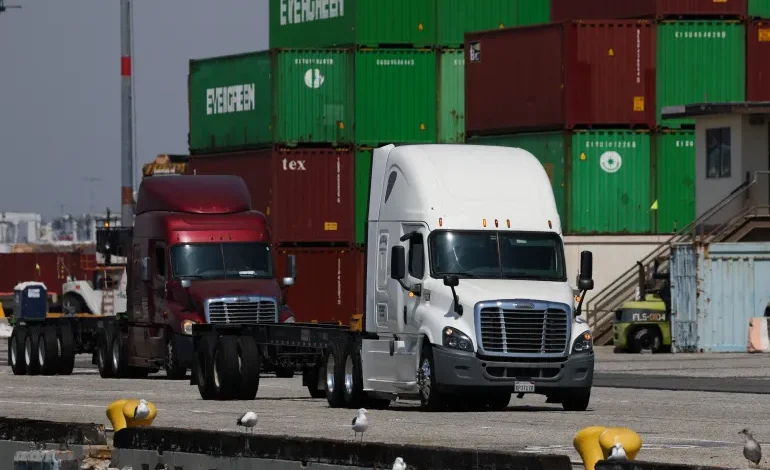

The United States has begun collecting a new 10 percent tariff on most imported goods, a rapid reset of its trade regime that comes just days after the Supreme Court struck down the bulk of President Donald Trump’s previous duties.
The new levy took effect at midnight on Tuesday under a notice from US Customs and Border Protection, replacing a system of country-specific tariffs that had ranged from 10 to 50 percent before the court ruled that Trump had exceeded his authority in using a 1977 law to impose them.
The speed of the move underlines how central tariffs remain to the administration’s economic strategy. The White House has framed the measure as a temporary step justified by what it calls “the large and serious United States balance-of-payments deficits”, pointing to a $1.2 trillion annual goods trade gap, a current account deficit equal to 4 percent of gross domestic product and the erosion of the country’s primary income surplus.
Formally, the new duty can last only 150 days unless Congress extends it. Politically and economically, it is being treated as a bridge toward a more durable framework. Trump initially described the 10 percent rate as temporary and then said he intended to raise it to 15 percent, though no timeline has been provided. A White House official told Reuters he had “no change of heart” about that higher level, leaving businesses and trading partners to navigate a policy that is both active and unfinished.
The Supreme Court’s six-to-three ruling did more than cancel the earlier tariffs; it forced the administration to find a different legal pathway. That has halted the collection of the previous duties and raised immediate questions about whether companies that paid them will be reimbursed.
Financial markets and analysts are trying to gauge the net effect. Deutsche Bank said the effective tariff rate could still fall this year compared with the pre-ruling system, suggesting that despite the new measure the overall level of protection may end up lower than before the court intervened. The president’s State of the Union address is being watched for clearer guidance on the next phase.
For US trading partners, the shift has created a transitional moment rather than a clean break. China urged Washington to abandon what it called “unilateral tariffs” while signalling it remained open to another round of negotiations and would decide later on any countermeasures. Japan, which has a trade deal with the United States, asked for assurances that its treatment under the new system would remain at least as favourable as before, emphasising continuity ahead of its prime minister’s visit to Washington. Officials on both sides said they would implement last year’s agreement “in good faith and without delay”.
The European Union faces a different calculation. It has already agreed to a trade framework with a 15 percent base tariff, leaving the bloc in the position of dealing with a temporary US rate that is lower than the one in its own agreement. EU Trade Commissioner Maros Sefcovic described the situation as a “transitional period” and said US officials had reassured him that Washington would honour the deal.
Trump has paired the new tariffs with a warning that countries should not retreat from recently negotiated trade arrangements, saying those that do could face much higher duties under other legal authorities. That threat reinforces the sense that the 10 percent measure is less an end point than a holding position while the administration rebuilds its trade policy after the court’s intervention.

The latest news in your social feeds
Subscribe to our social media platforms to stay tuned