

Mexico insists World Cup plans remain on track after cartel violence rattles host city
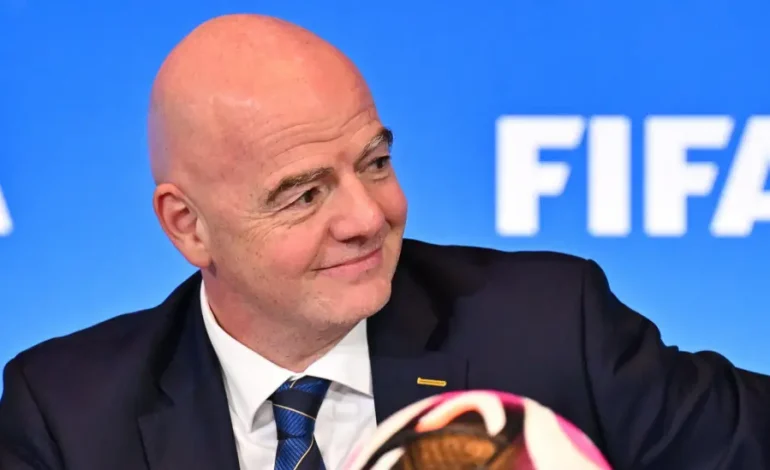

The World Cup is still four months away, but in Mexico the tournament has already collided with the country’s security reality. Days after coordinated cartel violence spread across much of the country, FIFA president Gianni Infantino struck an upbeat tone, even as football authorities and visiting teams weighed the risks more cautiously.
“Very reassured, everything’s good. It’s going to be spectacular,” Infantino said in Barranquilla on Tuesday, referring to preparations in one of the three host nations for the June 11–July 19 tournament. His comments came just 48 hours after gunmen linked to the Jalisco New Generation Cartel launched retaliatory attacks following the killing of their leader, Nemesio “El Mencho” Oseguera, in a military operation near Guadalajara.
The scale of the violence was hard to contain within official narratives. At least 74 people were killed in the operation and the clashes that followed. Authorities say only one of them was a civilian, but the images that travelled worldwide showed highways blocked in 20 of Mexico’s 32 states, vehicles set on fire and businesses forced to shut down. In tourist areas such as Puerto Vallarta, the atmosphere was one of shock. “It feels like we’re in a war zone,” said Javier Perez, an engineer who spoke from a supermarket car park littered with burned-out cars.
That contrast — between the global message of reassurance and the local experience of disruption — is now shaping the conversation around the tournament. Guadalajara, which will host four group-stage matches and part of the playoff tournament that decides the final two qualifiers, was directly affected by the unrest. Mexico City and Monterrey, the country’s other host venues, were not.
For the Mexican government, the priority has been to stabilise the narrative as much as the situation on the ground. President Claudia Sheinbaum said there was “no risk” to fans and that conditions were “gradually returning to normal”. Jalisco Governor Pablo Lemus went further, ruling out any possibility that Guadalajara could be dropped as a host and insisting there was “absolutely no risk” of a change to the lineup.
Inside football, the responses have been more measured. Mexico national team coach Javier Aguirre said preparations were continuing as planned, but the Portuguese Football Federation said it was “closely monitoring the delicate situation currently unfolding in Mexico” before deciding whether to play a scheduled friendly in Mexico City at the end of March. It added that safety considerations would be decisive.
The timing has made the episode particularly sensitive. In addition to its four group matches — including one of the most anticipated early fixtures between Uruguay and Spain — Guadalajara is due to co-host the intercontinental playoff tournament later in March. A first-division game in Querétaro was already suspended because of the violence, and the central state will now be under scrutiny when Mexico plays Iceland there in a friendly.
What emerges is a familiar tension for major sporting events in countries facing internal security challenges. The official line is that the tournament can proceed normally, backed by the argument that the violence was linked to a specific operation and that the situation is stabilising. The international football community, meanwhile, is signalling confidence while quietly building in room to reassess.

The latest news in your social feeds
Subscribe to our social media platforms to stay tuned