
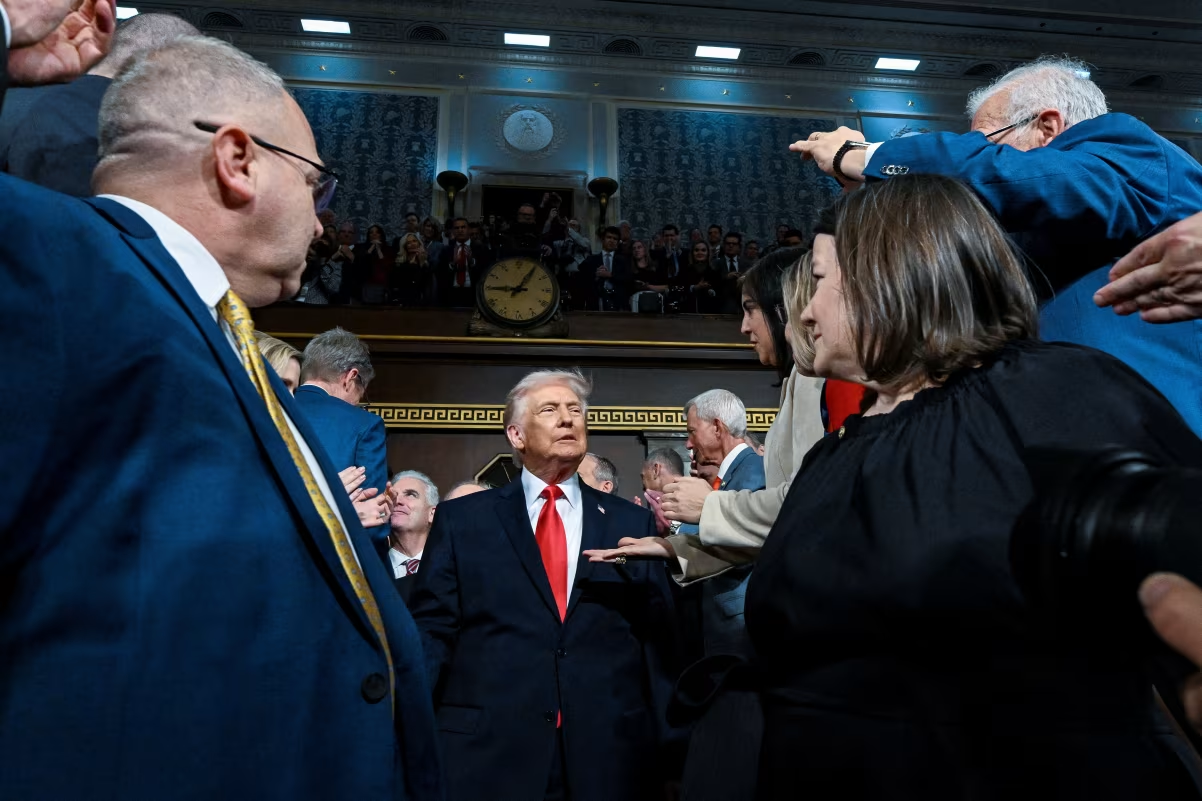


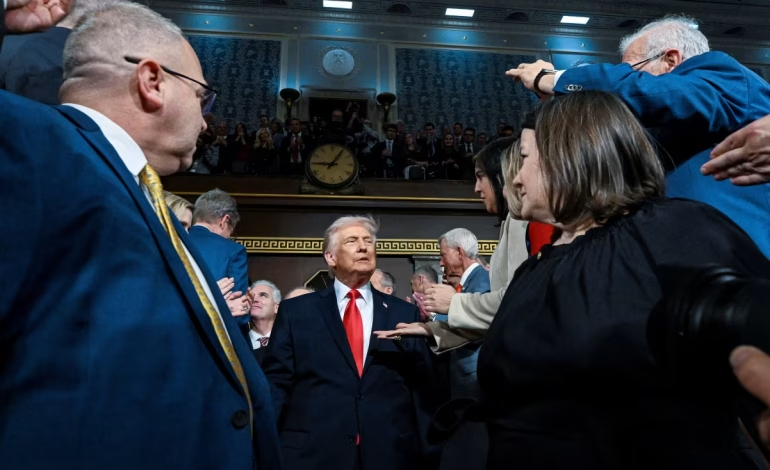

Donald Trump’s first State of the Union of his second term stretched to nearly one hour and 47 minutes, the longest such address on record, and unfolded at a politically fragile moment — days after the Supreme Court struck down his global tariff regime and as his approval ratings remain weak. The speech mixed campaign messaging, ceremony and confrontation, while sidestepping some of the issues that have weighed most heavily on his presidency.
Immigration quickly became the central political dividing line. After highlighting “angel moms” whose children were killed by undocumented immigrants, Trump framed the next election as a choice between border security and what he described as a return to open borders. He challenged Democrats to stand in support of the idea that “the first duty of the American government is to protect American citizens, not illegal aliens.” They remained seated, prompting him to say:
“You should be ashamed of yourself not standing up,” as Republicans prolonged their applause to underscore the contrast.
Tariffs — the issue most immediately shaped by the Supreme Court’s ruling — were handled more cautiously than in his recent public remarks. Trump avoided directly attacking the justices and instead insisted he still had other tools at his disposal. He also signalled he would not seek to have Congress codify his tariff policy, saying, “Congressional action will not be necessary,” even though the Constitution assigns tariff authority to lawmakers. He coupled that with a sweeping claim about their long-term impact:
“I believe the tariffs paid for by foreign countries will, like in the past, substantially replace the modern-day system of income tax, taking a great financial burden off the people that I love.”
Democratic protests punctuated the speech despite party leaders urging restraint. Rashida Tlaib called on Trump to release more Epstein files and Ilhan Omar shouted criticism from the chamber. Al Green was escorted out after displaying a sign referencing a recently circulated racist video. At another point, a Democrat shouted “liar” in response to Trump’s claim that he had ended eight wars. Several lawmakers walked out before the address concluded.
As in his previous speeches, the president relied heavily on stagecraft. He devoted extended time to honouring the US men’s Olympic hockey team, awarded medals to military figures and a Korean War veteran, and orchestrated a reunion for a Venezuelan political prisoner. He repeatedly drew attention to whether Democrats were applauding, turning even ceremonial moments into partisan markers.
At the same time, some of his most politically difficult topics received little attention. He did not discuss the controversy surrounding the killing of two US citizens by immigration agents in Minneapolis, barely mentioned deportation policy and avoided the Epstein files despite their recent release. The economy — consistently one of the most challenging issues for his administration — was addressed largely through broad claims rather than detailed policy.
On foreign policy, Trump offered one of his more explicit attempts to justify the possibility of new strikes on Iran, eight months after the attack on its nuclear facilities. He argued Tehran had “killed and maimed thousands of American service members” and said it was again pursuing nuclear capabilities.
“They were warned to make no future attempts to rebuild their weapons program, in particular, nuclear weapons,” he said. “Yet they continue starting it all over. We wiped it out, and they want to start all over again – and are, at this moment again, pursuing their sinister ambitions.” He reiterated that he preferred diplomacy but concluded, “I will never allow the world’s number one sponsor of terror, which they are by far, to have a nuclear weapon. Can’t let that happen.”
The speech also contained a pointed warning about the 2026 midterms.
“They want to cheat,” Trump said of Democrats. “They have cheated, and their policy is so bad that the only way they can get elected is to cheat. And we’re going to stop it. We have to stop it.” The remarks came as he pushes for stricter voter ID laws and as his Justice Department pursues investigations tied to past elections.

The latest news in your social feeds
Subscribe to our social media platforms to stay tuned