


Guadalajara prepares for World Cup under the shadow of cartel violence
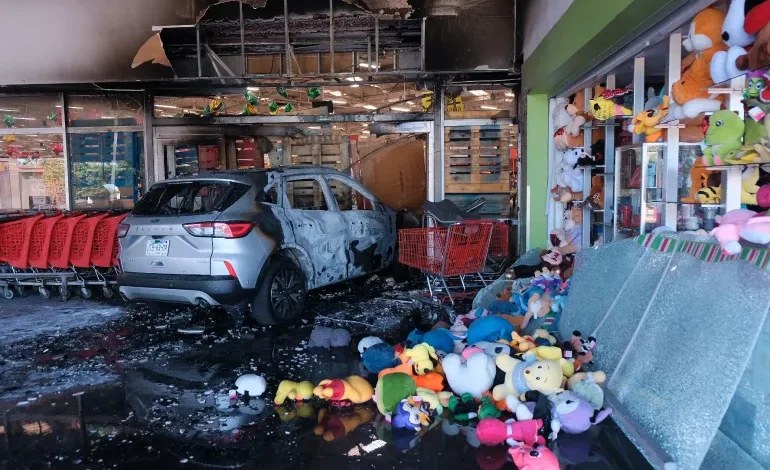

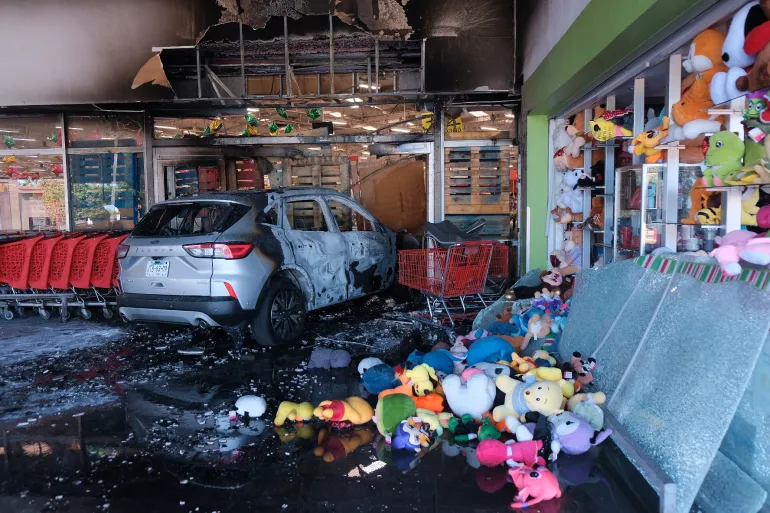
Guadalajara is trying to pivot from a weekend of burning vehicles and empty streets to the choreography of a global sporting event. In four months, the city is scheduled to host World Cup matches. For now, the images that linger are of suspended classes, shuttered businesses and highways blocked after the killing of one of Mexico’s most powerful cartel leaders.
Nemesio “El Mencho” Oseguera, head of the Jalisco New Generation Cartel, was killed in an army operation about 130km from the city on Sunday. The response from the organisation was immediate and nationwide: gun battles with security forces that left at least 57 people dead, the torching of buses and businesses and roadblocks across 20 states. Football matches in Guadalajara and in the state of Querétaro were called off as the violence spread.
By Monday, the city that had recently been described by state officials as “peaceful” had largely come to a standstill. Schools closed not only in Jalisco but in a dozen other states, and the usual movement of one of Mexico’s largest metropolitan areas slowed to a near halt.
The timing is difficult to ignore. Guadalajara is one of Mexico’s host cities for the World Cup, which the country is cohosting with the United States and Canada. The state government is now leaning heavily on a security plan built around technology — drones, anti-drone systems and AI-driven surveillance — to reassure both residents and international organisers that the tournament can unfold without incident. FIFA has declined to comment on the latest violence.
The preparations are taking place in a region already marked by a deeper and more persistent crisis. Jalisco leads the country in disappearances, with 12,575 people officially listed as missing, more than half from the Guadalajara metropolitan area. Forced recruitment into criminal groups is widely cited by specialists as a driving factor. For years, families have conducted their own searches, uncovering clandestine graves in fields and on the outskirts of the city.
That reality sits uneasily alongside the language of global celebration. “I don’t think there is anything to celebrate. It seems like a pretty grotesque situation to me,” Carmen Ponce, whose brother disappeared in 2020, told AFP while standing at a site where she and her mother found human remains last September. “The country celebrates goals while we are here searching.”
Security officials acknowledge that the World Cup itself could become a focal point for public anger. Juan Carlos Contreras, who runs the city’s surveillance camera network, said protests by families of the disappeared are a possibility as the tournament approaches.
There are also immediate economic consequences. Missael Robles, a tour guide, said he had cancelled about 25 tours since Sunday’s violence. “The economic blow is a big deal,” he said, a reminder that the World Cup is expected to be not only a sporting event but a major source of income for local businesses.
The geography reinforces the tension. Properties linked to criminal groups have been found within a few kilometres of the Akron Stadium, one of the venues for the matches. In one recent raid less than two kilometres from the arena, prosecutors arrested two people on kidnapping charges. Inside the abandoned building were chains wrapped around metal bars; from outside, the stadium is clearly visible.
For families of the disappeared, the arrival of foreign visitors brings a different kind of anxiety. José Raúl Servín, who has been searching for his son since 2018, worries that tourists could become targets. “We don’t want anything to happen,” he said, “like what’s happened to us.” His son, he added, was a football fan. “If he were here, he would be happy about the World Cup.”
The city is therefore moving on two tracks at once. One is the global timetable of a tournament that demands smooth logistics and the appearance of normality. The other is a local reality shaped by organised crime, mass disappearances and periodic explosions of violence that cannot be contained by security plans alone.

The latest news in your social feeds
Subscribe to our social media platforms to stay tuned