


Alcovasaurus: The Wyoming Dinosaur That Almost Went Extinct Again After Discovery
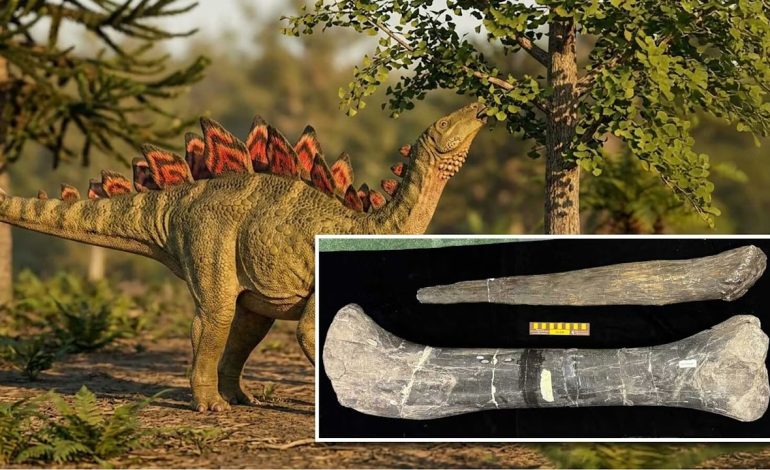

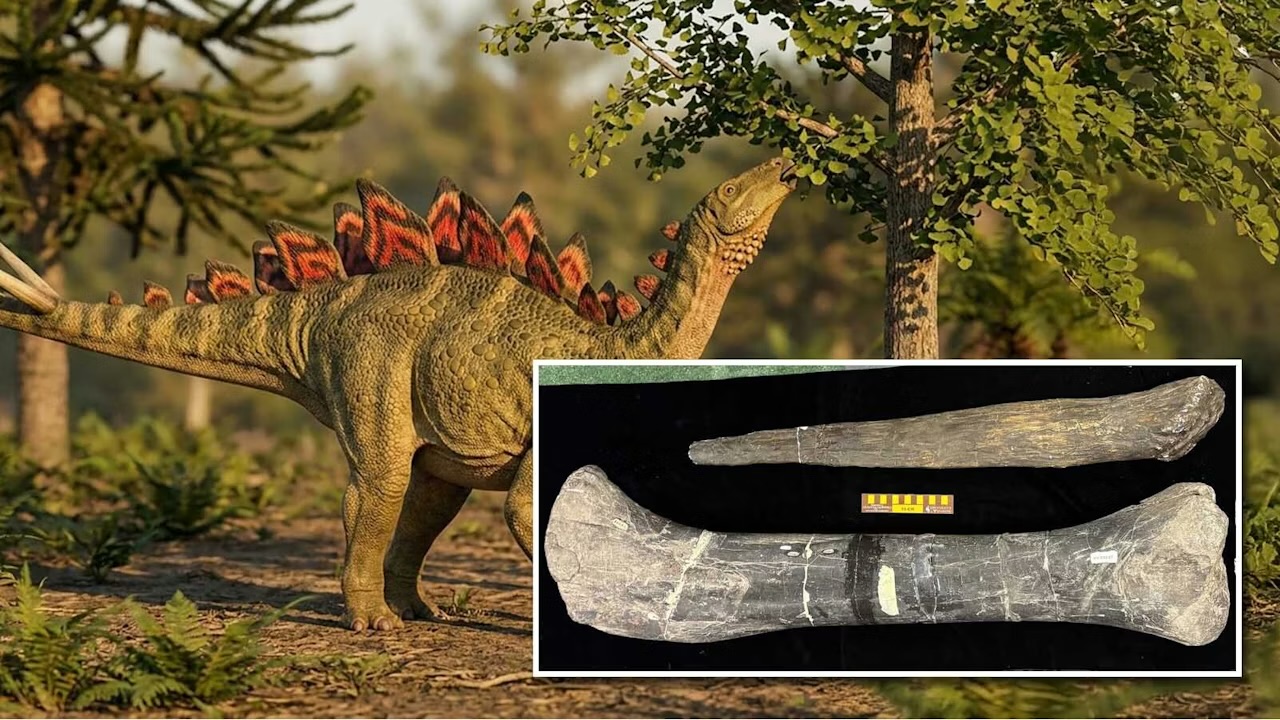
Only one specimen of Alcovasaurus has ever been found—named for the tiny Wyoming town of Alcova near Casper. Discovered more than a century ago, it almost vanished a second time when a burst pipe at the University of Wyoming destroyed most of its fossils.
The story begins in July 1908, when famed fossil hunter William Harlow Reed and A.C. Dart set out to collect mammal fossils at Hell’s Half Acre. Too many rattlesnakes sent them elsewhere. Near the Alcova Reservoir, they found something far more significant: the partial skeleton of a stegosaur.
The specimen—42 vertebrae, ribs, a pelvis, a femur, and four tail spines over 3 feet long—was unlike anything seen before. Those elongated spines prompted Reed to send casts to the Smithsonian. In 1914, paleontologist Charles Gilmore declared it a new species: Stegosaurus longispinus, “the long-spined roof lizard.”
Part of the skeleton went on display at UW’s Geological Museum, surrounded by one of the largest collections of American Jurassic fossils in the world. Then, in the late 1920s, disaster struck. An overhead water pipe burst, flooding the exhibit hall. Water seeped into the fossils, reducing them to rubble. Nearly every bone of the unique specimen was destroyed.
Only the femur survived.
For decades, paleontologists studied what little remained—the femur, plaster casts of the spines, and photographs taken by Reed and Gilmore. The dinosaur was renamed, reclassified, and debated. In 1993, an amateur paleontologist tried calling it “Natronasaurus.” In 2016, it became Alcovasaurus longispinus. In 2019, Portuguese researchers lumped it with a European dinosaur. Then in 2025, a new study resurrected it as a distinct Wyoming species once more.
“It’s been a very roundabout journey,” said Julian Hernandez Diepenbrock, a UW graduate student. “A lot more eventful than most dinosaur specimens.”
Alcovasaurus lived at the very end of the Jurassic Period, alongside Stegosaurus, Allosaurus and Diplodocus. But while Stegosaurus specimens fill museums worldwide, no second Alcovasaurus has ever been found. A possible tail spine collected near Como Bluff in the 1990s was lost again before anyone could study it.
The original quarry also remains lost. BLM paleontologist Brent Breithaupt has spent years trying to relocate it using old photographs and field notes. “It’s one of my grails,” he said.
Finding it could yield more fossils—or at least pinpoint where this one-of-a-kind dinosaur came from. Despite more than a century of searching across the American West, Alcovasaurus remains stubbornly, frustratingly unique.
“It’s not too surprising we haven’t found another one,” Breithaupt said. “But maybe we haven’t looked in the right places. Wyoming is a hotbed for dinosaur fossils. There are lots of places to look, and new discoveries all the time.”



The latest news in your social feeds
Subscribe to our social media platforms to stay tuned