


Why Scientists Doped Up Mountain Lions and Climbed Trees With Them in Yellowstone

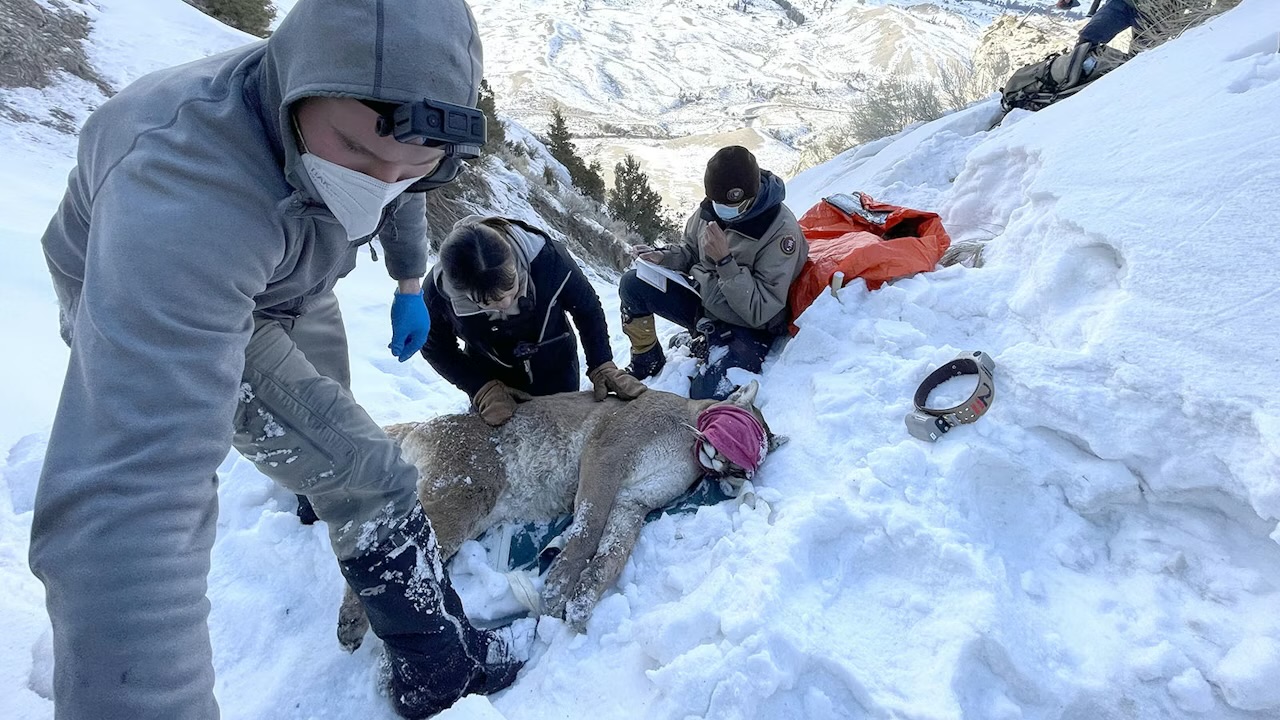
To study how mountain lions interact with wolves in Yellowstone National Park, researchers faced a tricky problem: how to get a sedated big cat safely out of a tree. Their solution involved ketamine, climbing harnesses, and a fair amount of nerve.
Wesley Binder, a doctoral student at Oregon State University, told Cowboy State Daily he was nervous the first few times he scaled a tree after a drugged mountain lion. “It’s definitely a little wild,” he said. “I’m up there thinking, ‘Oh, I hope this drug is working.'”
The study, based in northern Yellowstone, examines how two apex predators have reached a tenuous balance since wolves were reintroduced in the 1990s. Wolves and mountain lions compete for food and sometimes kill each other, but evidence suggests they’ve adapted. In the park’s northern range, mountain lions have shifted toward eating more mule deer while wolves continue targeting elk.
“I think the big thing that’s driving the change in diet in North Yellowstone is the changes in the elk herd,” Binder said. The northern herd has stabilized at about 8,000 animals for a decade, down from its peak. Along with wolves and mountain lions, bears also compete for elk.
Their hunting styles differ dramatically. Mountain lions hunt alone, using stealth and ambush. They get within about 10 yards before sprinting, typically going for the neck to suffocate their prey. An adult can kill about one big game animal per week—but loses much of it to scavengers, including wolves.
Wolves hunt in packs, running prey to detect old, weak or sick animals.
To capture cats for study, researchers brought a houndsman who runs trained packs that chase mountain lions up trees. But not every tree worked. “Sometimes we’d throw snowballs or sticks at it,” Binder said, to coax it down and run again. On average, each cat was treed three or four times before finding a suitable spot.
Ketamine was the drug of choice. As a dissociative anesthetic, it leaves cats “out of it” but still able to hang on. “You can see them bobbing their heads, but they’re holding on,” Binder said. Once secured in a harness, the cat was lowered gently and given additional sedatives for hands-on study.
Robert Crabtree of the Yellowstone Ecological Research Center has used ketamine thousands of times on species from coyotes to lynx. He said watching animals come down is crucial—they can “cycle back” into a trip. He once watched a coyote nearly fall into water and drown.



The latest news in your social feeds
Subscribe to our social media platforms to stay tuned