




CNBC, the Financial Times, Bloomberg, and Reuters contributed to this report.
Consumer prices in China sprang higher in February, surprising economists and handing policymakers a short-term inflation headache just as factory-gate pain eased a bit.
Quick numbers: the headline consumer price index rose 1.3% year-on-year in February, beating the 0.8% consensus and following a 0.2% gain in January. On the month, prices jumped 1.0%, well above forecasts. Core inflation — which strips out food and energy — climbed 1.8% year-on-year, a pace the country hasn’t seen since March 2019. Official data came from the National Bureau of Statistics.
On the factory side, the producer price index was still negative — down 0.9% year-on-year — but that’s actually better than economists expected (a 1.2% fall) and the slowest pace of deflation in over a year. In short: the worst of factory price pressure appears to be easing, even as shoppers and service providers saw price gains.
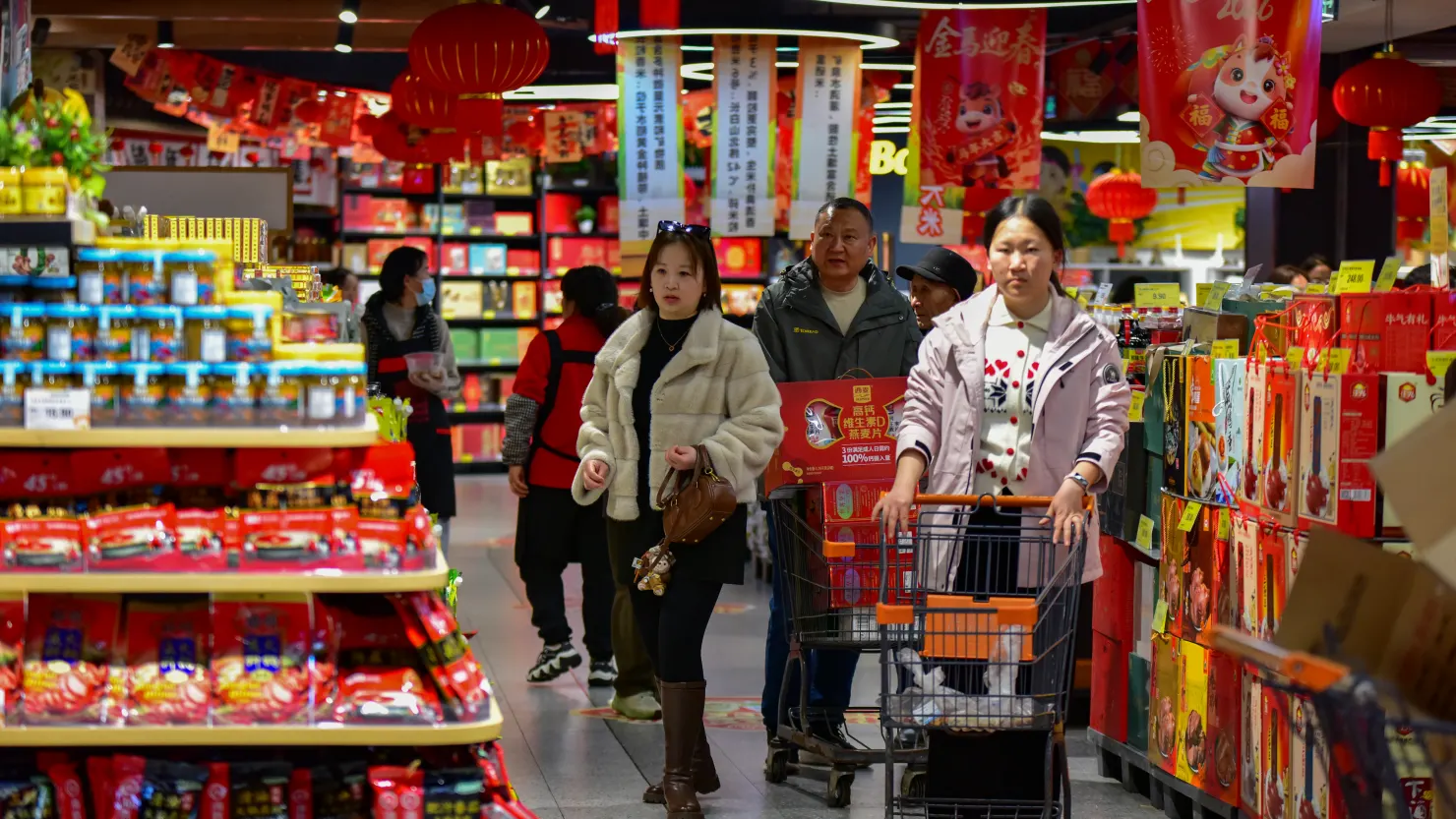
Services were the big story. Tighter demand over the long Lunar New Year helped explode travel, dining and leisure spending: service prices rose 1.1%, adding roughly 0.54 percentage points to the headline CPI. That holiday — running Feb. 15–23 this year, the longest on record — clearly pumped extra cash into the system. As Zhiwei Zhang put it, the holiday bump “was stronger than market expected,” and it’s unclear whether that lift will hang around once the festivities fade.
Commodity moves also left a mark. Metals and precious-metal refining saw big gains, and basic energy prices nudged higher — gold jewelry and gasoline both showed double-digit moves in some measures — which helped put a tentative floor under factory prices and kept producers from sliding further into deflation.
What Beijing is thinking: policymakers still have room to breathe. Officials set this year’s consumer-inflation ceiling at “around 2%” and trimmed the GDP target to 4.5%–5%, signaling a cautious, gradual approach to stimulus. The budget includes 250 billion yuan for a consumer trade-in program and a 100 billion yuan fund to coax private investment and spending — modest, not explosive, support.
On the outlook, this data is a two-edged sword. A firmer consumer print helps the argument that weak domestic demand is finally picking up, but it also raises the risk that inflation expectations drift higher — especially if service price gains persist.
“If exports stay strong, policymakers may tolerate weak domestic consumption,” said Larry Hu. “But if exports wobble, Beijing will likely step up stimulus to defend the growth target.”
February looked cheerier at the checkout than the factory floor did, but the gains may be holiday-driven and fragile. Watch whether service inflation cools after the New Year lull — that will tell you if this is a real rebound or just a one-off spike.



The latest news in your social feeds
Subscribe to our social media platforms to stay tuned